


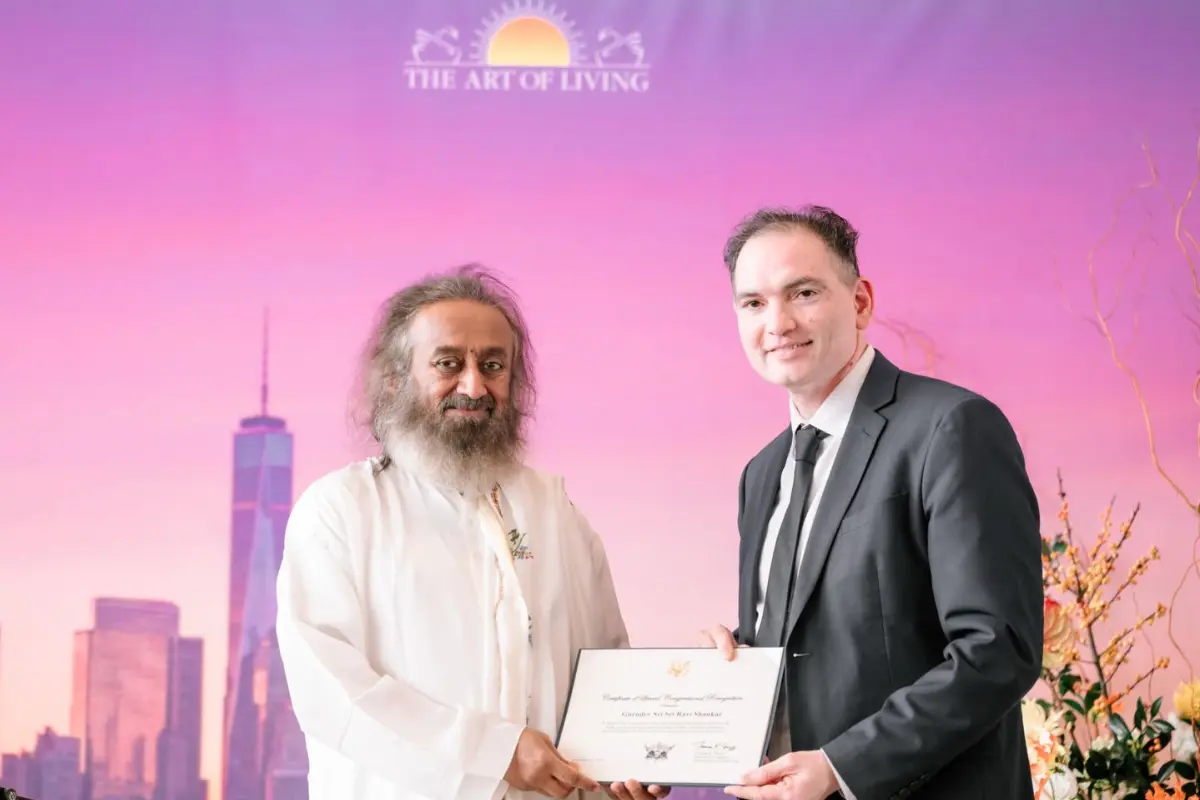
In what experts are calling a defining moment for global wellbeing, more than 12.1 million people from 150 countries participated in the largest collective meditation in history, led by India’s Gurudev Sri Sri Ravi Shankar. The event, held on World Meditation Day, reflects a growing global search for peace and resilience at a time of escalating stress, conflict and mental health challenges.
World Meditation Day was formally adopted by the United Nations General Assembly in 2024 as an annual observance to highlight meditation’s role in mental wellbeing and social harmony. This year’s event was anchored at the United Nations Trusteeship Council in New York City, where diplomats and senior officials joined the live meditation led by Gurudev. From there, the practice rippled across continents—from Indian cities and villages to communities in Africa, Europe, Asia, the Americas and Australia.
DON'T MISS
Unlike mass rallies or festivals, the event’s impact lay in its scale of shared silence and collective stillness, uniting diverse populations including students, professionals, farmers, and prison inmates from over 60 countries.
The global movement was amplified by the launch of a first-of-its-kind study on meditation and wellbeing, announced jointly by Gallup and The Art of Living ahead of World Meditation Day. Through this collaboration, Gallup will incorporate new meditation questions into the Gallup World Poll, enabling comparative data-driven insights into how meditation relates to emotional health, life evaluation and social wellbeing across populations—a dataset that has never before existed at this scale.
Gallup’s recent research shows that negative emotions such as stress and worry remain elevated worldwide, underlining an urgent need for scalable approaches to mental health.
India’s spiritual and cultural heritage was unmistakably at the centre of this global moment—offering a practical, evidence-anchored tool for billions seeking relief from anxiety, burnout and societal strain.
As Gurudev put it at the UN event, “Meditation is no longer a luxury; it is a necessity”—a sentiment that now resonates across diplomatic corridors and grassroots communities alike.
The study’s global results are expected in December 2026, potentially shaping public policy, education, and workplace wellbeing initiatives worldwide.
On 19th December, Permanent Representatives from India, Sri Lanka, Andorra, Mexico, Nepal along with other member countries and UN agencies came together to celebrate the ancient practice; share its relevance in dealing with global social, political, and mental health challenges, where Gurudev’s keynote address and guided meditation placed a practice rooted in India’s civilisational heritage within the heart of global diplomacy.