

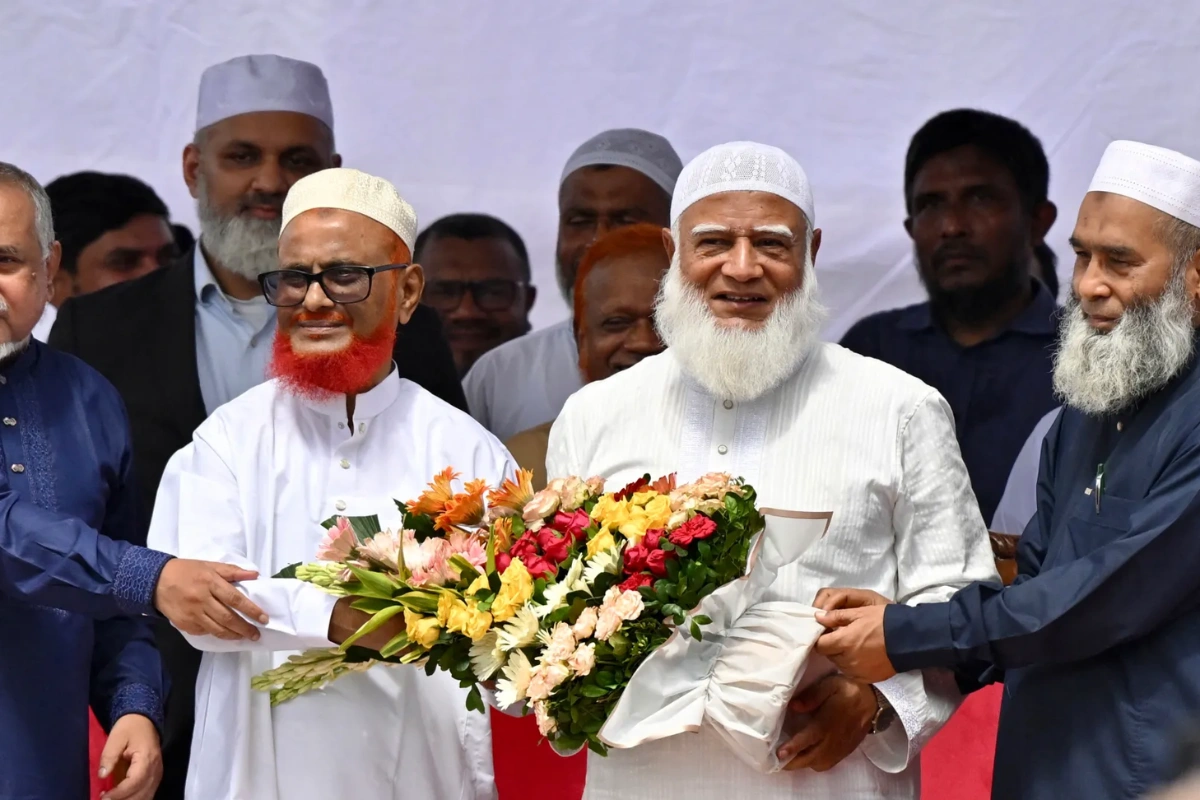
Jamaat-e-Islami Bangladesh: Recent media reports have suggested that Washington is likely to woo Jamaat-e-Islami, the Islamist party of Bangladesh, before the upcoming elections.
Jamaat is likely to deliver a winning performance in the February 12 elections. Sheikh Hasina’s Awami League Party is already banned from the Bangladesh elections. Tarique Rahman, the Party chair of the Bangladesh Nationalist Party, is yet to find the “connection“.
DON'T MISS
Now comes the interesting part – the Jamaat-e-Islami has a pro-Pakistan tilt. Washington’s decision to stay too close to it may backfire as New Delhi may be against anyone who favours Pakistan.
Jamaat-e-Islami Bangladesh-US Connection
Donald Trump wants the leaders of Jamaat to be friends. It is believed that Washington is encouraging journalists to bring the Islami Chhatra Shibir, the influential party wing of the Jamaat, onto their television programs.
A fundamentalist Islamic Party, Jamaat-e-Islami has a history of being banned for anti-national activities. The party was first banned in 1972 after the country achieved its independence due to its alleged role in the 1971 genocide. In 2013, it was banned again and the Bangladesh High Court deregistered it as a political party. In August 2024, a fresh ban was imposed by the Awami League government but it was reversed by the interim government later that month.
The Growing Popularity of Jamaat
Jamaat-e-Islami seems to have reinvented itself, unsettling minority communities and traditional moderates. Since Sheikh Hasin was thrown out, the party has been trying hard to emphasize on welfare and anti-corruption outreach to win voters and broaden its appeal.
An International Republican Institute (IRI) poll revealed that the Jamaat is “liked” by more than 53 percent of the respondents. Last year, the student wing of Jamaat won major student union elections at Dhaka and other prominent universities.
Some of the party’s Islamist coalition partners have exited the Jamaat-led electoral alliance, underscoring the Islamic Bloc’s tactical and ideological frictions.