

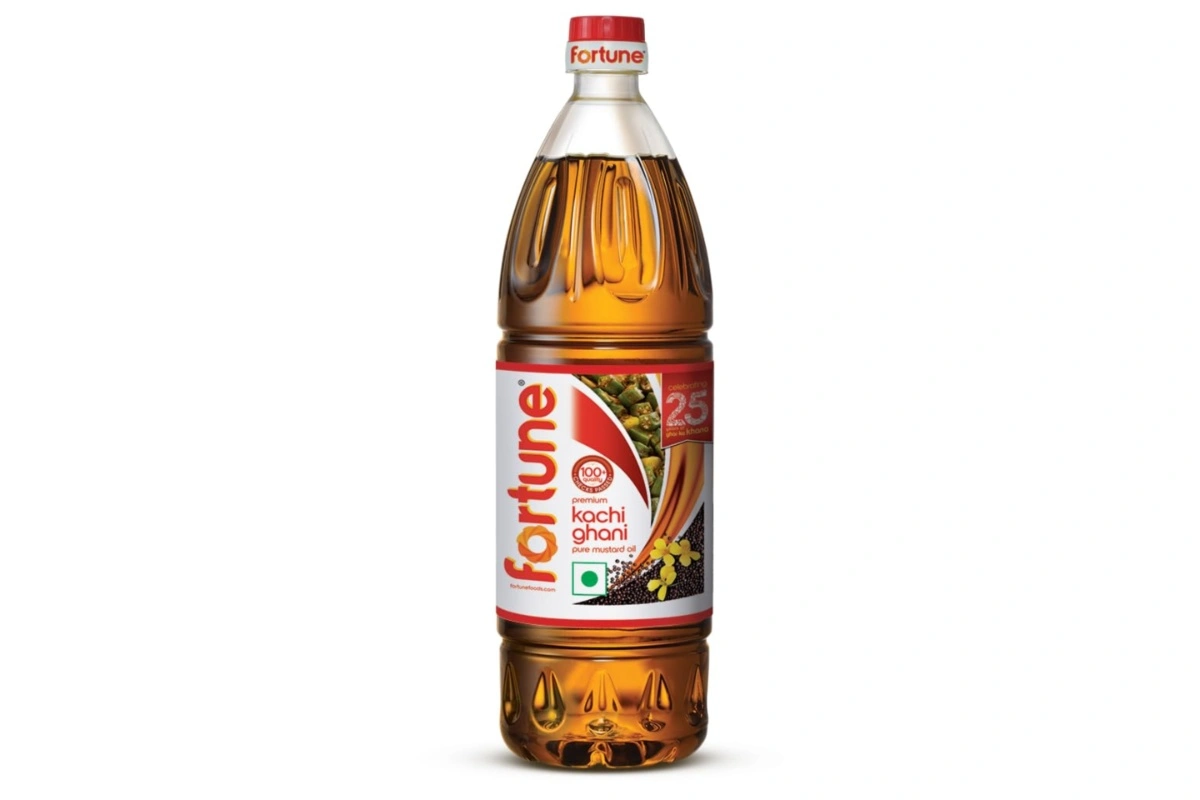
Mustard Oil Test: Mustard oil is a staple in many Indian kitchens. We trust it for cooking, pickles, and even home remedies. So when a bottle says “100% pure mustard oil,” most of us don’t think twice. But what if the label doesn’t tell the full story? A recent Mustard Oil Test has raised questions that every consumer should know about.
This test focused on a popular brand that many households rely on daily. The results were not about safety scares or illegal adulteration. Instead, they revealed something more subtle but important (a mismatch between what the label claims and what the lab actually found).
To make things transparent, the product was ordered blindly from Amazon through a third-party seller. Two sealed 1-litre bottles from the same batch were sent directly to the laboratory. An uncut unboxing video shows the sealed product going straight for testing, ensuring there was no bias or interference at any stage.
Mustard Oil Test: What The Lab Found Vs What the Label Claims
The label mentioned only one ingredient (mustard oil), meaning the product claims to be 100% pure. In the first level of testing, chemical parameters were checked. Since oil contains only fat, the lab focused on fat quality and composition.
The total fat content was found to be 99.9%, which is expected for pure oil. However, the confusion began when the fat breakup was analysed. The company claimed saturated fat at 12 grams per 100 grams, but the lab found only 5.98 grams. Trans fat (claimed as 1 gram) was below the quantification limit.
Even bigger differences appeared in unsaturated fats. Monounsaturated fatty acids were claimed at 36 grams, while the lab found 66.97 grams. Polyunsaturated fatty acids were claimed at 16 grams but tested at 26.95 grams. These numbers did not match the label at all.
DON'T MISS
Big Relief: Mustard Oil Price Drops
To double-check authenticity, a full fatty acid profile was done. Interestingly, all fatty acids were within FSSAI guidelines for mustard oil. This raised a key question – if the oil meets regulatory standards, why is the label so inconsistent? The issue became more puzzling when the same brand showed different fat values across platforms like Blinkit, Swiggy and Zepto.
Safety Checks, Purity Tests And Final Verdict
Beyond fat composition, the oil went through multiple quality and safety tests. No mineral oil was detected, ruling out adulteration with petroleum-based oils. The iodine value was within limits, confirming authenticity and no mixing with palm oil.
The acid value was low, indicating good quality and freshness. Tests for hydrocyanic acid showed levels below the quantification limit. Rancidity was negative, meaning the oil was fresh and safe to consume. Unsaponifiable matter and saponification values also stayed within FSSAI limits.
Physical checks showed no added colour, no argemone oil, no water separation and no foreign matter. Advanced tests for melamine, heavy metals and aflatoxins were also clear, with only copper detected within safe limits.
In short, the oil passed all six levels of testing under FSSAI standards. But it failed when compared against its own label claims. The product appears safe and authentic, but the lab results suggest that consumers may not be getting the nutritional information they are promised.