

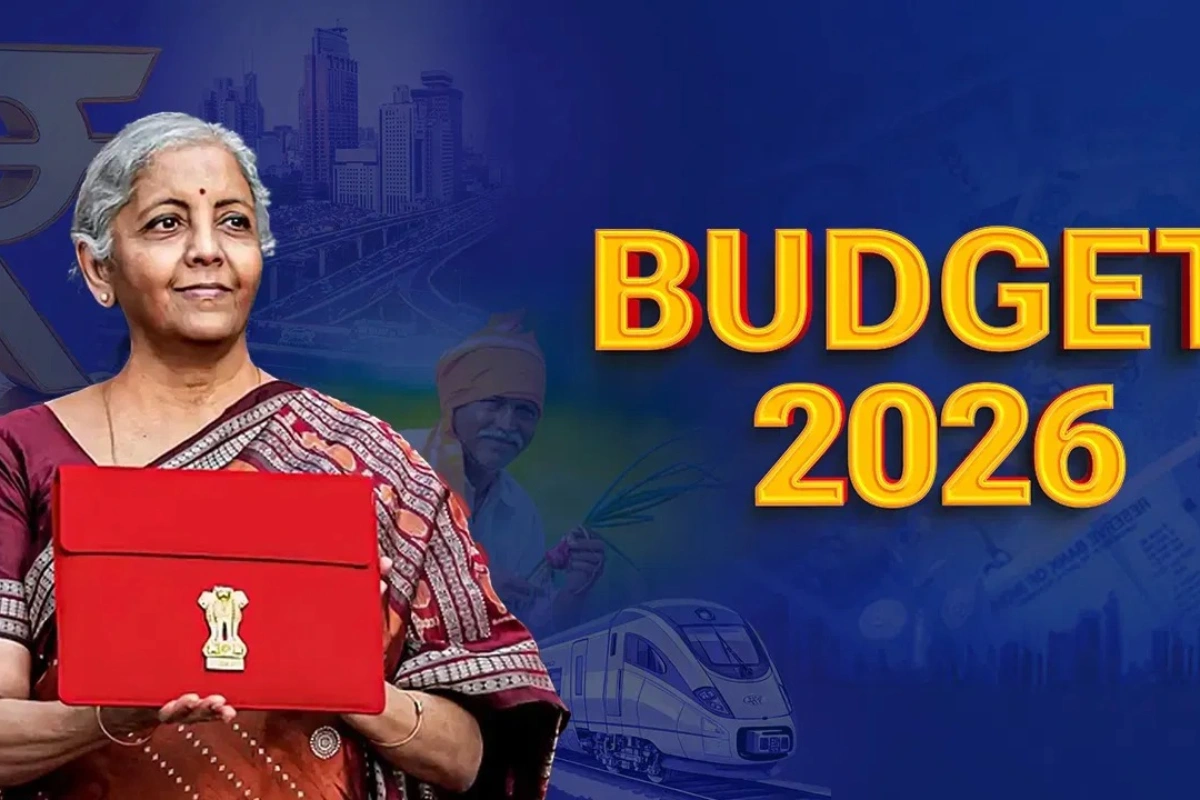
Budget 2026: Nirmala Sitharaman, the Union Finance Minister of India, would present the Budget 2026-27 on February 1, 2026. At 11 am on Feb 1, millions of India’s tax-paying class would be closely watching the budgetary measures that would have a profound impact on the finances of each and every household in the country.
Budget 2026’s outlook is expected by a big majority of taxpayer community as cautiously optimistic. The Economic Survey 2025-26 that was tabled on January 29 projected the gross domestic product (GDP) growth of the country at 6.8 to 7.2 percent for FY27. This would be a modest increase over the 6.3 to 6.8 percent growth forecast that was mentioned in the survey of last year.
Will the Budget 2026 fall below, meet or exceed the expectations of the common man? Let us explore some of the most common expectations of the taxpayer community and industry experts.
Standard Deductions To Offset Inflationary Pressure
Middle class of India is expecting a higher standard deduction, potentially rising from ₹75,000 to ₹1,25,000 to offset inflationary pressure. Industry experts believe that FM Sitharaman may fine-tine tax slabs, especially for the income bracket of ₹12-20 lakh.
Joint Taxation For Couples
The Institute of Chartered Accountants of India (ICAI) suggested that India should welcome the concept of Joint taxation for couples. The system would facilitate a unique system that would unify the incomes of both spouses are blended and taxed together as a single unit. This would help the couple to save more and reap the benefits of joint taxation.
Budget 2026 Expectation-Affordable Housing Loans
Siddarth Bhamre, Head of Institutional Research, Asit C Mehta Investment Intermediates Limited, remarked the government should ideally focus on higher allocations under housing schemes such as Prime Minister Awas Yojana. This would be beneficial for affordable housing financing companies and housing Non-Banking Financial Companies (NBFCs). This would improve home ownership access for lower-income families and first-time buyers.
Budget 2026 Expectation-Would Home Loan Deductions Increase?
KPMG tax experts have suggested that housing loan interest deduction should be permissible in next tax regime. Presently, taxpayers are unable to offset housing loan interest against income from salaries, including for self-occupied properties. Under the new tax regime, such interest deduction on self-occupied properties must be permissible.
Would House Property Losses Be Adjusted Against Other Income Heads?
The American Chambers of Commerce in India (AMCHAM) has suggested that set off of house property losses against any other income source(s) should be allowed. Alternatively, the deduction limit should be increased from ₹2 lakh to ₹5 lakh.
Presently, set off of losses are restricted to the extent of ₹2 lakh against any other income head.
DON'T MISS
The Bombay Chambers of Commerce and Industry (BCCI) have urged the FM to increase the limit of deduction to ₹5 lakh.
Healthcare-Making it More Affordable & Accessible
Gautam Khanna, CEO, P.D. Hinduja Hospital & Medical Research Centre, Mumbai, remarked that healthcare access and affordability are still two of the biggest challenges before the common Indian. The challenges are even bigger for Indian families managing geriatric and long-term patient care.
The government may increase investment in early diagnostics and preventive facilities, especially in tier 2, 3 and rural regions to reduce healthcare disparties.
Incentivize Investments And Savings to Grow Overall Economy
The tax-paying and investor communities in India are seeking a significant increase in the Long-term capital gains (LTCG) tax-free threshold from ₹1.25 lakh ₹2.75-3.25 lakh. This will help in encouraging equity participation of Indians in the long run.
A significant majority of market participants have also urged the Finance Minister to restore the concept of indexation advantages of debt mutual funds that was withdrawn in the 2025 Budget.
Investment-Associated Deductions-Sections 80C And 80D
Additional budget 2026 expectations include innovative investment-associated deductions, higher Section 80C and 80D limits and stronger National Pension System tax incentives under Sections 80CCD(1), 80CCD(1B) and 80CCD(2). This would help salaried professionals of the country boost their retirement savings over a period of time.
Presently, there is a cap of ₹1.5 lakh on Section 80C deductions. Increasing it to ₹2.5-3.0 lakh would boost savings and investments.
Similarly, Section 80D deductions for health insurance premiums and preventive health check-ups should be significantly increased. This would reduce dependence on high-interest personal loans, ease household financial strain and prevent the drainage of emergency savings.
Would Higher Life Insurance Deductions Be Used To Offset Inflation?
Jude Gomes, MD & CEO, Ageas Federal Life Insurance, remarked policymakers should emphasize on retirement preparedness and long-term savings among Indians. Gomes added it’s time to revisit the present ₹2.5 lakh annual premium threshold for Unit Linked Insurance Plans (ULIPs) to stay relevant with inflation and rising income levels.
Cash Gifts From Friends Or Non-Relatives-Would Limits Be Increased?
Presently, cash gifts received from colleagues, friends or non-relatives on any occasion are tax exempted up to an aggregate limit of ₹50,000 in a financial year. Gifts over this limit are taxed as ‘income from other sources’. Taxpayers suggest that the tax-free limit for such gifts should be raised to at least ₹1.5-2.5 lakh.
Would February 1 finally bring a smile on the faces of millions of Indian taxpayers?