


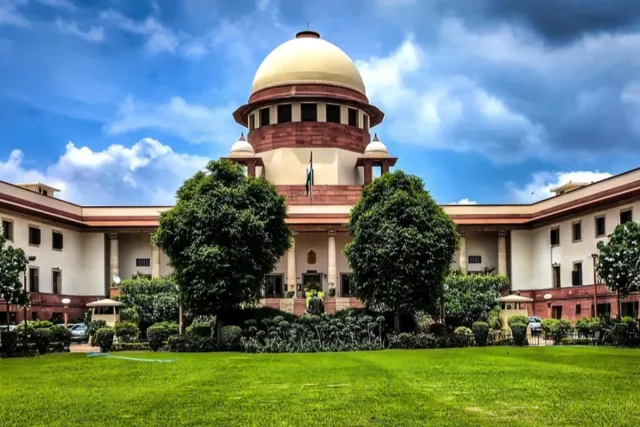
SC On Menstruation: In a landmark judgment with far-reaching implications for women’s health and education, the Supreme Court of India has declared menstrual hygiene an integral part of the fundamental right to life under Article 21 of the Constitution.
The apex court observed that access to proper menstrual hygiene facilities is essential to dignity, health, equality and bodily autonomy, and that denial of such facilities directly affects the education and well-being of adolescent girls across the country.
SC On Menstruation: Free Sanitary Pads in Schools
The Supreme Court directed that free sanitary pads must be provided to school-going girls, covering government, aided and private institutions. The court emphasised that menstrual hygiene cannot be treated as a matter of charity or policy discretion, but as a constitutional obligation of the state.
DON'T MISS
Schools have also been instructed to create menstrual hygiene management facilities, including emergency supplies and safe disposal mechanisms, to ensure that menstruation does not become a barrier to regular school attendance.
Mandatory Separate and Accessible Toilets
Highlighting the lack of basic sanitation infrastructure in many schools, the court ordered the provision of separate toilets for girls, equipped with water supply, hygiene facilities and disabled-friendly access. The judgment made it clear that proper sanitation is a prerequisite for ensuring girls’ right to education and privacy.
The court warned that non-compliance by private schools could invite strict action, including withdrawal of recognition, while state authorities would be held accountable for implementation failures.
Link to Education and Equality
The bench noted that inadequate menstrual hygiene facilities contribute to school absenteeism and dropouts among girls, reinforcing gender inequality. By linking menstrual health to the Right to Education and Right to Life, the court underscored that structural neglect of menstrual needs amounts to a violation of constitutional rights.
A Step Towards Gender Justice
Legal observers view the ruling as a major step towards gender-sensitive governance, recognising menstruation as a public health and human rights issue rather than a social taboo. The judgment is expected to guide future policies related to school infrastructure, public health and women’s welfare.
The Supreme Court’s directions aim to ensure that no girl is forced to compromise her education or dignity due to lack of menstrual hygiene support, marking a significant shift in India’s constitutional and social framework.