

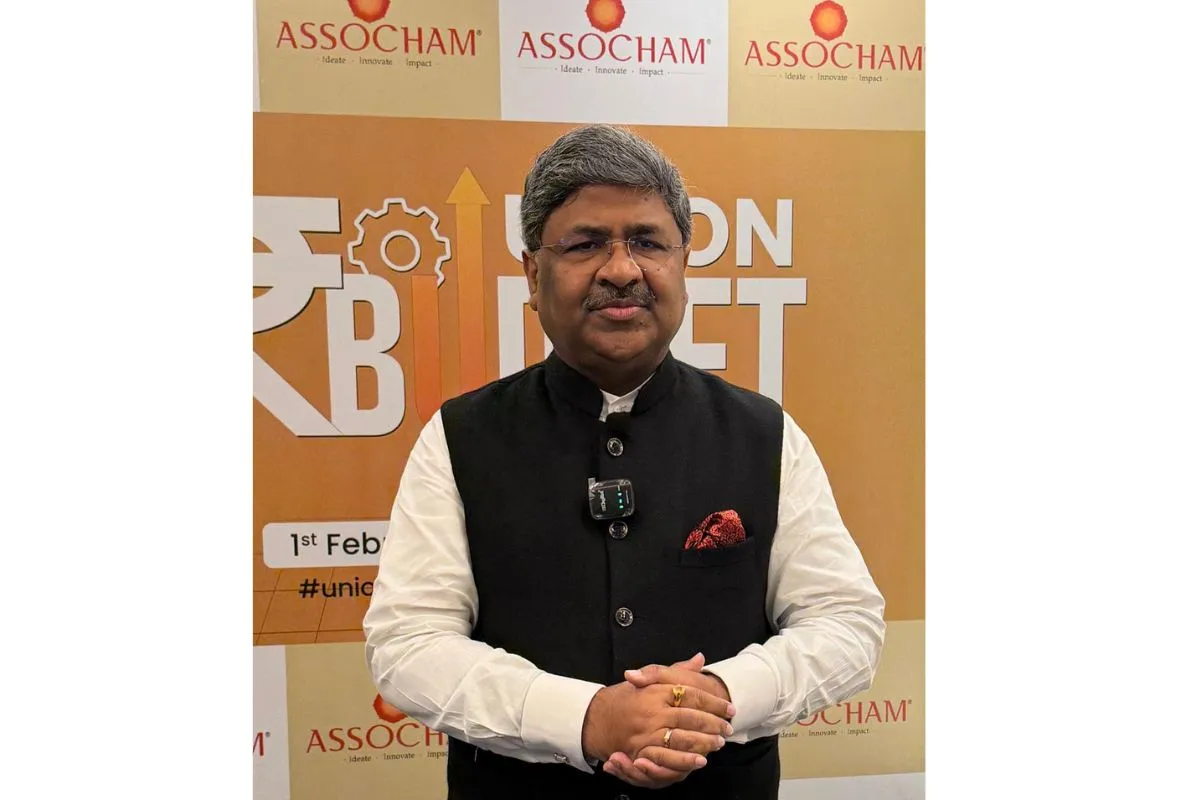
Union Budget 2026–27 has been presented at a time when India’s education system stands at a critical inflection point. Over the last few years, education has steadily moved from being viewed as a social obligation to being recognised as an economic and strategic asset. This year’s Budget reinforces that direction, but also brings into focus the deeper question that now confronts policymakers: can intent translate into institutional strength on the ground?
The overall macro framework of the Budget is disciplined and growth-oriented. With GDP growth projected at around 7 percent, moderate inflation, and a fiscal deficit targeted at 4.3 percent of GDP, the government has signalled continuity, stability, and reform momentum . Education finds place within this broader vision of Viksit Bharat, youth-centric development, and people’s capacity building.
In absolute terms, education expenditure has been placed at ₹1.39 lakh crore, positioning it among the major heads of Union spending . The intent to strengthen the education–employment–enterprise continuum is further reflected in the proposal to set up a High-Powered Standing Committee on Education to Employment and Enterprise, acknowledging services and skills as key drivers of future growth.
Several announcements merit attention. The proposal to develop five University Townships along major industrial and logistics corridors is a structurally important idea. If implemented well, it can anchor regional universities to industry clusters, research, and employment pathways, especially beyond metropolitan centres. Equally significant is the announcement of a girls’ hostel in higher education STEM institutions in every district, which directly addresses access, safety, and participation of women in advanced learning.
The Budget also places visible emphasis on emerging sectors that intersect with education—AVGC content labs in schools and colleges, design education through a new National Institute of Design in eastern India, allied health professionals, caregivers, sports education, and AYUSH institutions . Together, these signal a widening imagination of education beyond degrees, towards employability, creativity, care, and services.
DON'T MISS
Yet, while intent is visible, the deeper institutional challenge remains unresolved.
Over the past few years, one persistent issue has been the gap between Budget Estimates and actual absorption, particularly in higher education and state-linked schemes. This Budget does not yet articulate a clear execution architecture to address that deficit. Regional universities—especially state universities and private institutions in Tier-II, Tier-III towns—continue to struggle with fragmented approvals, delayed releases, and compliance-heavy frameworks. Without predictable multi-year funding and simpler delivery mechanisms, even well-designed initiatives risk remaining aspirational.
Another concern is the silent cost burden on students. While core education services remain protected, allied services—hostels, transport, sanitation, digital infrastructure—continue to attract indirect taxes, raising the real cost of education for families. The Budget is progressive on ease of living and trust-based governance in many sectors, but education still awaits similar treatment in this regard.
On research and innovation, the Budget strongly supports manufacturing, frontier technologies, AI, semiconductors, and biopharma. However, universities are not yet explicitly positioned as the central pipelines for this innovation ecosystem. Globally, deep-tech leadership flows through strong university–industry research corridors. India’s ambition to be a technology creator will require more deliberate integration of public and private universities into national R&D frameworks.
The larger takeaway
Union Budget 2026–27 reinforces the right direction: youth-centric growth, regional development, and institutional reform. The opportunity now lies in execution depth. Strengthening regional universities, empowering rural and first-generation learners, and recognising private institutions as partners in national capacity building will determine whether this Budget delivers lasting transformation.
A developed nation is not built by announcements alone. It is built when budgets consistently strengthen institutions, convert learning into capability, and capability into shared prosperity.
Contributed by: Kunwar Shekhar Vijendra | Co-founder & Chancellor, Shobhit University, and Chairman, National Education Council, ASSOCHAM. He has been engaged in institution-building and education policy discourse, with a focus on regional universities, rural youth empowerment, and inclusive growth.