


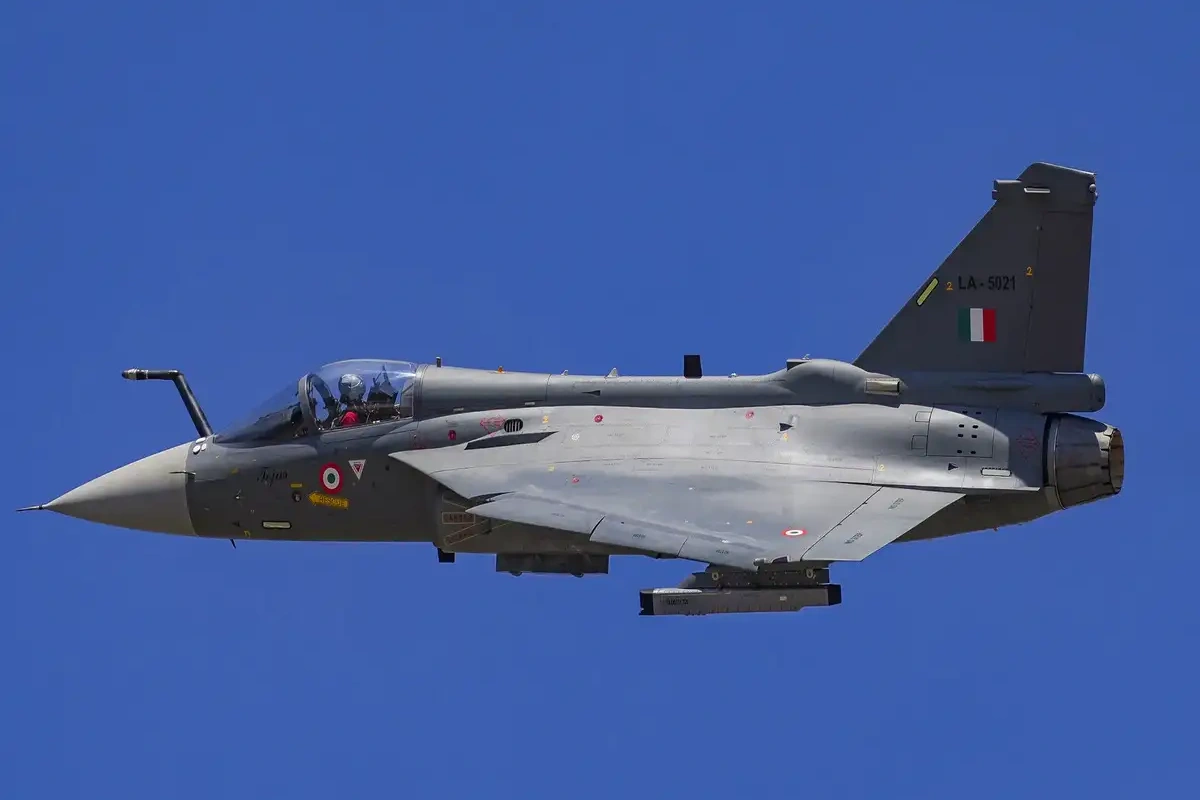
The recent crash of the Tejas Fighter Jet has raised a lot of worries among India’s defence officials. The Indian Air Force has grounded all of its single-seat HAL Tejas planes for thorough safety checks after the incident, which happened during a routine training flight earlier this month.
DON'T MISS
This is the third crash since the fighter was put into service, which is why the move was made. The timing is important for a program that represents India’s desire for self-reliance.
What happened in the most recent crash of a Tejas fighter jet?
Reports say that the tragedy happened at a major IAF airbase while the plane was landing after a normal mission. The jet went off the runway because it was thought that the brakes had failed.
The pilot got out safely and didn’t get hurt badly. But the plane was badly damaged and will probably be written off.
In March 2024, a plane crashed near Jaisalmer when the engine stopped working. The pilot lived. In November 2025, a plane crashed at the Dubai Airshow, killing everyone on board.
IAF Grounds Fleet: Is this a warning or a precaution?
After the crash of the Tejas fighter jet, the IAF has grounded about 30 single-seat Mk-1 models that Hindustan Aeronautics Limited delivered.
This choice is a safety measure. The force will do a standard court of inquiry and extensive technical tests to find any problems with the design or maintenance. No official announcement has established the exact cause yet. Operations are still on hold to keep pilots safe.
Is there a dent in the “Made in India” movement?
The Tejas program is a key part of the “Make in India” defence effort. It was built as India’s own fighter plane and shows the country’s technological ambition and strategic independence.
But recurrent collapses have made people more concerned about quality control, delivery times, and the company’s ability to export. The next few weeks will be very important. Whether this is just a momentary setback or a bigger problem with the system will depend on the results of the inspections.