


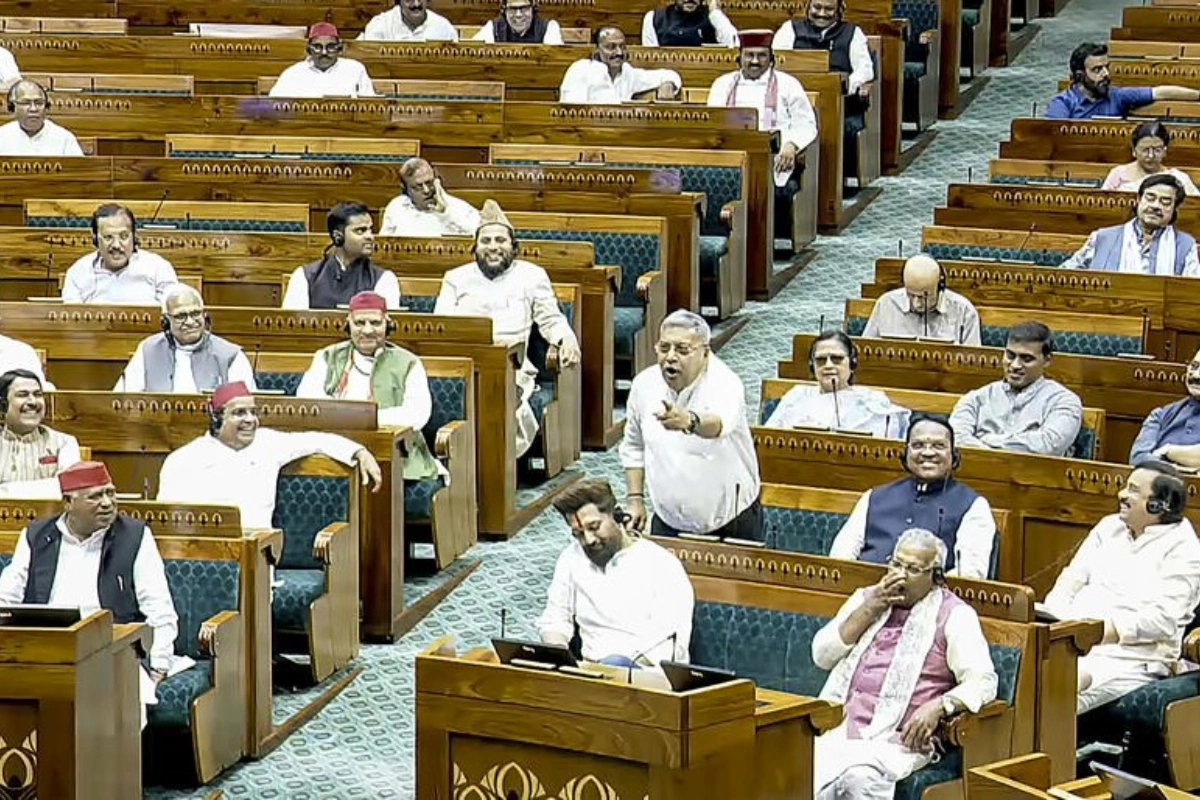
Delimitation Bill 2026: The proposed Delimitation Bill 2026 is all set to face voting in the Lok Sabha today. The bill carries implications for the balance of power across the federal structure of India.
Delimitation Bill 2026-The Numbers And Impact
For the ruling National Democratic Alliance (NDA), the Delimitation Bill 2026 is more than a legislative exercise. The NDA is making a strategic gamble that may possibly redefine political representation for decades to come.
However, the parliament arithmetic along with the unpredictable variable of cross-voting makes the outcome far from certain. The bill needs to secure a 2/3rd majority of the number of members present and voting in both the Lok Sabha and the Rajya Sabha before it goes to the President.
In the Lok Sabha, the NDA enjoys a comfortable majority but a 2/3rd majority is not just about crossing the halfway mark. It would require a significantly larger coalition of support, especially if attendance is high. The NDA would require all of its allies to remain firmly aligned with no absentees.
DON'T MISS
Challenge In Rajya Sabha
The Upper House remains fragmented even though the NDA has numerical dominance. Unlike the Lok Sabha, the opposition parties hold substantial ground in the Rajya Sabha.
Strategic walkouts, abstentions and absenteeism could all play an important role. If opposition parties decide to boycott the vote, the count of members present and voting would reduce, thereby lowering the effective threshold required for passage.
Why the Delimitation Bill Matters Politically?
The redrawing of electoral boundaries based on population changes is an extremely politically sensitive matter. States with higher population growth, especially in the north, are likely to gain more representation. On the other hand, southern states that have noticed slower population growth because of effective population control measures, fear a relative loss of influence.
Opposition parties, especially those with strong bases in southern states, view the bill as structurally skewed. Their resistance is not merely procedural but rooted in long-term political survival.
There are several factors that could trigger cross-voting. Regional interests may override party loyalty, particularly for MPs from states that stand to gain from delimitation. Similarly, internal dissent within opposition parties could lead to fractures during voting.