

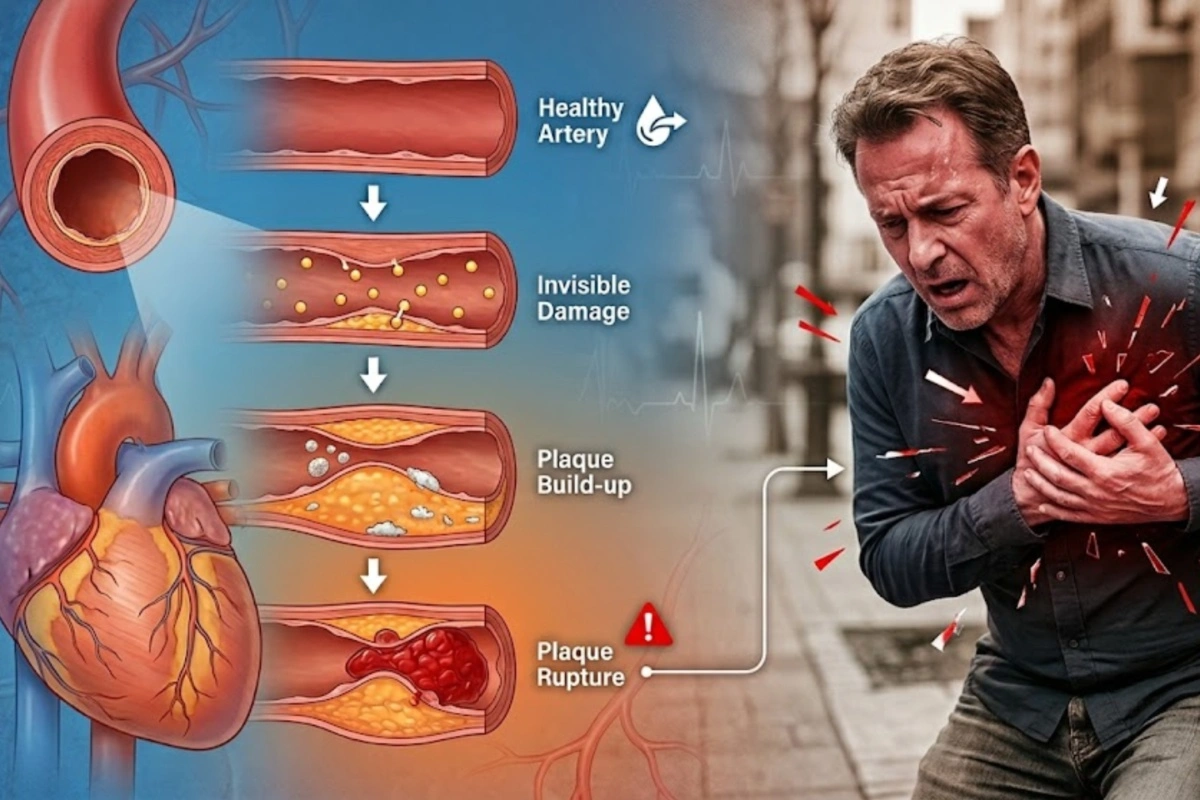
High levels of cholesterol in the blood can silently damage the heart over time. According to a video on the YouTube channel Healthy Living Zone, cholesterol is a fatty substance that the body needs in small amounts. But when it increases beyond normal levels, it starts building up inside blood vessels. This process can slowly turn dangerous without any early warning signs.
The problem begins when excess cholesterol sticks to artery walls and forms thick deposits called plaques. These plaques gradually harden and narrow the arteries, reducing blood flow to the heart. This condition is known as atherosclerosis. In many cases, people do not notice any symptoms in the early stages. But as the blockage grows, it can lead to chest pain, breathlessness or even a sudden heart attack.
In severe cases, doctors may need to insert a stent. A stent is a small mesh tube placed inside the artery to reopen blocked blood flow. It helps keep the artery open and reduces the risk of serious heart problems. Because of this, managing cholesterol levels early becomes extremely important for heart health.
DON'T MISS
Cholesterol And Silent Artery Blockage: What Happens Inside the Body
The danger of cholesterol is that it often works silently. Many people only discover the problem when symptoms become severe. Inside the body, LDL (bad cholesterol) contributes to plaque formation, while HDL (good cholesterol) helps remove excess cholesterol from the bloodstream.
Over time, uncontrolled cholesterol can lead to:
- Narrowed or hardened arteries
- Reduced oxygen supply to the heart
- Increased risk of chest pain and heart attack
- Emergency procedures like angioplasty or stent placement
Doctors explain that a heart attack can happen suddenly when a plaque ruptures and completely blocks blood flow. This is why early detection and lifestyle changes are critical.
Simple Steps For Heart Protection
Experts strongly recommend controlling it through daily habits rather than waiting for symptoms. A heart-healthy lifestyle can significantly reduce the risk of artery blockage.
Key prevention steps include:
- Eating a balanced diet with fewer fried and fatty foods
- Increasing fibre-rich foods like fruits, vegetables and whole grains
- Exercising regularly to improve blood circulation
- Managing weight, blood pressure and cholesterol levels
- Avoiding smoking and excessive stress
Research shows that maintaining healthy levels can greatly lower the risk of cardiovascular disease.