

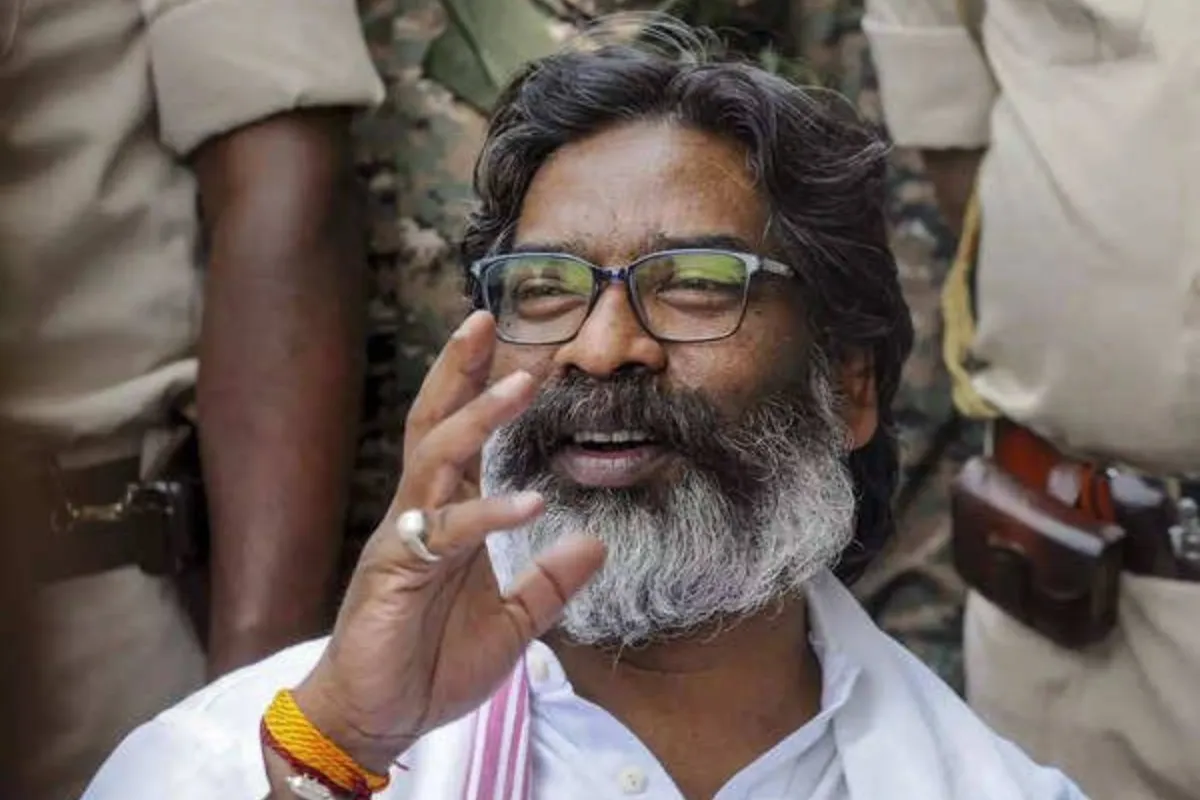
News: Jharkhand Chief Minister Hemant Soren urged people attending Van Mahotsav to plant at least one fruit-bearing or locally useful tree and take responsibility for nurturing it like a member of their family.
Highlighting the importance of indigenous trees, Soren said species such as mahua, jackfruit, jamun and karanj contribute far beyond increasing green cover. According to him, these trees support rural livelihoods, nutrition, the local economy and biodiversity.
Soren said that if thousands of people participating in the programme each plant a tree and commit to keeping it alive, the collective effort could become a powerful people-led environmental movement—potentially more impactful than any government campaign alone.
Jharkhand News: Focus on Green Initiatives in Cities
The Chief Minister also highlighted initiatives aimed at increasing greenery in urban areas. He said the state government has introduced incentives, including free electricity-related benefits for people who plant trees, to encourage greater public participation in urban greening.
However, Soren stressed that government incentives alone are not enough. He called for environmental responsibility to become a personal commitment among citizens.
‘Jal, Jungle and Zameen’ Is a Shared Responsibility
Appealing to the public, Soren said the protection of water, forests and land should not be viewed solely as the responsibility of the government. He urged citizens to consider environmental conservation a shared duty.
He said that ensuring trees survive after plantation is as important as planting them in the first place, making community participation central to the success of Van Mahotsav.