

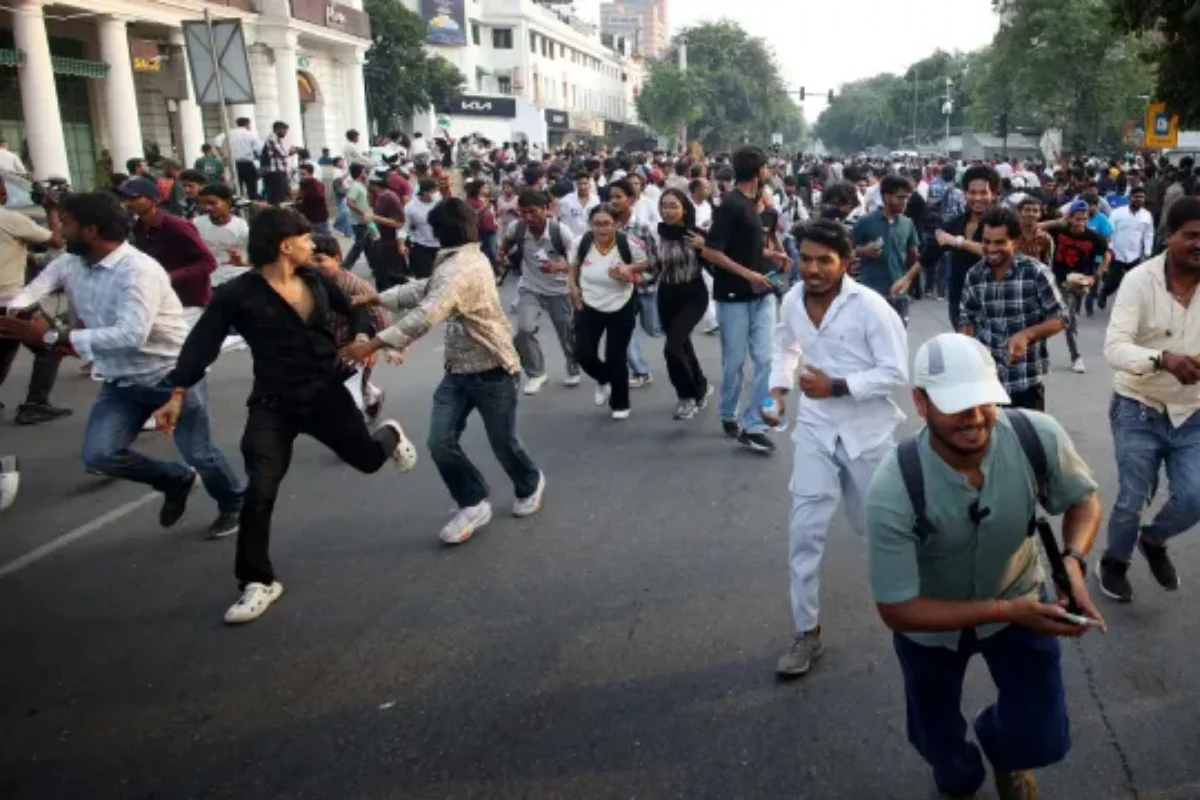
CJP Protest: The OHCHR said it was concerned by reports of mass detentions of demonstrators, protest leaders, civil society members, lawyers and journalists before and during Saturday’s demonstrations in Delhi. It urged Indian authorities to ensure law enforcement showed “utmost restraint” toward peaceful protesters, in line with the country’s democratic traditions and human rights obligations. The protests demanded CEC Gyanesh Kumar‘s resignation and the scrapping of the Special Intensive Revision of electoral rolls.
DON'T MISS
India’s Response
India’s mission in Geneva said it was the world’s largest democracy, where the right to peaceful assembly is guaranteed by the Constitution and safeguarded by robust institutions, an independent judiciary and a free media. It said the OHCHR “would also do well to devote comparable attention to large-scale protests elsewhere,” citing the body’s mandate of impartiality and non-selectivity. The Ministry of External Affairs called the concerns unwarranted and an unacceptable interference in India’s internal affairs. It added that anyone who feels their rights were violated can seek relief in the courts.
A Familiar Exchange
CJP Protest: This is not the first clash. In December 2021 the MEA accused the OHCHR of bias over its statement on the arrest of activist Khurram Parvez in Jammu and Kashmir. It said then that authorities act against violations of law, not against the legitimate exercise of rights.
Is the UN Biased?
CJP Protest: India’s argument is that the UN applies uneven standards across countries. Critics respond that the OHCHR routinely comments on protest policing worldwide, and that mass preventive detentions of lawyers and journalists fall squarely within its mandate. Opposition leaders and journalist bodies have also condemned Saturday’s detentions, while the government says its measures were needed to prevent disorder. Whether the UN is biased is a contested political question, and these reports do not settle it.