


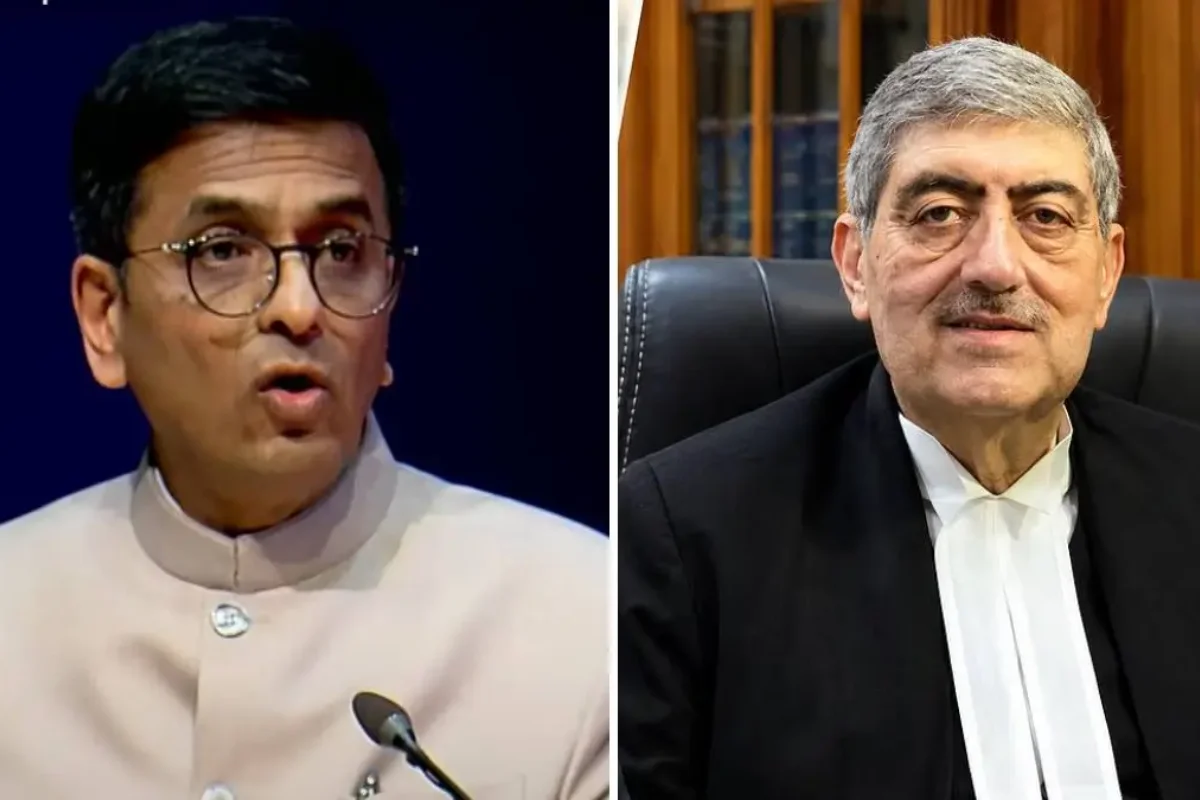
Former Supreme Court judge Sanjay Kishan Kaul has said former CJI U U Lalit altered the Supreme Court’s case-listing process. In his forthcoming book Without Fear or Favour, Kaul has described Lalit’s decision to start listing cases earlier than they are marked as sensitive and kept off regular hearing lists. This comes days after Kaul criticized former CJI D Y Chandrachud’s conduct on the judicial appointments front.
What did Sanjay Kishan Kaul like about Justice U. U. Lalit?
Justice of India for less than three months in 2022. But the judge made adjustments in the listing and assignment of the cases for hearing, writes Kaul in his memoir. Kaul pointed out that over 1,000 cases have been designated sensitive and are not appearing on the cause list. He asked as to why some comparatively mundane cases were given sensitive mark.
Lalit himself says that he was starting to list some of these cases, and they would be able to come for a hearing. It throws light on the role of listing and case allocation in matters reaching court.
More than 1,000 cases marked sensitive
The sensitive cases have also brought to the fore the powers of administration of the Chief Justice of India. The Chief Justice of India, as the chief of the Supreme Court has a say in the allocation of cases to benches and the order of listing of cases. Kaul’s memoir raises some of those questions about how this discretion was used prior to Lalit’s taking office. As per his memoir, over 1,000 cases were also removed from the regular cause list upon being classified as sensitive. He wondered why the classification was made, especially in situations where there seemed to be no concern that would warrant this preferential consideration.Lalit’s choice to list a handful of these cases was a departure, notes Kaul.
DON'T MISS
Sanjay Kishan Kaul’s criticism of DY Chandrachud
Kaul has lauded Lalit’s administrative style while he has attacked former CJI D Y Chandrachud. In his upcoming memoirs and recent interviews, Kaul has accused Chandrachud of being too subservient to the government, specifically on judicial appointments.Kaul recounted a meeting of the Collegium, a discussion on Supreme Court appointments, where Chandrachud expressed an intention to verify the government’s opinion on a candidate before the Collegium had concluded its decision.Kaul worries that working with the government on candidate selection in advance could set a precedent which future Chief Justices would then feel compelled to adhere to.His complaints focus on the judiciary’s role in relation to the executive, including the importance of maintaining the independence of the judicial appointment process.
What did DY Chandrachud said in response?
Chandrachud has replied to the insinuations regarding the Collegium’s functioning. On October 26, he stated in reports that the Collegium’s decisions had been unanimous and that Kaul had endorsed each of the recommendations made while they served together.Chandrachud said he would have to go through Kaul’s account and seek the context behind it before expressing a detailed opinion. He referred to the Collegium’s official resolutions and reasons, which they had published, for judicial appointments.
Why has Justice Lalit’s brief term become a focal point?
Lalit’s term was less than three months, but the decisions taken by him during that period are seen by Kaul to have had an effect on the matter of case-listing in the court. This is important because long waits to be listed can disadvantage litigants awaiting a hearing. Having transparent and predictable processes for listing cases can also contribute to maintaining confidence in the operation of the Court. Kaul’s comments are a perspective in the broader debate about the authority of the Chief Justice of India, how pending cases should be managed, and how judicial administration and independence relate.