

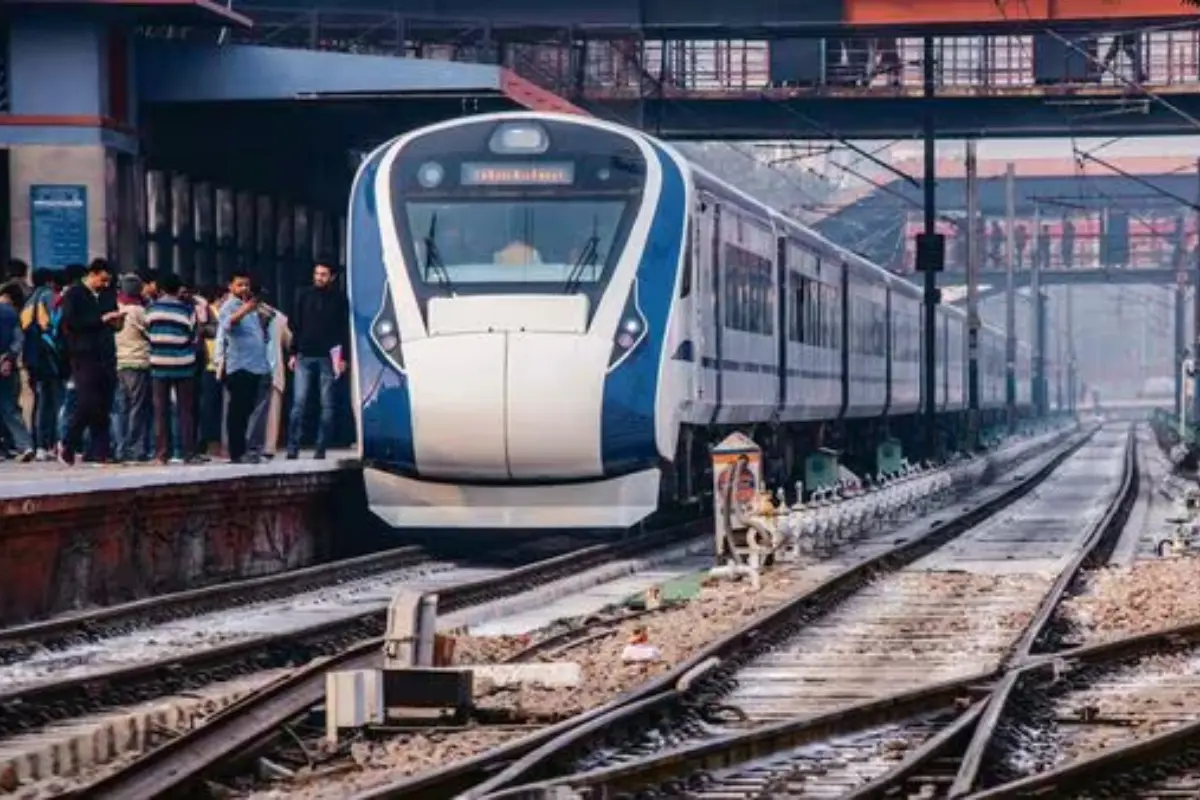
The transformation of Indian Railways must begin by balancing equity with economics. Importantly, infrastructure ownership must remain sovereign while reform measures must be introduced to target service delivery and commercial viability.
Budget 2026: As the Union Budget 2026 approaches, Indian Railways commands the centrestage in the growth story of India. Railways drive mass connectivity, economic cohesion and freight logistics. It seamlessly anchors the export ambitions, urban expansion and sustainability goals of the country.
Yet despite unprecedented capital infusions, performance lags. Execution delays multiply, operating ratios climb stubbornly high, private capital stays tentative and freight market share erodes against road and other forms of transportation. These persistent shortfalls arise not just from funding gaps but also from structural rigidities that have long undermined competitiveness and accountability.
Budget 2026 presents a pivotal moment. This is not only to inject more resources but to recalibrate Indian Railways for inclusive prosperity, freight dominance, operational excellence, pricing clarity and ironclad security.
Budget 2026-Inclusive Growth
Railways need to evolve significantly from an urban-centric carrier to a true inclusion engine. Presently, tier-2/3 cities and rural feel and remain underserved. Furthermore, passenger services on branch lines tend to suffer from chronic underinvestment while freight access remains elusive for Micro, Small and Medium Enterprises (MSMEs).
Budget 2026 may prioritize regional equity corridors. Targeted capex for 50-75 new Amrit Bharat-style stations in aspirational districts, multi-modal logistics parks near tier-2 industrial clusters and viability gap funding for socially vital uneconomic lines could be a good start to the financial year.
Better Security
There is no denying the fact that safety remains the biggest unresolved imperative of Railways for too long now. Despite track renewals and Kavach deployment, security incidents expose a series of systemic vulnerabilities such as ageing assets, fragmented oversight and overburdened staff.
DON'T MISS
Budget 2026 may bring institutional reforms and an Independent Rail Safety Authority with statutory powers over forensic incident analysis, crew rostering and anti-collision systems. Mandatory AI-driven predictive maintenance, phased rollout of Kavach 4.0 across 10,000 km Golden Hour routes and zero-tolerance certification for all locomotives may become realities.
Streamlined Freight
For long, freight underperformance of Indian Railways has drained its economic vitality. Presently, modal share languishes below 30 percent as road transport captures the biggest volume via flexibility. Small and medium-sized enterprises face opaque booking processes, private operators hesitate and dedicated freight corridors operate under capacity.
Budget 2026 may bring a freight platform authority. Other possibilities may include standarized slot contracts, transparent path auctions on operational Dedicated Freight Corridors (DFCs) and digital integration with Gati Shakti to ensure seamless SME access.
Railways could possibly focus more on real-time Estimated Time of Arrivals (ETAs), exceptional and reliable transit speeds and dynamic pricing that can claw back market share of Indian Railways.
End to Cross-Subsidy Confusion
Undeniably, cross-subsidies tend to distort every decision. Politically-capped passenger fares inflict massive losses, internal accruals stagnate and freight rates compensate via inflated tariffs despite ₹2.5 lakh crore capex.
The budget could focus on legislating explicit subsidy architecture. Direct budgetary support for concessional travel replaces hidden distortions to free freight P&L for competitive pricing; it may be encouraged.
Efficiency in Overdrive
Chronic execution failures betray ambition. L1 procurement breeds corner-cutting, project launch sans clearance and department silos tend to fragment delivery. The Budget 2026 could mandate pre-tender readiness certification – land acquisition, statutory approvals and Detailed Project Report (DPR) validation before bid invitation.
All in all, Budget 2026 requires no radical departures but decisive signals that structural reform eclipses incremental allocation. Inclusive growth, bulletproof security, freight resurgence, pricing sanity and efficiency dominance could form Railways’ new mandate – guiding India’s next growth decade.