


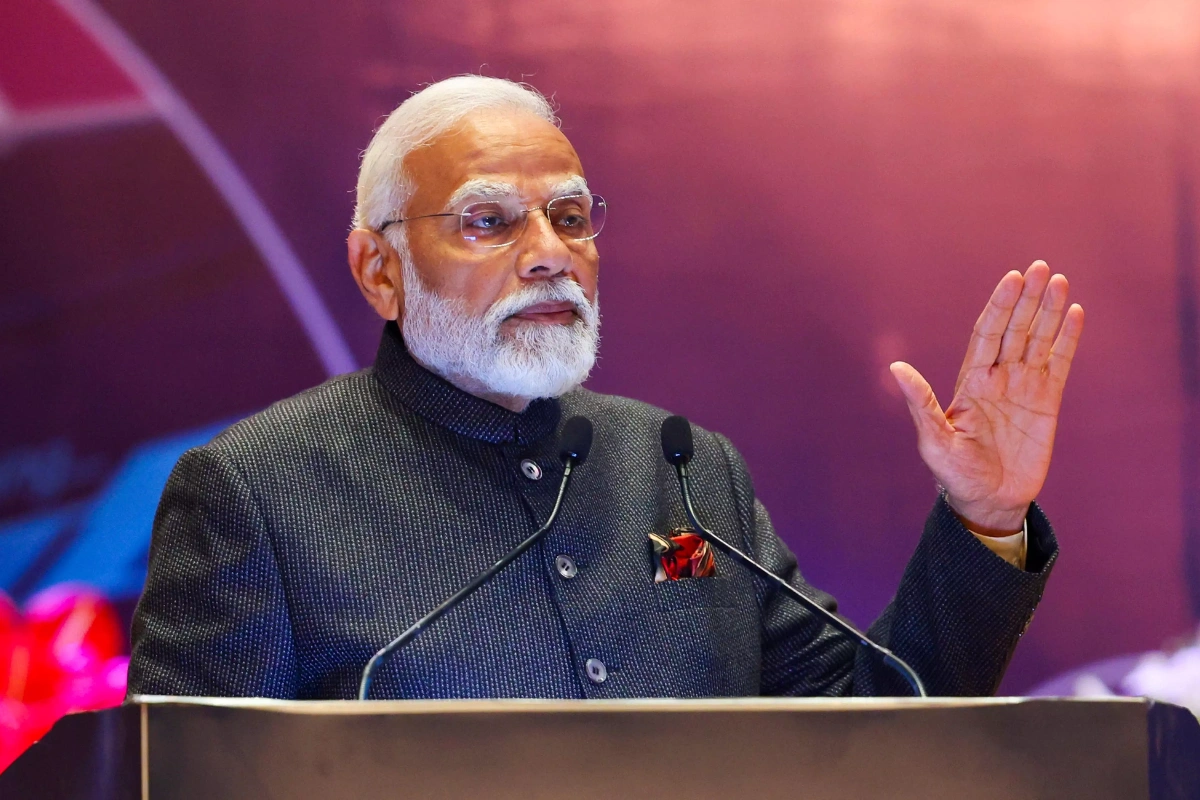
Vande Mataram: PM Narendra Modi, while addressing the Vande Mataram discussion in Lok Sabha, recalled how the national song of India became a powerful call for unity, patriotism, and togetherness when Britishers started divide and rule.
Modi said it feels sad to see that Indians have been unknowingly doing harm by not embracing Vande Mataram. He said Mahatma Gandhi, the father of India, used to view Vande Mataram as the national song of the country.
DON'T MISS
Modi added that India’s first PM Jawahar Lal Nehru never condemned the negative comments of the Indian Muslim League. Modi said Nehru tried to find faults with Vande Mataram instead of correcting the Indian Muslim League leaders because he felt threatened by Vande Mataram.
The Significance of Vande Mataram
Composed by Bankim Chandra Chatterjee in the 19th century, Vande Mataram became the emotional heartbeat of India’s independence struggle. In the fractured atmosphere before independence, Vande Mataram served as a powerful call transcending linguistic, religious, and regional divides.
Its stirring verses evoked deep love and admiration for the motherland, uniting people from diverse backgrounds under a common banner of pride and freedom. Modi said chanting Vande Mataram became an act of solidarity and defiance when many voices in the country risked being drowned by discord.
Complex legacy of Vande Mataram
Over years, the legacy of Vande Mataram has been marred by controversies. Many question whether the song fully represented India’s pluralistic spirit, pointing out concerns about the cultural and religious imagery in its verses.
In today’s India, Modi’s remembrance of Vande Mataram reaffirms the need for continued national unity. The Indian PM said Congress disappointed India and the countrymen by not giving Vande Mataram its “true due.”
Modi added Congress compromised heavily on many frontiers, which sowed the seeds of partition and post-partition hatred between Hindus and Muslims. The Indian PM said Congress should have acted strong and negated all negative aspects and the India today would have been completely different.