

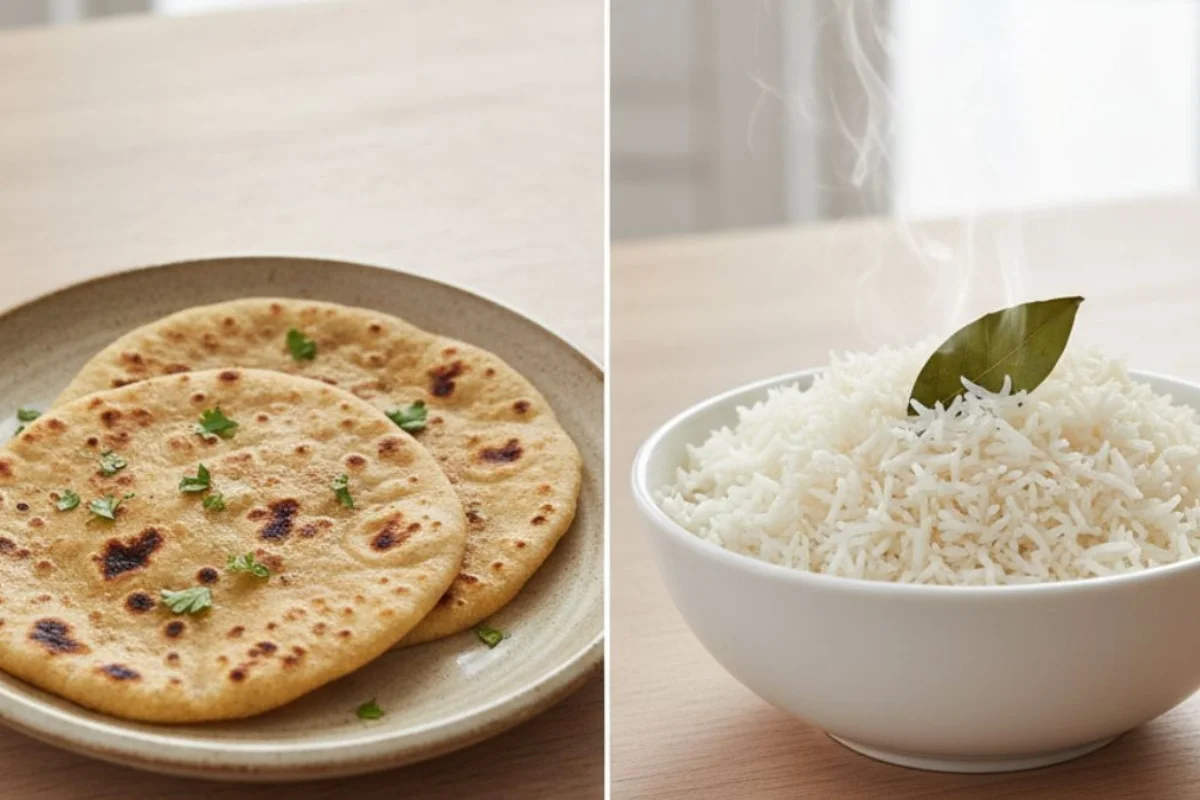
The classic dilemma of roti vs rice for dinner is one that many Indian households face regularly. While some prefer roti for its lighter, healthier appeal, others find rice more satisfying and fulfilling as a dinner choice. Both have their benefits, but which one truly works better for your body and lifestyle?
In this article, we explore expert opinions on the nutritional differences, benefits, and potential drawbacks of each. Read on to find out which option should make it to your dinner table tonight!
Nutritional Differences Between Roti and Rice Explained Clearly
The debate between roti vs rice remains a common discussion in many Indian households. A recent Instagram post from the fitness page Diet Dynamo provides a detailed comparison of these two staple foods. According to the chart, 100 grams of roti contains approximately 230 calories, 46 grams of carbohydrates, 8 grams of protein, 3 grams of fat, and 8 grams of dietary fiber.
On the other hand, 100 grams of cooked rice contains about 130 calories, 28 grams of carbohydrates, 2 grams of protein, 0.3 grams of fat, and 0.5 grams of fiber. Experts suggest that roti, being higher in protein and fiber, helps you feel fuller for longer, digests slowly, and prevents nighttime hunger. It also provides essential micronutrients found in whole wheat, such as iron, B vitamins, and various minerals.
DON'T MISS
In contrast, rice is lighter and easier to digest, making it a better option for those who feel bloated or heavy after eating roti. Its simpler carbohydrate structure allows for quicker digestion, reducing the chances of late-night stomach discomfort.
Choosing Roti vs Rice for a Light and Healthy Dinner
If you prefer a light and easily digestible dinner option, then you should choose Rice. Rice will have a lower fibre content, which may help to alleviate digestive stress from acidity, GERD, IBS, or weak digestion.
However, if you are looking for satiety, superior macronutritional content, or a stable blood sugar throughout the night, then Roti is the better choice. It’s higher protein and fibre content regulates hunger and prevents late-night snacking.
Nutritionists recommend practising portion control and consuming 1-2 pieces of Roti or one bowl of Rice cooked with Daal, Sabzi, and Protein for best results.
Best Choice for Diabetics, Fitness Goals, and Lifestyle
In the roti vs rice debate, roti is generally the best choice for diabetics. This is simply because it is a higher fibre food, which helps with a slower release of glucose. However, diabetics may also consume rice (small soft portions) in combination with protein and vegetables without any issues. But for those who go to bed later or feel full after eating, rice at night will help reduce digestion and help you get a better night’s rest.
In conclusion, the roti vs rice debate is still inconclusive. Both roti and rice can be included in a healthy dinner. What matters is how well you digest it.
Disclaimer: This content, including advice, provides general information only. It is not a substitute for a qualified medical opinion in any way. The methods and claims mentioned in this article should be considered as suggestions only; DNP India neither confirms nor denies them. Always consult a doctor before following any such suggestions/treatments/medications/diets.