

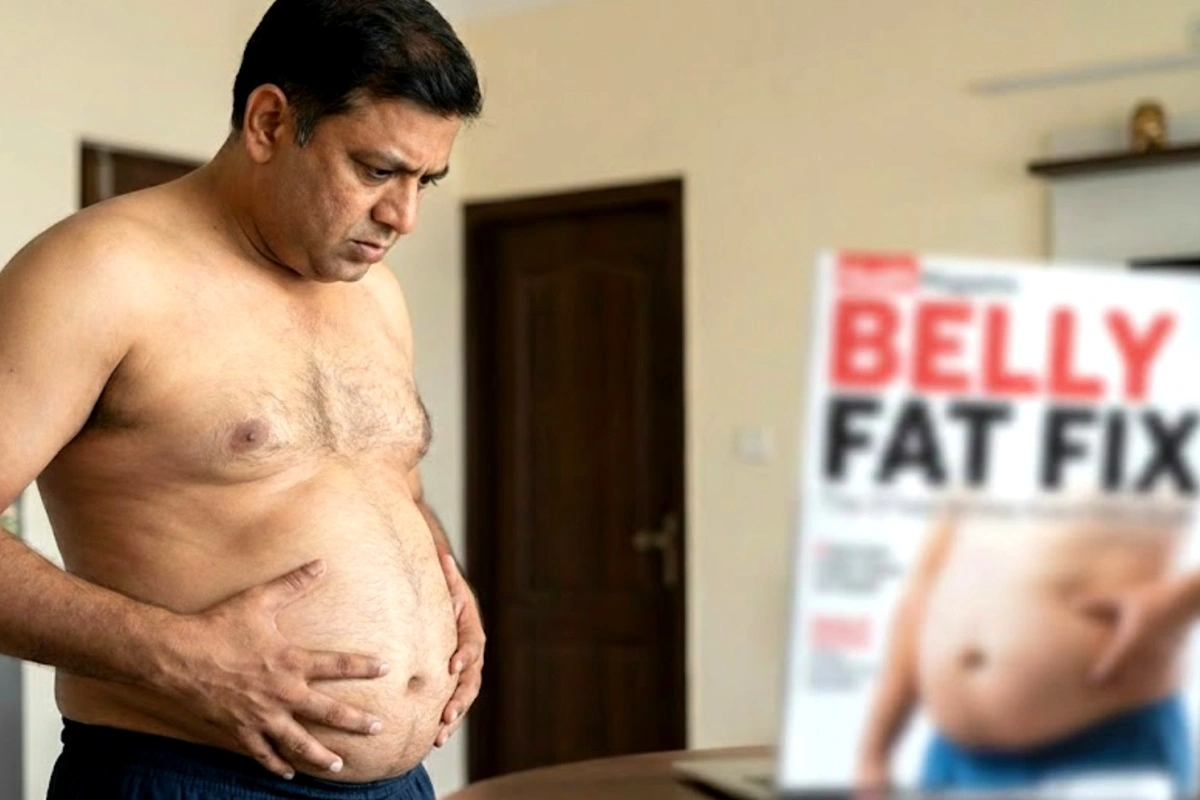
Are you frustrated that no matter how much you exercise or diet, your belly just won’t shrink? Sit-ups, running, strict diets – nothing seems to work. Many people face the same problem, but what most don’t realise is that not all belly fat is the same. Some fat is just under the skin, while the hidden kind can silently harm your health.
On his YouTube channel Healthy Hamesha, Delhi-based Dr Salim Zaidi recently explained why stubborn belly fat persists and what you can do to reduce it in just two weeks.
Understanding Belly Fat And Its Hidden Dangers
According to Dr Zaidi, belly fat comes in two types. Subcutaneous fat sits right under the skin and is mostly a cosmetic issue. On the other hand, visceral fat surrounds vital organs like the liver, pancreas, intestines and kidneys. This deep fat behaves like an active endocrine organ, releasing hormones and inflammatory chemicals that can damage your body over time.
Visceral fat increases chronic inflammation, disturbs insulin metabolism, contributes to artery plaque, raises blood pressure and even raises the risk of blood clots. It is directly linked to serious health problems like heart attacks, strokes, type 2 diabetes, fatty liver, kidney disease and erectile dysfunction.
Even thin people can have visceral fat, a condition known as TOFI (Thin Outside, Fat Inside). This hidden fat releases a hormone called resistin that disrupts insulin function, causing a dangerous cycle where fat becomes extremely stubborn and regular exercise alone does not work.
Belly Fat Reduction In Just 2 Weeks
Dr Zaidi explains that visceral fat is controlled more by hormones like insulin and cortisol than by calories or abdominal exercises. Crunches, planks or sit-ups may strengthen muscles, but will not reduce deep belly fat.
DON'T MISS
Diet Changes
To fight visceral fat, reduce high-carb and high-glycaemic foods for two weeks. Avoid white rice, maida, bread, sweet tea, biscuits, bakery items, and sugary fruits like bananas, mangoes and grapes. Instead, eat lentils (moong dal, masoor dal, chickpeas), green vegetables, bottle gourd, beans, cauliflower, paneer, eggs, fish, lean meats and nuts. Swap white rice for millets or brown rice and limit chapatis while adding more vegetables.
Intermittent Fasting
Follow a 16:8 intermittent fasting schedule for 14 days. Eat between 11 a.m. and 7 p.m., and fast for the remaining 16 hours, consuming only water, black coffee, or plain tea. This lowers insulin, shifts the body into fat-burning mode, reduces inflammation, and improves digestion.
Metabolic Training & HIIT
Short bursts of high-intensity activity melt visceral fat faster. Beginners can alternate 30 seconds of fast jogging, 30 seconds of slow pace, 20 quick squats, 20-second rest and stair climbing for 15 seconds. Repeat four cycles. Light variations like brisk walking, yoga poses (Surya Namaskar, Kapalbhati, Naukasana, Bhujangasana) and cycling also work.
Gut Health, Stress And Temperature Therapy
Improving gut bacteria helps reduce bloating and belly fat. Include fermented foods like curd, buttermilk, kanji, dosa or idli batter. Manage stress with pranayama, phone-free evening walks, devotional reading, or soft music to control cortisol. Cold and hot therapies (like ending showers with cold water or using ice packs) can improve metabolism and fat-burning.
Following this simple 14-day programme combining diet, fasting, exercise, gut health and stress management can start melting visceral fat quickly. Dr Zaidi emphasises tracking progress and being consistent.