


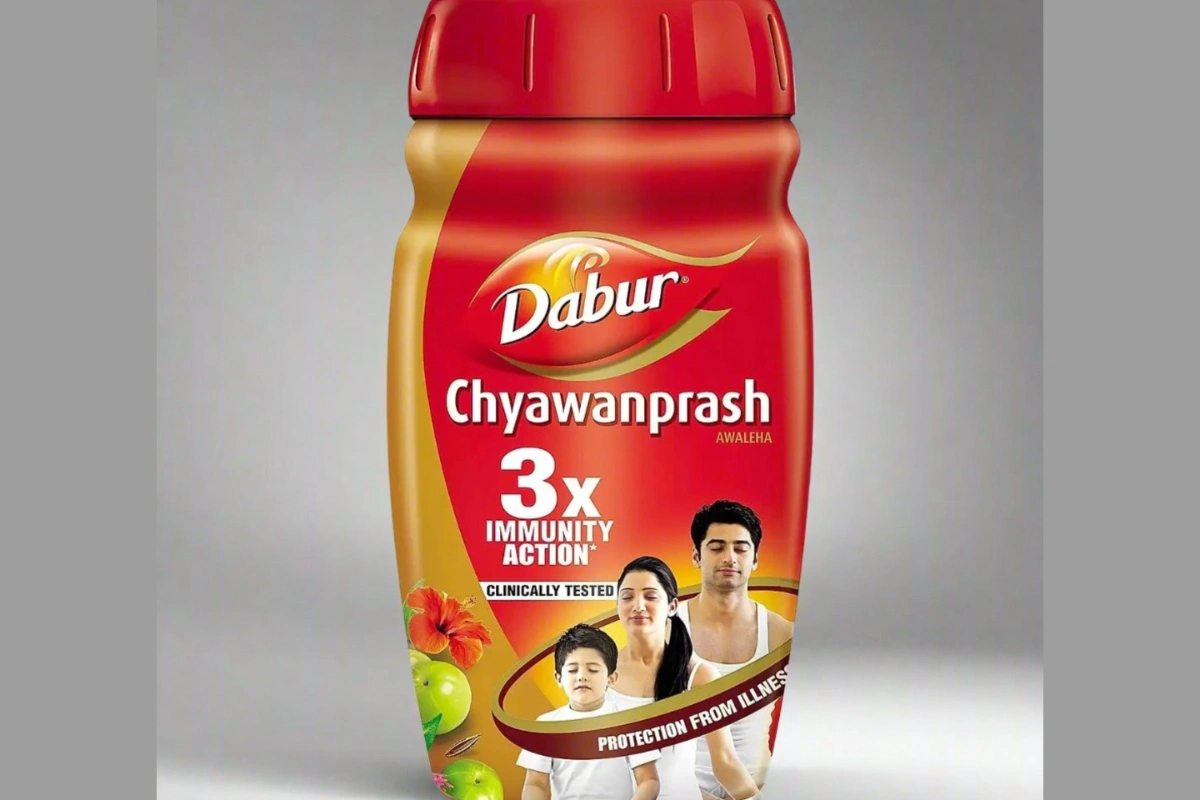
For generations, Indian households have trusted Ayurveda for good health. Dabur Chyawanprash, one of the most popular Ayurvedic products, has been considered a daily health booster. But is it really as healthy as it claims?
A recent revelation by health expert Dr Prashant Desai from Stanford School of Medicine has raised some serious concerns that every consumer should know about.
How Much Sugar Is Really In Dabur Chyawanprash?
Dr Desai recently shared on Instagram that reading the Dabur Chyawanprash label carefully is an eye-opener. In 100 grams of this Ayurvedic jam, sugar (listed as Sharkara) weighs 59.5 grams, while honey contributes just 4.7 grams. That means nearly 65% of the product is sugar.
To put this in perspective, Coca-Cola contains 10.6 grams of sugar per 100 ml, Ferrero Rocher has 40 grams per 100 grams and even Haldiram’s Gulab Jamun contains around 52 grams of sugar per 100 grams. In other words, Dabur Chyawanprash actually has more sugar than a typical Gulab Jamun.
What makes this more concerning is that sugar is not highlighted on the label. It’s buried under a long list of Ayurvedic herbs, using the Sanskrit term Sharkara. Many consumers might not notice it, assuming that the herbs are the main ingredients. Dr Desai warns, “All the herbs combined weigh less than the sugar alone.”
What You Need to Know Before Buying
The product also markets itself as having “3× immunity action,” but this claim is limited to common infections, not serious disease prevention. Consumers often assume such labels mean complete immunity support, which is misleading.
Dr Desai also raised questions for FSSAI, India’s food regulator, asking why brands are allowed to hide sugar behind complex terminology instead of listing it clearly as the primary ingredient. He emphasises, “You are the CEO of your and your family’s health. Always read the ingredient list of every HEALTH product you buy.”
In short, while Dabur Chyawanprash may provide some Ayurvedic benefits, the high sugar content is a serious concern. If you’re consuming it daily, thinking it’s purely medicinal, it’s time to read the label carefully and rethink your health choices.
Disclaimer: This content is for general information only and not a substitute for professional medical advice. DNP India neither confirms nor denies the claims. Always consult a doctor before following any suggestions, treatments or diets.