

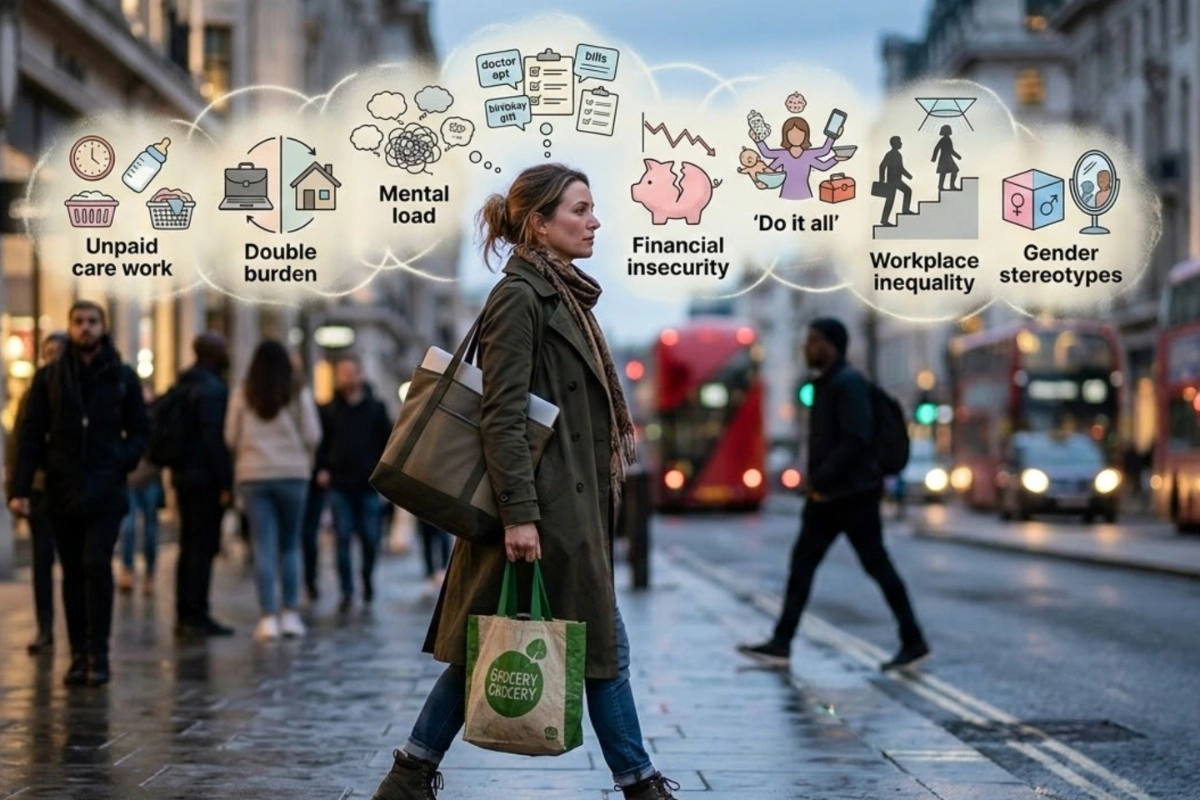
International Women’s Day 2026: Every year, International Women’s Day celebrates women’s achievements in society, careers, and leadership. But behind this progress, many women still face pressures that often go unnoticed.
These challenges are rarely discussed because they are seen as “normal” parts of life. However, global research shows that they affect women’s careers, finances, health and mental well-being. On International Women’s Day 2026, it is important to talk about these hidden struggles.
Here are seven silent pressures modern women continue to face today, supported by real data.
International Women’s Day 2026: 7 Silent Pressures On Modern Women
1. The invisible burden of unpaid work
One of the biggest silent pressures is unpaid household and care work. Around the world, women perform 76.2% of all unpaid care work, including cooking, childcare, and caring for elderly family members.
Research also shows that women spend more than four hours every day on unpaid work. This is far higher than the time spent by men. Because of this invisible labour, many women find it harder to pursue full-time jobs or career growth.
2. The double shift of work and home
Today, many women have full-time jobs. At the same time, they still manage most household responsibilities. Experts call this the double burden. Globally, women spend about 2.8 more hours each day on unpaid care and domestic work than men.
This daily balancing act often leads to fatigue, stress and less time for personal well-being.
3. The mental load no one sees
Women often carry the mental load of managing family life. This includes planning schedules, remembering appointments, organising childcare, and handling emotional responsibilities.
DON'T MISS
Studies suggest women feel more responsible for organising household activities. As a result, they often experience higher emotional fatigue. Over time, this hidden pressure can increase stress and affect work-life balance.
4. Financial insecurity and career breaks
Many women face financial pressure because of the gender pay gap and career breaks for caregiving. Globally, women still have fewer legal and economic protections than men. These barriers can limit their financial independence. Career breaks for maternity or family care can also reduce long-term savings and retirement benefits.
5. Constant expectations to do it all
Modern women are often expected to succeed in every area of life – career, family, relationships and health. This creates unrealistic expectations. Many women feel they must perform well at work while also being the main caregiver at home. Such pressure can lead to stress and burnout.
6. Persistent workplace inequality
Workplace equality remains a challenge in many industries. Women still face barriers when it comes to promotions, leadership roles, and fair pay. Some surveys even show that women’s confidence in workplace progress on gender equality has declined in recent years. This can create frustration and limit career opportunities.
7. Social expectations and gender stereotypes
Another silent pressure comes from social expectations about how women should behave. Some traditional views about gender roles still exist. For example, certain surveys show that some people still believe men should have the final say in household decisions. These stereotypes can affect women’s confidence and limit opportunities.
International Women’s Day 2026 is not only about celebrating achievements. It is also about recognising the hidden challenges women still face. From unpaid work and mental load to financial pressure and workplace inequality, these silent struggles show that gender equality still has a long way to go. Talking about these issues is the first step toward change.


