


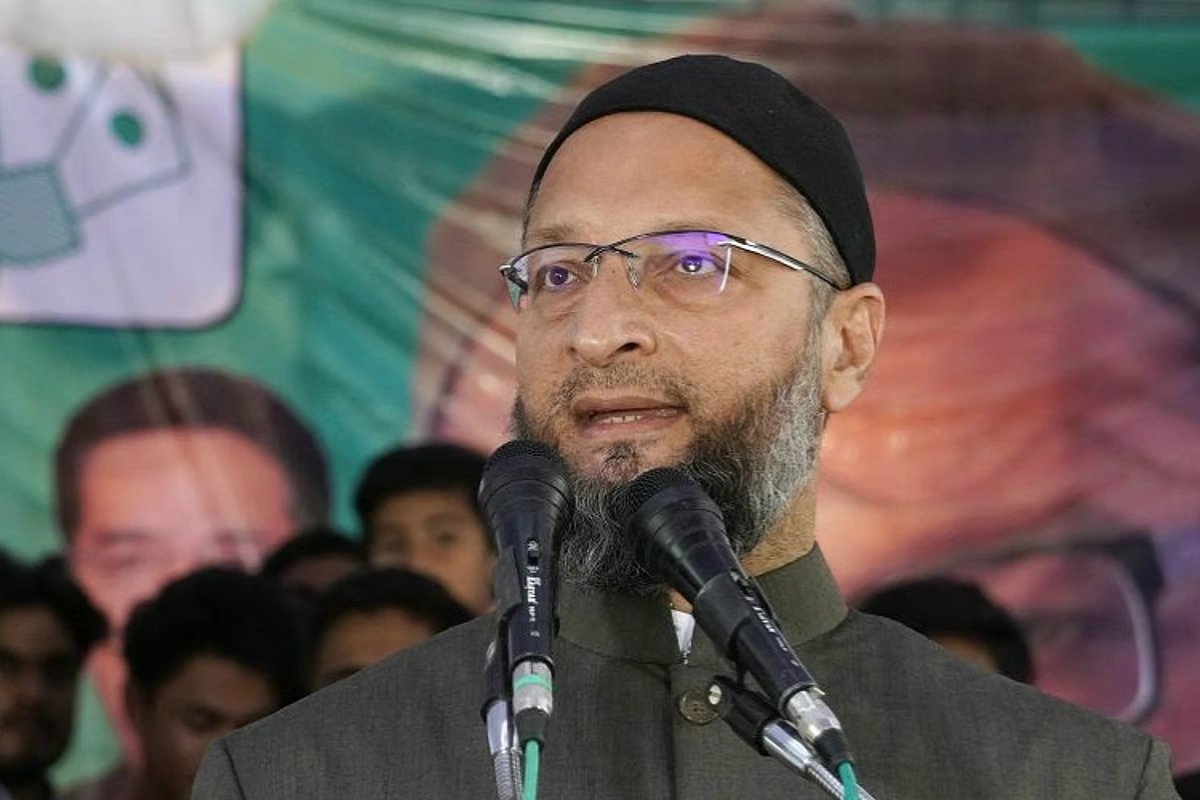
Asaduddin Owaisi: Asaduddin Owaisi, the Hyderabad MP and AIMIM boss, has once more gotten a lot of attention for saying that it should not be required to sing Vande Mataram. Owaisi told reporters, “You can jail me, but I won’t say it if it goes against my faith.”
This comes in the middle of arguments that have been going on since Jamiat Ulama-i-Hind and other Muslim leaders made comments about how loving India does not mean you have to do things that are against your religion.
What is Vande Mataram? Disagreement
When Prime Minister Narendra Modi spoke to the Lok Sabha about Vande Mataram’s 150th anniversary, he brought the debate back to the fore by asking why Muslim leaders’ complaints in the 1930s and 1940s limited the anthem’s recitation.
Owaisi’s comments are similar to those of many Muslim scholars: loving your country and having religious freedom can go hand in hand, but worshipping the home or saying verses that compare it to a god goes against Islamic principles.
Take a strong stand on religious freedom
Owaisi said again that Vande Mataram is a song of national pride but has lines that Muslims can’t say without giving up Tauheed (monotheism).
He pointed out constitutional protections under Articles 19 and 25 and stressed that forcing people to say religiously offensive things goes against their right to conscience and speech.
Responses from the Public and Politicians
There was a strong reaction on social media, and within hours, terms like #RespectFaith and #VandeMataramDebate were trending.
People who agreed with him liked his bravery, but people who disagreed with him called his comment “anti-national” or “regressive.”
Political groups don’t agree on this: the BJP said it hurt national unity, but Congress and other non-religious groups wanted a fair method that honoured both love of country and religious freedom.
Importance Before 2026
With India’s elections coming up and the famous song “Owaisi” celebrating its 150th anniversary, Owaisi’s strong position brings to light the ongoing conflict between the country’s symbols, religious beliefs, and personal rights.
It brings up an important question for both politicians and citizens: Is it possible to be patriotic without going against your own religion?