

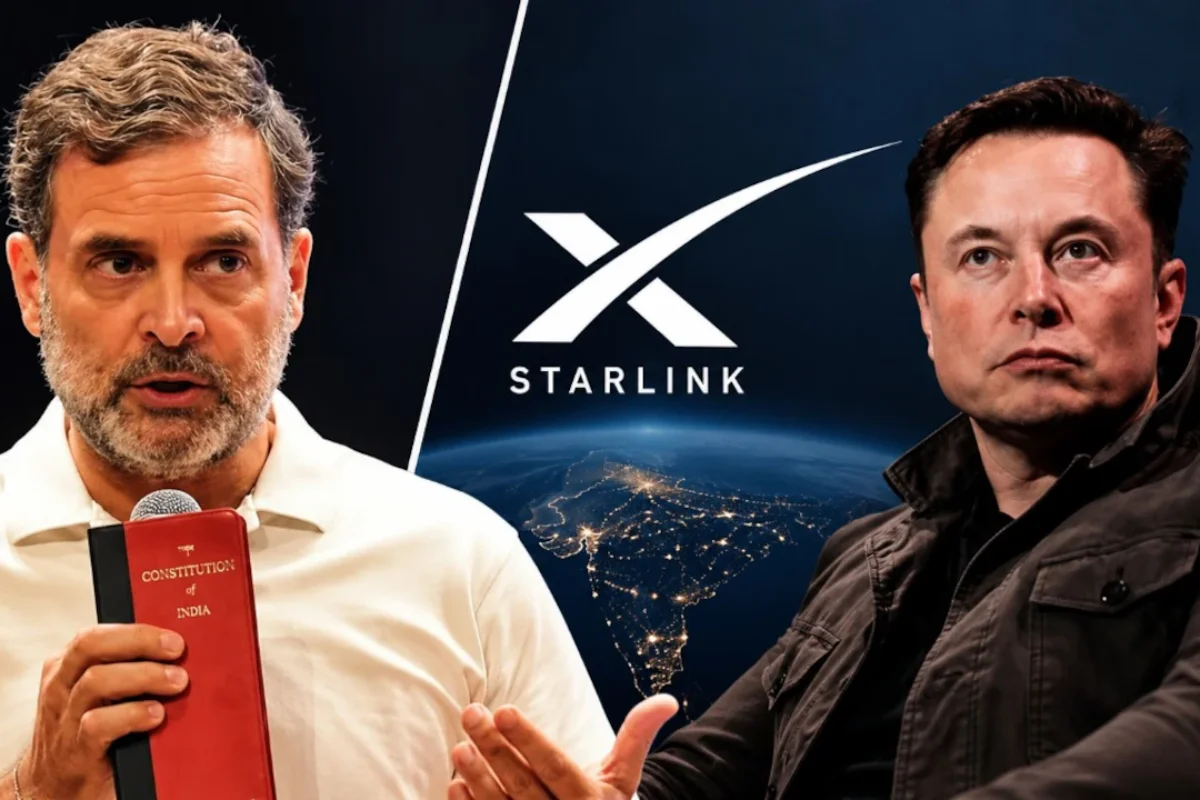
India’s satellite internet showdown turns political. Elon Musk blames entrenched business interests for delays in opening up Starlink to India. Now Congress’s Rahul Gandhi has had his say on Musk’s comments, escalating the conflict over competition, regulatory clearances and the role of entrenched industrial conglomerates in India’s telecom sector.
Musk Questions Who Controls India’s Internet Market
On October 7, 2026, Musk denounced Starlink’s delay to launching commercially in India, claiming unnamed business interests were trying to block market competition. “Delay in Starlink launch in India is the equivalent of banning the internet by the government,” he said. Musk went a step further, questioning if the real boss of India was Reliance Industries chairman Mukesh Ambani, thrusting the country’s fierce telecom rivalry into the spotlight. Musk did not provide any proof that any one of the targeted companies had intentionally shut down access to Starlink. The fight highlights a growing rivalry between telecom incumbents and satellite internet providers seeking a slice of India’s growing digital economy.
Rahul Gandhi Brings Politics to the Table
Leader of the Opposition in the Lok Sabha, Rahul Gandhi hit out at Musk, saying “wait till you discover the other guy.” While Gandhi made no mention of anyone in his post, media reports took his comment as a thinly veiled allusion to industrialist Gautam Adani. Musk later responded to the tweet by thanking Gandhi and lamenting the situation. The exchange has extended the debate past telecoms regulation, bringing the debate to the political level around issues of corporate power, market competition, and access to the infrastructure of the internet. Neither the social media exchange, nor the leak, proves alone that any industrial lobby group had an impact on the government.
DON'T MISS
Why Starlink Is Still Not Launching in India?
Starlink has met several regulatory requirements but still needs to obtain other clearances, such as spectrum and security, before it can finally go commercial. The company is not alone. Bharti backed Eutelsat OneWeb and Jio’s satellite broadband platform with SES are among the other satellite broadband players who are also dealing with the regulator. There are many reasons behind the delay, such as the way satellite spectrum ought to be allocated, how services should cater to national security needs, and how satellite systems should fit into India’s telecom infrastructure.
Government Rejects Allegations of Unfair Treatment
The Indian Ministry of Communications has said the regulatory process is impartial and non-discriminatory and that operators in question are “generally at similar stage in the approval process and should be required to complete the security assessment”. The answer is in direct opposition to Musk’s claim that powerful business interests are blocking entry of Starlink into India. Thus, there are two separate issues in dispute: one of the consistency of the approval process, and one of whether the other regulatory procedures are preventing commercial competition.
What the “Satellite Internet” Fight Actually Means for India
India is an important potential market for satellite broadband, especially in remote and low-income communities where other forms of connectivity are hard to reach. Such a service at launch may provide another choice of connectivity for homes, businesses, and institutions. Yet the actual launch date of Starlink is still unknown until the regulatory and security measures are in place.