


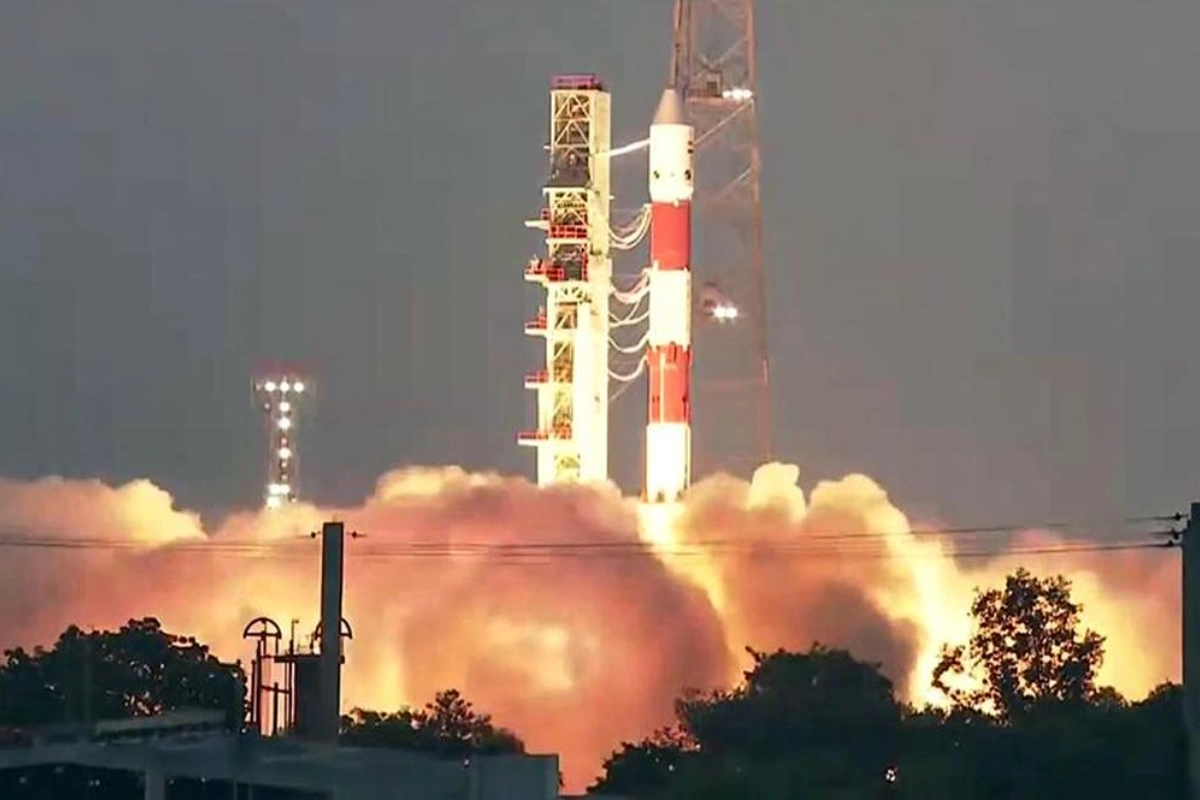
ISRO: The Indian Space Research Organization (ISRO) has launched the Polar Satellite Launch Vehicle (PSLV)-C62, the 9th dedicated commercial mission undertaken by NewSpace India Limited (NSIL).
The workhorse rocket would deploy 16 satellites into the Sun-Synchronous Polar Orbit, demonstrating the prowess of India in the small-satellite launch market.
PSLV-C62 is packed with cutting-edge tech like on-orbit refuelling, hyperspectral imaging, the world’s lightest telescope and an orbital artificial intelligence lab.
DON'T MISS
ISRO-Hyperspectral Imaging
The PSLV-C62 includes satellites that are equipped with out-of-the-box hyperspectral imaging tech. This can help India with precision agriculture by assisting farmers of the country can monitor crop health, pest infestations and soil moisture in real-time. This would help boost farm yields amid climate changes. Moreover, it would also be beneficial to identify mineral deposits, aiding resource exploitation in mineral-rich states such as Rajasthan and Odisha.
On-Orbit Refuelling
Bengaluru startup OrbitAID Aerospace’s AayulSAT debuts the first on-orbit refuelling demonstrator of the country. Typically, satellites die when their fuel runs out. Now, it would be easier to refuel them in space, splashing launch costs and debris. This would help India extend the life of critical assets such as navigation as well as communication birds, saving millions in replacements.
MOI-1: World’s First Space Cybercafe and AI Lab
Hyderabad startups TakeMe2Space and Eon Space Labs bring MOI-1, India’s inaugural orbital AI-image laboratory. It would allow anyone to rent processor time for as low as just $2 (Rs 180) per minute. This would help slash barriers to space data analysis, which would eliminate the requirement for expensive ground stations.
MIRA: Featherweight Telescope
Nestled in MOI-1 is MIRA, Eon Space Labs‘ 502-gram fused silica telescope that is the world’s lightest telescope. It is integrated with the artificial intelligence lab to capture and analyze images seamlessly. This miniaturization helps cut launch costs, enabling a series of tiny observatories for astronomy and surveillance.


 has launched the Polar Satellite Launch Vehicle (PSLV)-C62.)