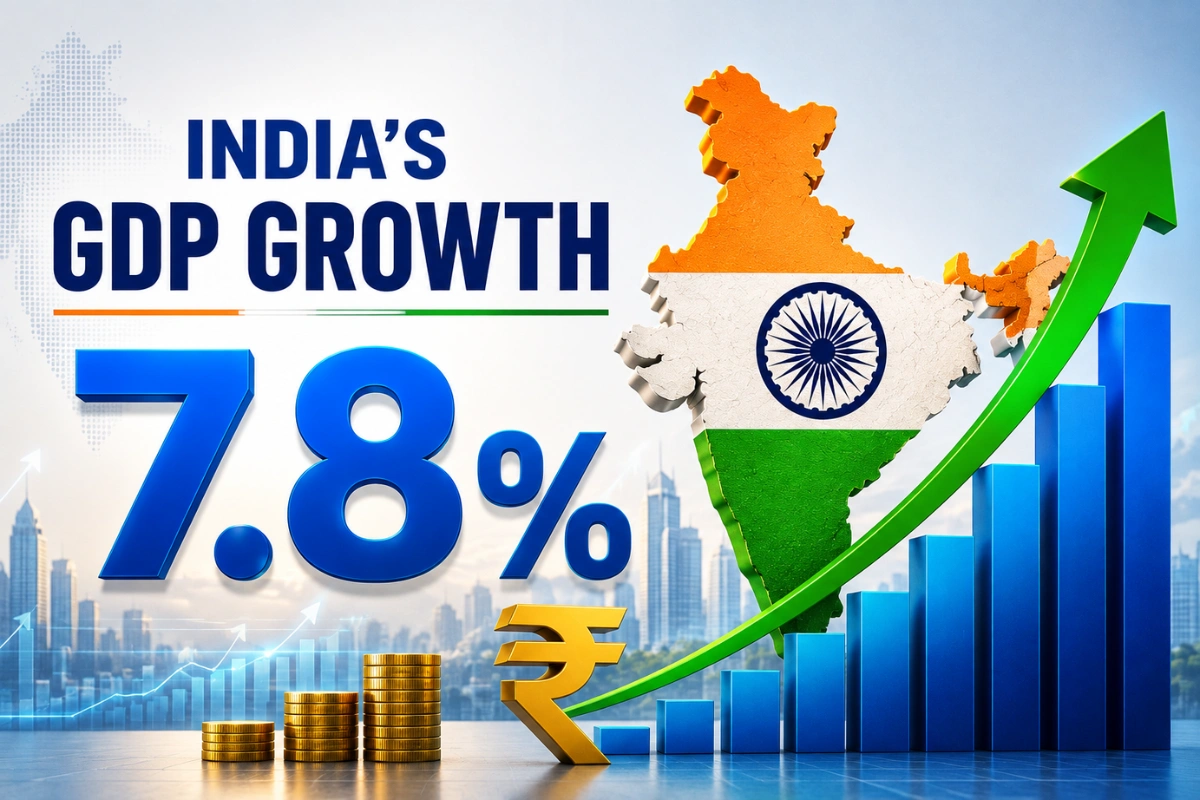
GDP Growth:India’s Ministry of Statistics and Programme Implementation announced 7.8% real GDP growth for the June quarter, comfortably beating the Reserve Bank of India’s 7% forecast. On paper, it looked like a clear win for the economy. But within hours, economists were split down the middle over whether the figure told the full story.
DON'T MISS
Where the “Statistical Gymnastics” Charge Comes From
The controversy traces back to a change in the GDP base year, which pushed last year’s nominal GDP figure down from ₹86.1 lakh crore to ₹80 lakh crore. Former finance secretary Subhash Chandra Garg argued that comparing this year’s number against the old, unrevised base actually shows growth of just 2.6%, not 7.8%. Government sources rejected this, calling it a comparison of two incompatible data series.
Politics Enters the Debate
Congress leaders were quick to weigh in. Jairam Ramesh called the numbers a “Greatly Distorted Picture,” pointing to weak private investment and sluggish consumer confidence. Sam Pitroda questioned whether the growth was reaching ordinary Indians at all.
The Government’s Defence
Officials, including economic advisor Sanjeev Sanyal, maintain the methodology change was overdue and aligned with IMF guidance. SBI’s Ecowrap report went further, calling the backlash an “unnecessary controversy” born from misreading revised data.
Investment Versus Consumption Gap
Beyond the base year dispute, economists are also flagging an imbalance within the growth number itself. The pace of capital spending is running well ahead of household spending, raising questions about how broad-based the recovery really is.
What the Data Actually Shows
Investment grew faster than consumption, with capital formation rising 11.9% against 7.1% consumption growth, hinting at an economy driven more by corporate spending than household demand. Whether that counts as pure data or statistical gymnastics may depend on who is reading the numbers.