

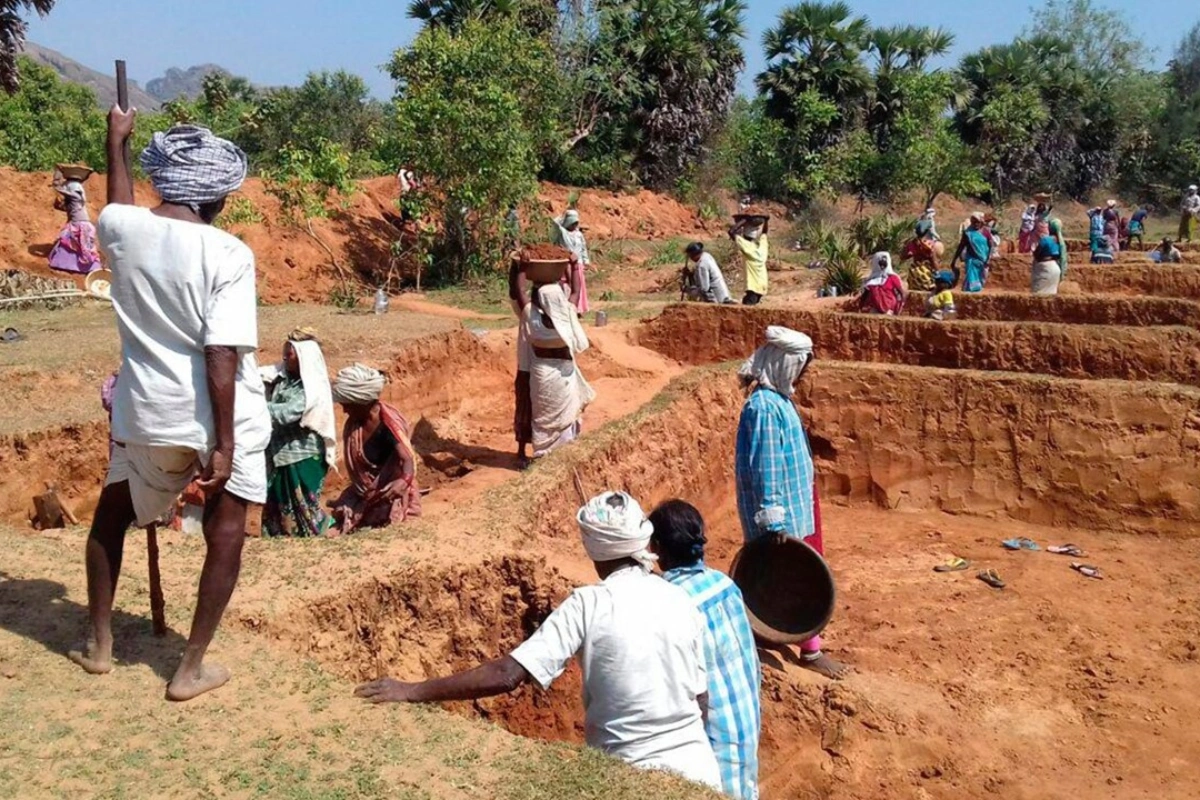
Rural India’s oldest job guarantee scheme has a new identity, and a very different operating system. The Government of India has officially introduced the Viksit Bharat Guarantee for Rozgar and Ajeevika Mission Gramin Act, 2025, popularly known as the VB-G RAM G scheme, as a modern replacement for MGNREGA, receiving Presidential assent in December 2025 and rolling out nationwide from 1 July 2026.
More Work Days, New Rules
The new Act guarantees 125 days of wage employment per rural household, up from the existing 100 days, for adult members willing to undertake unskilled manual work. A notable shift in funding structure also comes with it. While MGNREGA was demand-driven, with the Union government bound to allocate more money if demand for work existed, under the new scheme the Centre will determine state-wise normative allocation for each financial year.
DON'T MISS
Why the Government Made the Switch
The government acknowledged that several reforms had already been made under MGNREGA, including higher women’s participation and near-universal electronic payments, but investigations continued to flag issues including non-existent works, misuse of funds and large-scale misappropriation, with misappropriation across states amounting to Rs 193.67 crore in 2024-25 alone. Officials said this scale of the problem called for a new statutory framework rather than incremental fixes.
The Technology Layer
The new framework includes biometric attendance, geo-tagging of worksites, GPS-based monitoring, AI-enabled fraud detection systems, real-time dashboards, digital wage payments and mandatory social audits, alongside weekly public disclosures.
Village-level planning is also being restructured, with a new decentralised model through Viksit Gram Panchayat Plans, integrated with the PM Gati Shakti National Master Plan and the Viksit Bharat National Rural Infrastructure Stack.
Where the Debate Stands
Not everyone is convinced the tech layer solves the scheme’s real problems. Some observers note that beyond broad mentions of “technology-enabled” planning, there is not sufficient indication of exactly where AI will be deployed, while opposition voices have argued the shift from a demand-driven, rights-based guarantee to a centrally-controlled, normative-allocation model could reduce workers’ choice and bargaining power, even as the government frames it as a long-overdue modernisation on the road to Viksit Bharat 2047.