


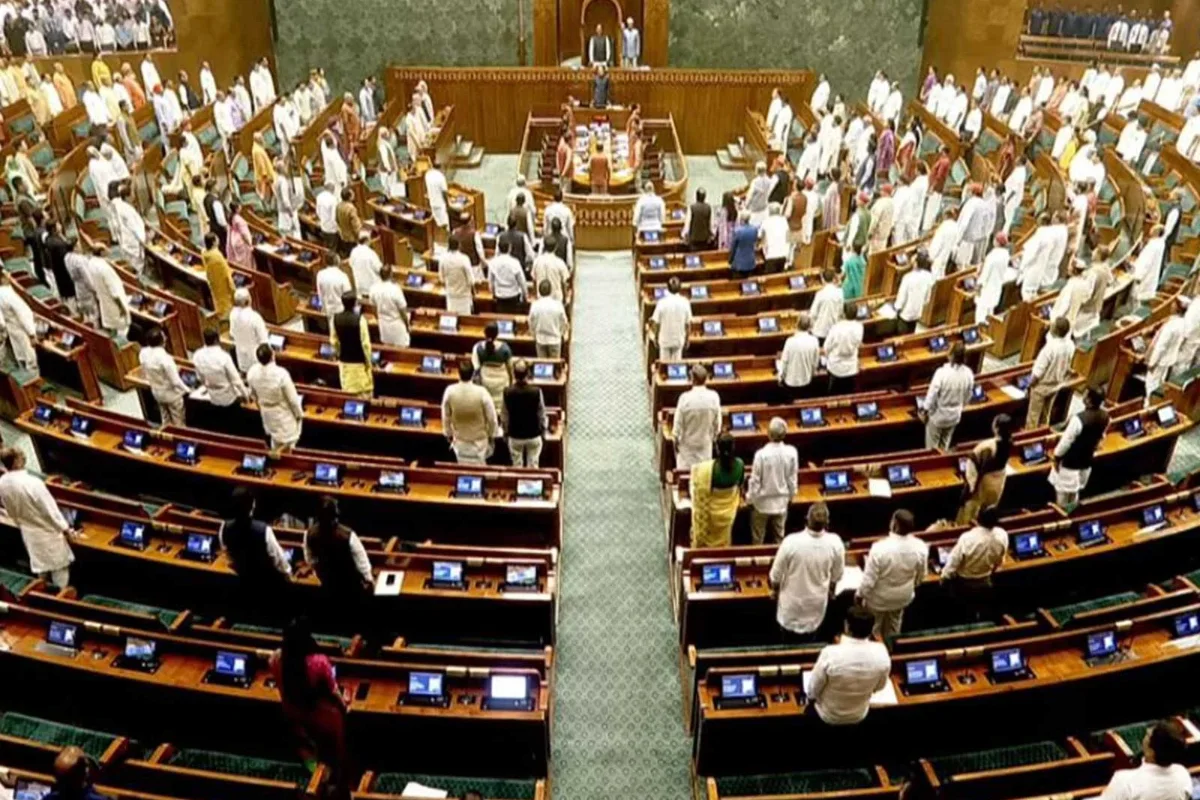
Delimitation Bill sparks fresh political debate ahead of the Parliament’s special session. A hurdle emerges as the NDA needs a two-thirds majority to pass the constitutional amendment relating to women’s reservation and delimitation. With an estimated 320 MPs, the NDA is searching for more numbers by courting regional parties.
Why does the NDA require additional MPs for the Delimitation Bill?
The bill aimed to bring in 33 per cent reservation for women in Lok Sabha and assemblies through an amendment linked to the process of delimitation. A constitutional amendment requires a two-thirds majority of those present and voting and also a majority of the total membership of the House.
NDA’s Lok Sabha Numbers
Reportedly having 320 MPs in the Lok Sabha including 241 BJP MPs and those from its alliance partners, if 540 MPs were present and voting, a two-thirds majority would be 360. Hence a shortfall of about 40 MPs.
Who Can Rescue NDA? Three regional parties in focus?
The numbers to bridge this gap, may be found by reaching out to some regional parties which include the DMK, NCP (Sharad Pawar) and the YSR Congress, who are among the parties under consideration to factor into the numbers game.
1. DMK: 22 MPs Could Change the Equation
With 22 MPs in the Lok Sabha, the DMK could be an influential player, the party has already voiced concerns over the delimitation process and how it could affect the southern states’ share in Parliament, Tamil Nadu in particular.
2. NCP (Sharad Pawar): Eight MPs in limelight
With eight MPs in the Lok Sabha, the NCP (Sharad Chandra Pawar) could potentially sway the numbers in the NDA. The party’s position, however, would be contingent upon how it evaluates the bill and the politics.
3. YSR Congress Party: Four MPs Could Matter
The YSR Congress has four MPs in the Lok Sabha. Though not a large contingent, their backing could help the government rally extra numbers in the special session of Parliament.
DON'T MISS
Delimitation Bill: Three Possible Voting Scenarios
If the DMK, NCP (SP) and YSRCP join forces with the NDA, it could increase the NDA’s strength from 320 to 354, still six shy of 360, assuming full attendance of 540 members. If a portion of the opposition members decide to abstain, the two-thirds mark could be lowered. But meeting that two-thirds mark would not eliminate the need to meet the majority-of-total-members requirement.
What Happened During the April Voting?
Government in the Lok Sabha to pass the Constitution (131st Amendment) Bill, 2026 on the 17th of April, was unsuccessful, of 528 MPs present and voting 298 were in favour and 230 against the Bill, the required number was 352 and the Government fell short by 54 votes on that occasion, a significant setback.
How Have Political Equations Changed Since April?
As per inputs, the strength of the NDA in Parliament is reported to have gone up following a political development involving a few MPs from the opposition and these have enhanced its position as compared to its state in April. Nevertheless the coalition is yet to muster enough numbers for a constitutional majority.
What Happens If Opposition MPs Abstain?
Abstentions might serve to lower the two-thirds majority threshold as only members who are present and cast a vote are considered in that tally. Nevertheless, the constitutional criterion of an absolute majority of the total number of members of the House still applies. Hence, the non-attendance of members opposed to the Bill does not ensure its passage.
Recent political developments involving several opposition MPs have reportedly boosted the NDA’s parliamentary strength since April. However, the coalition still falls short of securing a constitutional majority.
What impact would Opposition abstentions have?
While abstentions could lower the threshold for a two-thirds majority since the calculation only accounts for members present and voting the constitutional requirement of an absolute majority of the House’s total membership remains. As a result, non-voting by opposition members alone does not guarantee the Bill’s passage.