

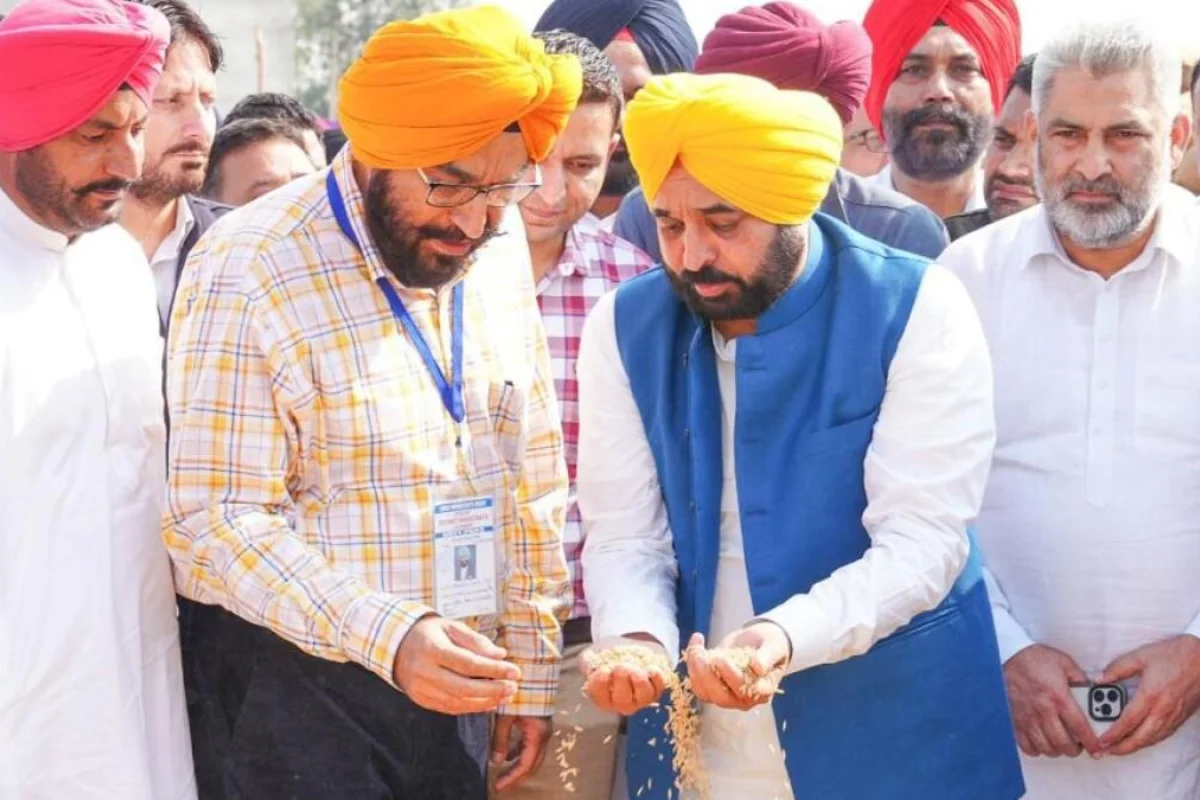
Bhagwant Mann: Punjab’s paddy procurement process is gaining momentum with approximately 8.50 lakh metric tonnes (MT) of paddy being received at mandis across the state. The Bhagwant Mann-led government has been making efforts to ramp up procurement infrastructure as more farmers reach mandis with their crop. The magnitude of arrivals also put the state’s mandi, procurement network on its toes to provide farmers with the no-frill auctioning of their produce. Purchase activities continue to be crucial for movement, storage, and processing of paddy during the harvest season.
Paddy arrivals push procurement systems to limit
The number of arrivals of 8.50 lakh MT exemplifies the number of arrivals of produce being recorded at the agricultural markets of Punjab. As arrivals go up, government agencies and mandi officials need to coordinate the purchase, lift, and shifting of grain along with the movement of the grain to the mandi godowns and rice mills
Government focus remains on smooth procurement.
Government strengthening arrangements at procurement centers to handle seasonal paddy Arrivals. The state government has been strengthening arrangements at procurement centres to meet the surge in paddy arrivals. The process involves government agencies, mandi officials, transporters, millers. The government activities along with tender information related to procurement of goods is still published in the state government’s e-procurement system of the Punjab state. The grain distribution activities and other tendering activities related to civil and food supplies are still managed by the state’s food and civil supplies infrastructure. Procurement is also part and parcel of the larger question of how paddy is managed once it hits the mandi. Quick lifting and transportation can ease the load on the facility and keep the procurement process moving as arrivals increase.
What is the increase in arrivals doing to farmers?
Bhagwant Mann:The average pace of procurement for farmers would be dependent on the speed with which a harvested paddy makes its way through the market system. The market system could improve pace by reducing waiting times and ensuring a continuous flow from mandi to storage/processing units. The scale of arrivals also means procurement agencies will need to sustain coordination through the season. Continual high arrivals could potentially put increased pressure on storage, transportation, and milling capacity. The current numbers highlight how crucial it is to keep the procurement chain of Punjab alive as the paddy season picks up. What lies ahead will be contingent on how well agencies are able to manage incoming stock, lifting and payments while keeping pace with farmers across the state.


