

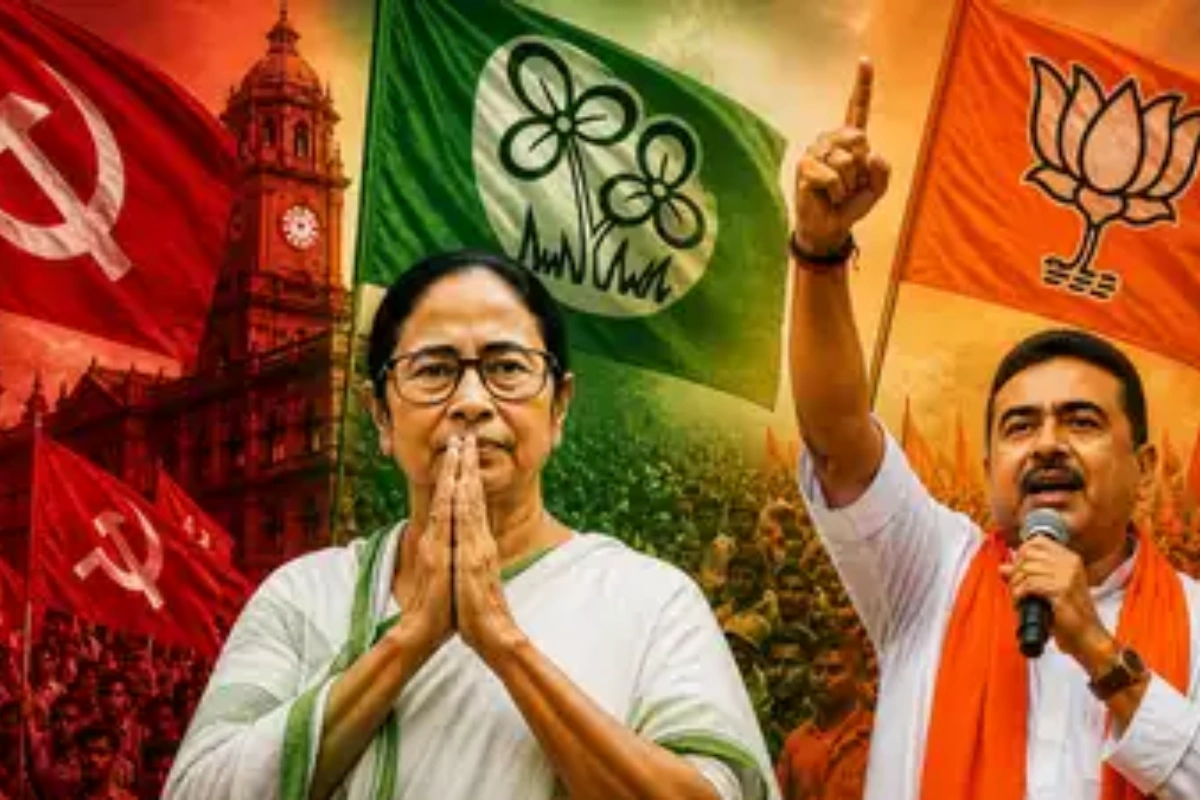
Bengal Assembly Elections 2026: The result day for Bengal Assembly Elections 2026 is out! In a highly surprising turn of events, the Bharatiya Janata Party (BJP) led by election rallies from stalwarts like PM Narendra Modi and UP CM Yogi Adityanath is giving a tough fight to the ruling Trinamool Congress (TMC) led by Mamata Banerjee.
For over a decade, Mamata Banerjee has remained the unchallenged epicentre of Bengal’s politics, crafting a formidable grassroots network and an image of regional pride. However, the BJP appears determined to mount its most serious challenge yet and overthrow the TMC government in West Bengal.
Bengal Assembly Elections 2026-The Evolution of BJP’s Bengal Strategy
The BJP’s rise in West Bengal has been neither accidental nor sudden. From being a marginal player in the state’s political landscape just a decade ago, the party steadily built momentum through organizational expansion, ideological outreach and electoral persistence.
DON'T MISS
The 2019 Lok Sabha elections marked a turning point, when the BJP secured a significant vote share and parliamentary presence, signalling its arrival as a credible challenger. Since then, the party has recalibrated its strategy. The BJP has attempted to blend its nationalistic messaging with regional sensibilities recognizing that Bengal’s political fabric is deeply rooted in cultural identity. Leaders have emphasized themes such as governance, corruption and alleged political violence, while also invoking cultural symbolism aimed at resonating with local voters.
Mamata Banerjee’s Enduring Stronghold
Despite facing a formidable challenge, Mamata Banerjee’s political resilience cannot be underestimated. Since coming to power in 2011, Mamata Banerjee has cultivated a strong support base through welfare schemes, grassroots mobilization and a carefully crafted image as a leader who stands up for Bengal’s interests against external pressures.
Programs targeting women, farmers, illegal Bangladeshi voters and marginalized communities have helped consolidate her voter base. Additionally, her party’s deep penetration at the local level, particularly in rural areas, continues to serve as a critical advantage.
Another crucial factor is Mamata Banerjee’s personal appeal. In a state where leadership charisma often plays a decisive role, her direct connect with the electorate remains a significant asset. For many voters, the election is not merely about party politics but about trust in a leader who has consistently positioned herself as Bengal’s protector.