


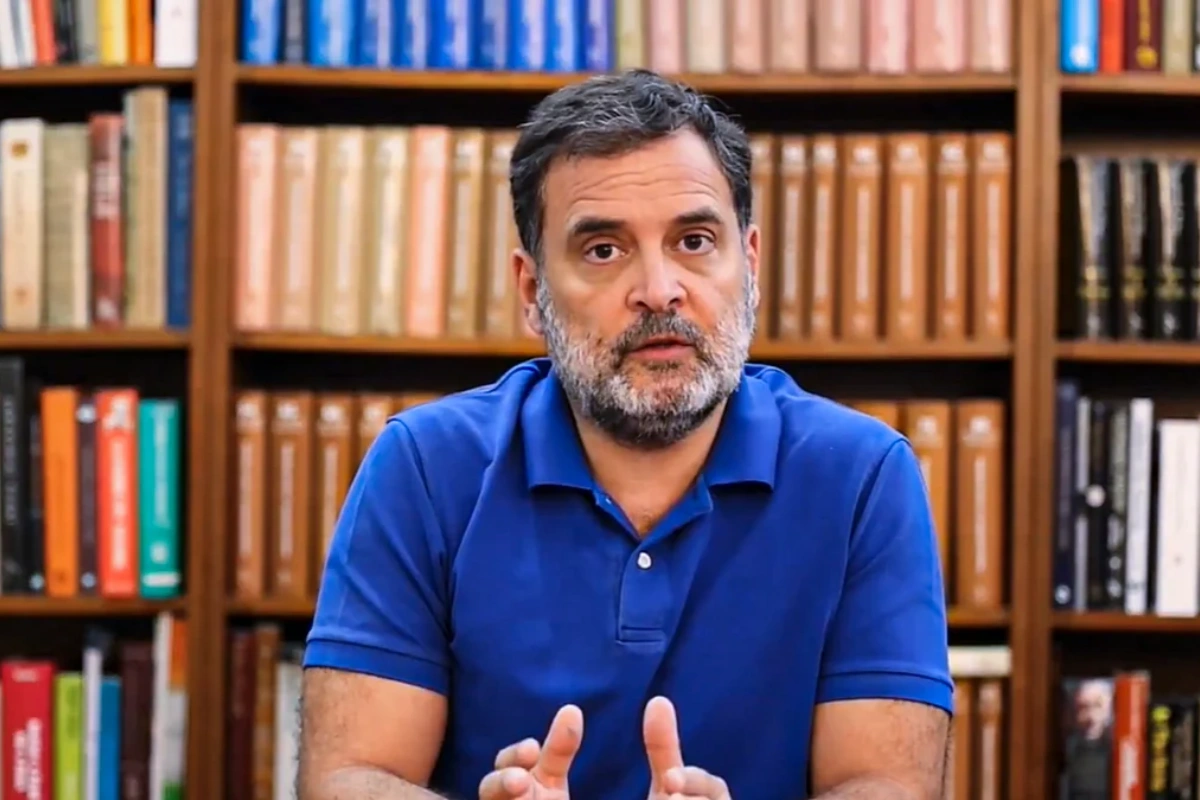
Rahul Gandhi: Rahul Gandhi, Leader of Opposition in the Lok Sabha, has blasted the Women’s Reservation Bill during the special Parliament session.
The senior Indian National Congress leader questioned the intent and impact of the bill on inclusive representation in the Indian Parliament.
Rahul Gandhi Comments
The Leader of Opposition in the Lok Sabha commented that while the role of women in our society cannot be denied, the present framework of the women’s reservation bill seems a failure when it comes to empowering women as it overlooks key sections of the Indian society like the OBCs, SCs and Muslim community.
DON'T MISS
Gandhi went on to comment that the entire opposition would unite to defeat the bill in the Indian parliament.
Appeal By Narendra Modi
In a post on X, Indian Prime Minister Narendra Modi to all parliament members to vote unanimously in the support of Women’s Reservation Bill 2026. Modi urged all to reflect upon their conscience while remembering the women in their families so justice could be done to nation’s women.
Interestingly, many political leaders including Rajnath Singh, Nitin Gadkari and Rahul Gandhi could end up losing their present constituencies if women reservations in India are introduced without waiting for delimitation. According to an analysis of the 2024 Election Commission Voter data, this could be a possibility if seats in each state of the country are reserved by choosing constituencies with the highest women voter proportions.
If applied this way, women candidates would get reservations on 181 seats of Lok Sabha and 155 of them would need an alteration in incumbent representation. This is simply because only 26 MPs (women) presently hold seats that would remain reserved under the formula.
For instance, Rahul Gandhi won the Rae Bareli seat in 2024 that had 47.69 percent women electors that is above the state average of 46.7 percent, making it a likely reserved constituency. Nagpur that is represented by Nitin Gadkari had 49.9 percent women electors that is well ahead of the state average of 48 percent.