


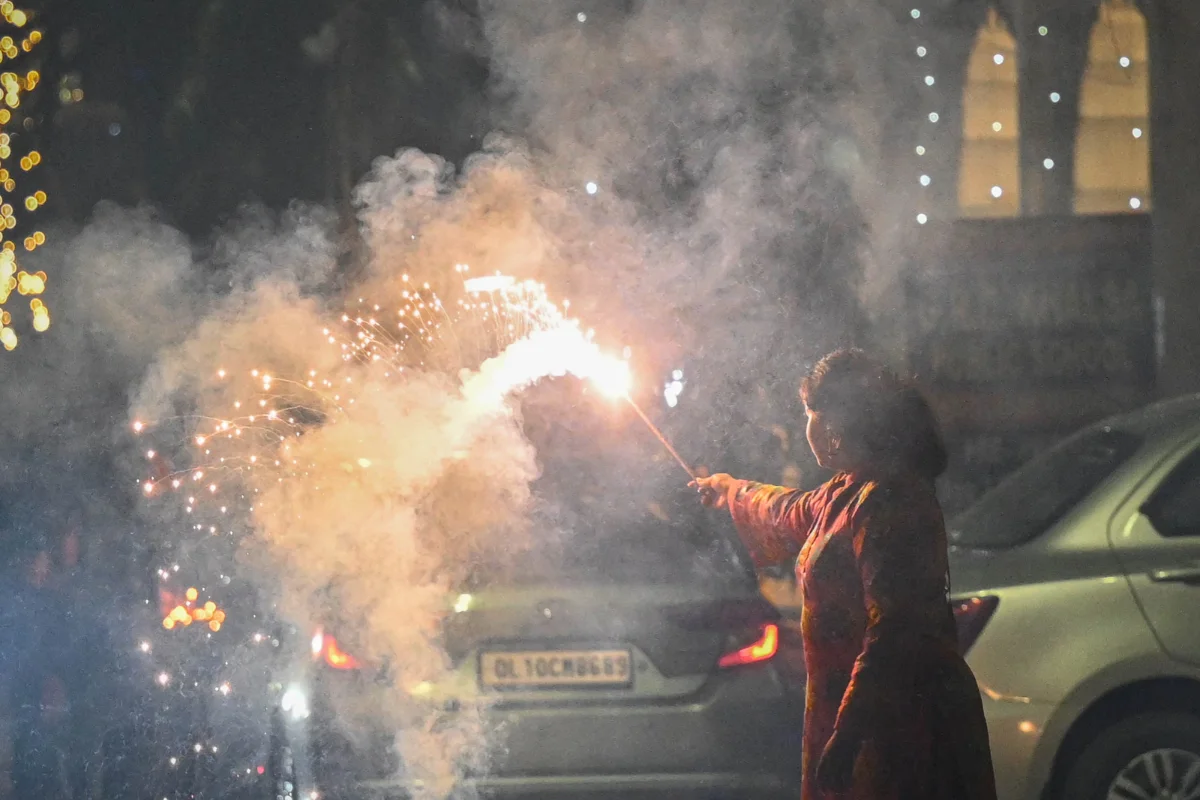
Delhi Pollution: Delhi’s air was already struggling before Diwali on November 8, 2026. The night itself raised a second question: why did so many monitors stop reporting just when the readings mattered most?
Monitors Go Dark as Pollution Spikes
Several stations, including RK Puram, Nehru Nagar, Mundka, Sonia Vihar and Dwarka, stopped displaying readings after 9 pm on Diwali night. RK Puram had recorded PM2.5 of 504 micrograms per cubic metre around 8 pm before its data stopped. The JNU station in a less crowded part of South Delhi kept reporting.
DON'T MISS
What the Restored Data Shows
A Hindustan Times investigation found that 43 of the city’s 59 stations had PM2.5 gaps between 10 pm and 6 am. Across 39 long-standing stations, about 42 per cent of expected readings in that window were missing.
The restored figures are alarming. Across 22 stations with a full set of readings, average PM2.5 hit 1,480 micrograms per cubic metre at 1 am on November 9. The average across eight stations with complete readings in CPCB’s records was 547. Mundka reached 3,744 micrograms per cubic metre in data released after Diwali.
Crop Fires Add to the Burden
Firecrackers were not the only source. Delhi and four states recorded 1,248 crop-residue burning incidents on Diwali, compared with 135 the year before. At 8 am on Tuesday, Delhi’s hourly average AQI stood at 304, according to CPCB data.
What Went Wrong?
The reports I found do not give an official explanation for the gaps. The problem is also not new. After midnight on Diwali 2025, 28 of 39 Delhi monitors went blank. ThePrint’s analysis found that no station tracked PM2.5 continuously through October. That points to a recurring reliability problem, not a one-night failure.
Public health advisories, pollution-control curbs and citizen decisions all rely on these readings. When monitors drop out at the worst hours, averages can look milder than reality. Residents and policymakers are then left with an incomplete picture of the exposure.