


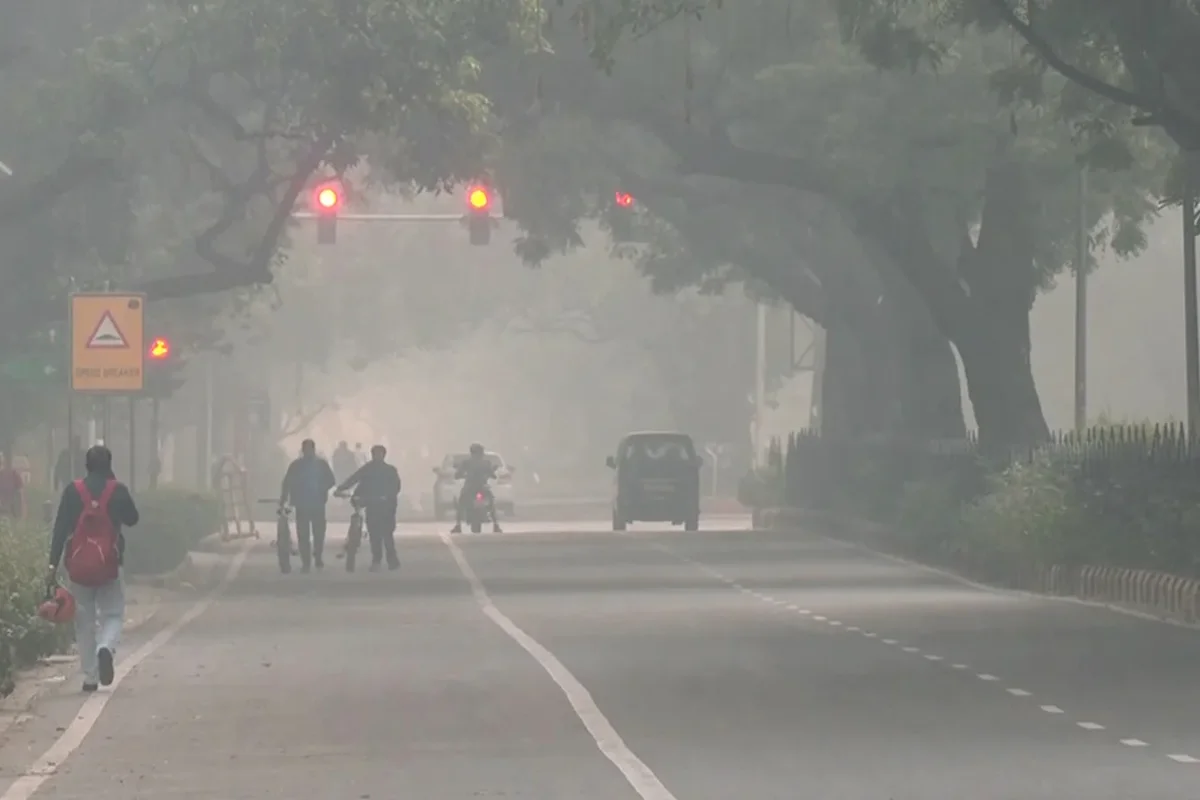
The Commission for Air Quality Management (CAQM) on Wednesday, October 21, invoked Stage I of the Graded Response Action Plan (GRAP) across Delhi-NCR after the national capital’s air quality deteriorated to the ‘poor’ category following Dussehra.
The decision came as Delhi’s Air Quality Index (AQI) climbed sharply from 179 on October 20 to 244 at 2 pm on October 21. The deterioration prompted authorities to activate the first stage of the pollution-control plan with immediate effect.
According to the CAQM, agencies across the National Capital Region have been directed to implement, monitor and review the prescribed measures to prevent further deterioration in air quality.
Delhi-NCR Authorities Directed to Intensify Pollution Control Measures
Under GRAP Stage I, authorities have been asked to strengthen existing pollution-control measures, maintain strict vigilance and ensure compliance with the prescribed guidelines.
The measures focus on controlling road dust, construction-related pollution, vehicle emissions and the open burning of waste. Agencies have also been instructed to improve coordination and step up enforcement across the region.
DON'T MISS
The CAQM has urged residents to follow the citizen charter under GRAP Stage I and cooperate with authorities in efforts to curb pollution.
What Does GRAP Stage I Mean?
The Graded Response Action Plan is a set of emergency measures designed to address deteriorating air quality in Delhi-NCR. It is implemented in phases, with restrictions becoming progressively stricter as pollution levels rise.
Stage I is activated when the AQI falls within the ‘poor’ category, ranging from 201 to 300. The subsequent stages apply to ‘very poor’, ‘severe’ and ‘severe-plus’ air quality conditions.
The first stage includes measures to prevent dust pollution, prohibit open waste burning and restrict the use of coal and firewood in commercial cooking establishments covered by the applicable guidelines. The use of diesel generator sets is also regulated under the prescribed rules.
Air Quality Expected to Remain Poor
Weather forecasts issued by the India Meteorological Department and the Indian Institute of Tropical Meteorology indicated that Delhi’s air quality could remain in the ‘poor’ category over the coming days.
The rise in pollution levels has renewed concerns as the winter pollution season begins. Weather conditions, including low wind speeds, can limit the dispersal of pollutants and contribute to worsening air quality.
Authorities will continue monitoring AQI levels and weather forecasts to determine whether additional measures are necessary.
Residents Advised to Follow Pollution-Control Guidelines
With GRAP Stage I now in force across Delhi-NCR, residents have been advised to follow official pollution-control guidelines and avoid activities that contribute to deteriorating air quality.
The CAQM has emphasised that coordinated action by government agencies, local authorities and citizens will be essential to prevent pollution levels from rising further.
The effectiveness of the measures will depend on their implementation and continued monitoring as Delhi-NCR moves deeper into the winter season.