The Punjab government, under the leadership of Chief Minister Bhagwant Mann, has initiated a remarkable ‘education revolution’ in the state’s government schools. The direct benefit of this is visible in the bright future of the children. The Mann government has moved away from the old, difficult method of rote learning and adopted Finland’s famous ‘Happiness-First’ education model. The goal of this model is to protect children’s childhood and help them become happy individuals.
Sending dedicated government school teachers directly to Finland for training demonstrates the government’s desire to raise the standard of education to a global level. This is not just a visit; it is our complete faith in our government schools. So far, more than 200 primary teachers have been sent to the University of Turku in Finland for 15 days of specialized training. This initiative is entirely different from the false promises of previous governments—it is a guarantee of work! The first batch departed on October 18, 2024, the second on March 15, 2025, and the third on November 15, 2025.
Smiling and playful children are the guarantee of a better future, which is why teachers returning from Finland have completely transformed the classroom environment. Government schools are no longer merely places for reading books; they have become centers of joy, innovation, and practical knowledge. A new policy promoting short breaks for significant change and increased concentration is now being adopted in government schools. Teachers like Head Teacher Lavjit Singh Grewal learned the biggest lesson from Finland: “Children must get a chance to breathe, play, and refresh themselves.” Consequently, children are now given a short break after every two periods. This small change has shown a remarkable effect: children now return to their studies with greater attention, improved concentration, and renewed energy. We are reducing the burden of childhood!
Recognizing the power of practical knowledge, education is no longer confined to four walls. To connect children with the soil and their agricultural roots, they were taken to paddy fields where they observed how transplantation is done. To understand the EVS (Environmental Studies) lesson, students visited flood-affected areas so they could personally comprehend how deforestation causes floods—areas with fewer trees were more severely impacted. This learning experience was far more effective than textbooks. Furthermore, inspired by Finland, essential Life Skills are now being taught in schools, where, breaking old stereotypes, boys will learn skills like stitching and girls will learn welding, as everyone acquires these skills there.
DON'T MISS
To forge a stronger link between home and school, Head Teacher Jagjit Walia has launched ‘Mom Workshops’ in Kapuri village, Patiala. Here, mothers (most of whom are homemakers who discontinued their studies after marriage) participate in activities like solving puzzles and coloring alongside their children. This is increasing parental and school engagement. We are connecting the entire family with education!
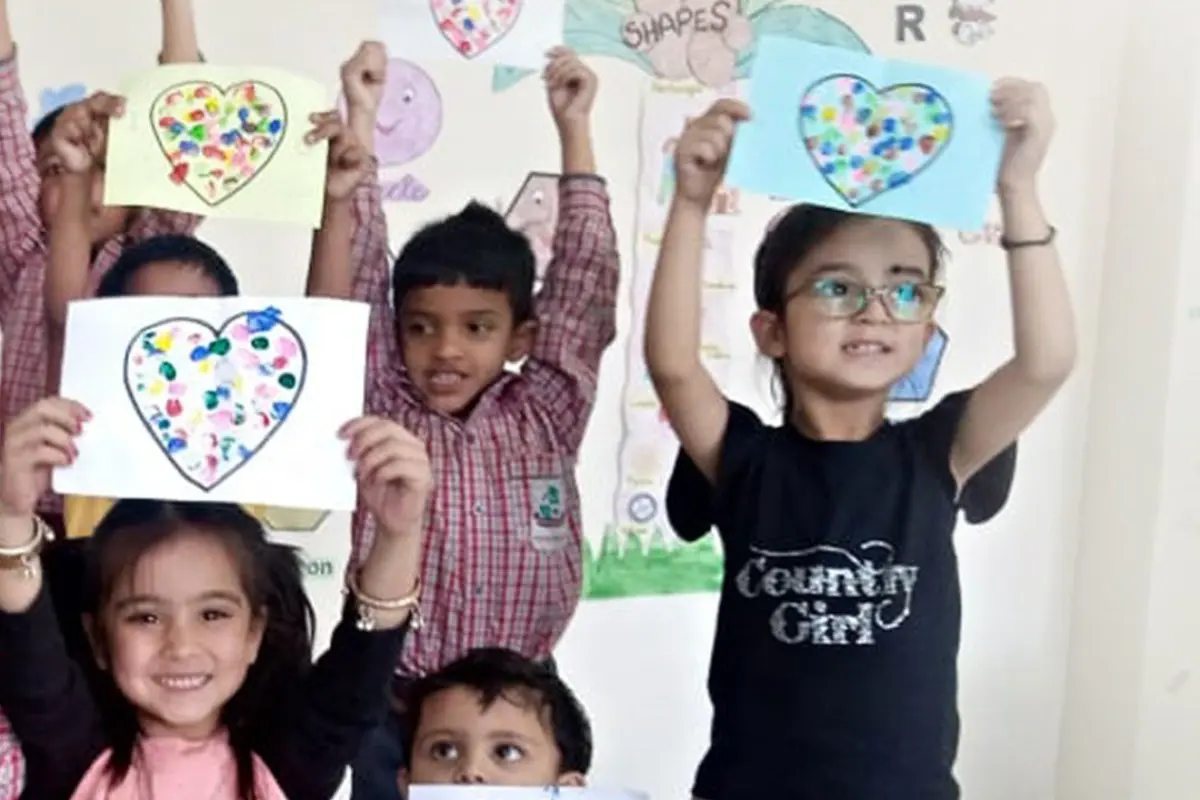
Absenteeism has dropped because teachers are now focusing not on filling notebooks, but on coloring, making clay models, and simplifying learning. Cluster Head Teacher Kavinder Kumar says Finland taught him that comfort and happiness boost children’s attendance and make mornings pleasant. That’s why, on Children’s Day (November 14), a balloon-made ‘student’ named ‘Jumbo’ was created to delight new children and excite them about coming to school. According to teacher Jaspreet Singh, in Finland, child care centers are linked to schools, where children have nap time, and there are only 20 students per teacher. This method is based on love, flexibility, and continuous encouragement.
Ensuring a strong foundation for the education revolution and the government’s long-term vision, Education Secretary Anindita Mitra has assured that the government is working on a robust plan to institutionalize these positive changes. Starting January 2026, teachers who have returned from Finland will begin training their colleagues under a specific schedule, ensuring this model spreads across the state. Furthermore, plans are underway to share study material and exchange new information with Finland. The work of establishing Psychometric Labs in schools to assess the strengths of every child is also ongoing.
Due to the foresight of Chief Minister Bhagwant Mann, Punjab’s government schools are now leading the way in education. This is not just reforming education, but a true investment in the future of children, which will benefit the state tomorrow.