


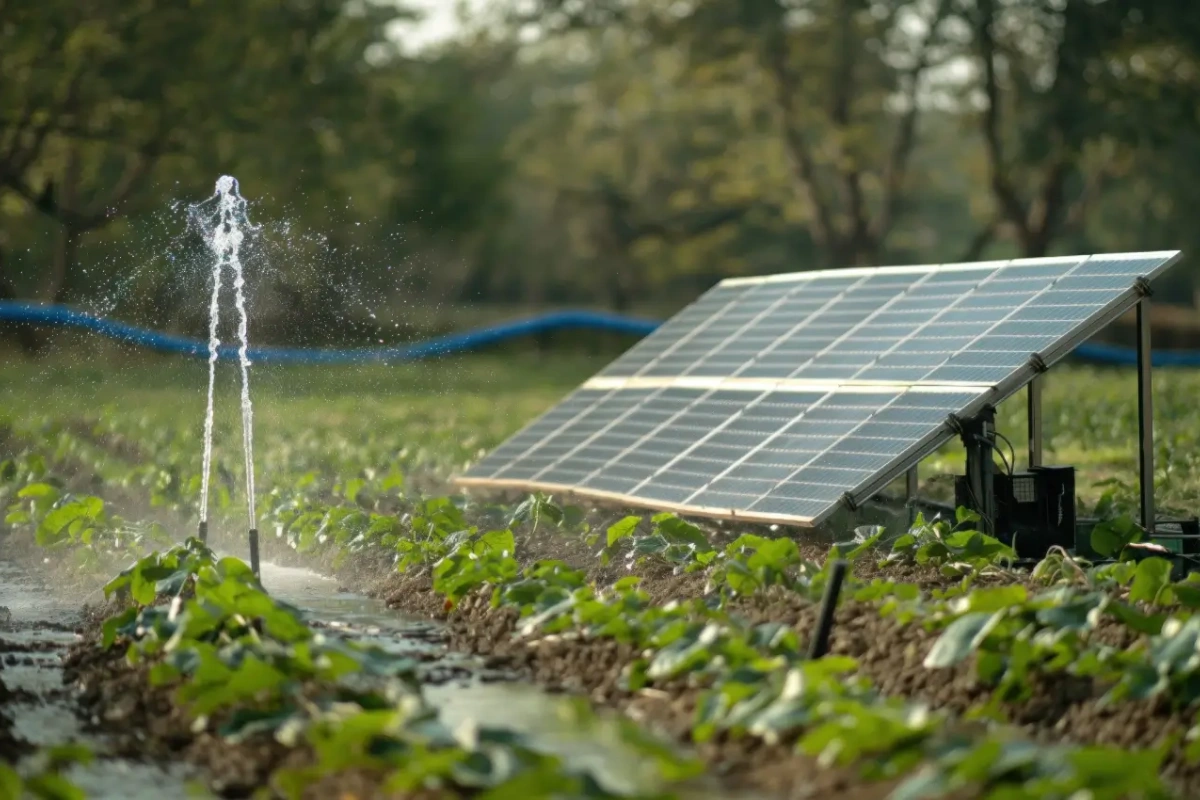
Rajasthan News: The rapid rollout of the Pradhan Mantri Kisan Urja Suraksha evam Utthaan Mahabhiyaan (PM KUSUM) program is slowly but steadily transforming the rural solar landscape of the country. This is done primarily by facilitating feeder-level, decentralized solar-power projects for agricultural use via artificial intelligence (AI).
The solarization of agricultural pumps in states such as Rajasthan has resulted in a massive surge in the use of robotic module cleaning.
DON'T MISS
How Will This Rajasthan News Benefit Farmer Incomes?
As solar panels accumulate dust quickly in arid zones, developers and farmers are adopting robotic cleaning systems to maximize output.
Robotic Cleaning Surge
Rajasthan’s PM-KUSUM rollout has spurred the concept of robotic module cleaning in feeder-level projects under Components A and C. These ground-mounted arrays tend to face severe spoiling from farming activity and unpaved roads, causing 5-12 percent generation losses without intervention. This is where artificial intelligence (AI) steps in.
Robots powered by AI offer waterless, daily cleaning that is approximately 5-8 times cheaper than manual methods that tend to guzzle 7-12 tons of water per MW per cycle.
PM-KUSUM Framework
The scheme provides up to 30 percent central aid, which is presently capped at ₹10.5 million per MW, enabling farmers to install solar plants on barren land and sell power to DISCOMs. The semi-arid belts of Rajasthan amplify dust challenges. However, erratic labour and water scarcity can be challenges and this is where automation comes into the picture. According to industry experts, most projects over 1 MW will standardize robots within five years for 25-year viability.
Income Boost Potential
Robotic systems slash operational and management costs – 30-40 percent of which is cleaning – by 20 percent long-term while lifting energy yield 5 percent annually. This could easily translate to stable revenue from power sales, diversified income via solar leases and reduced diesel dependence.