

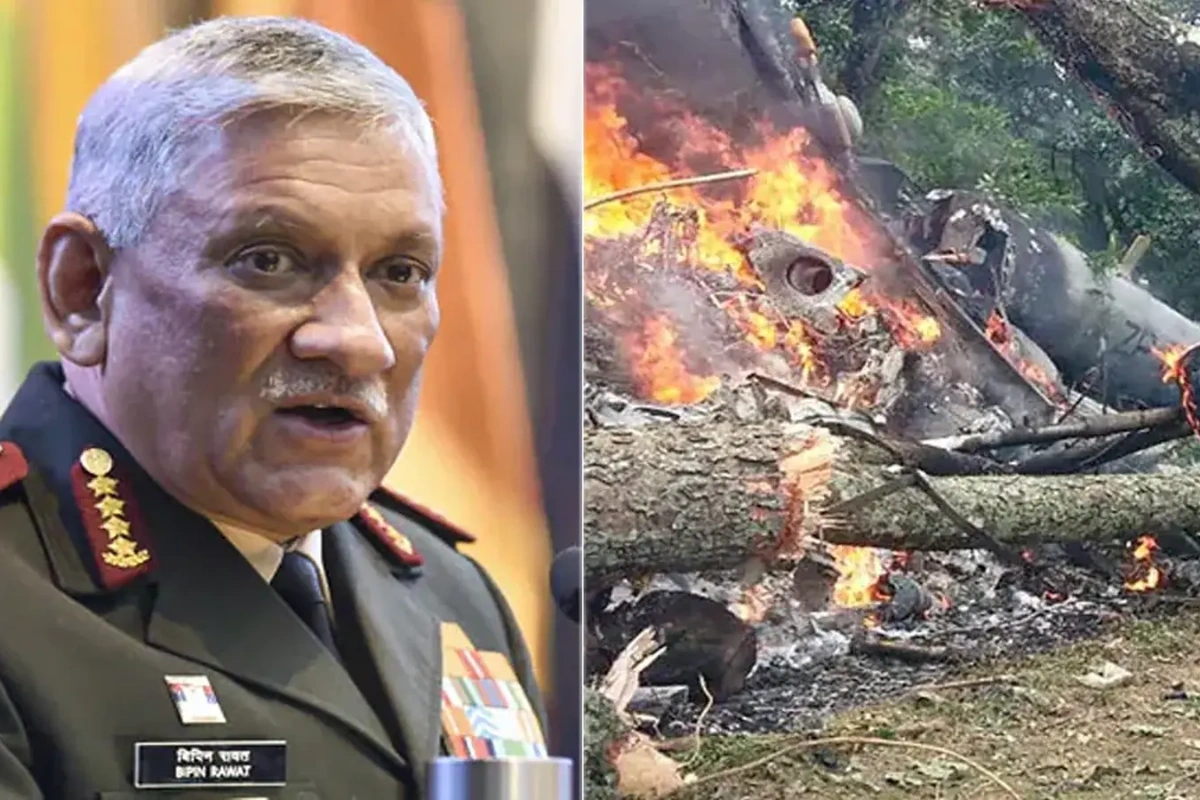
Uttarakhand: India is mourning the fourth death anniversary of its first Chief of Defense Staff (CDS) on December 8.
General Bipin Rawat, the country’s most adored Chief of Defense Staff (CDS) met his tragic death in a helicopter crash on December 8, 2021, alongside his wife Madhulika and 11 others near Coonoor, Tamil Nadu.
As the 27th Chief of Army Staff prior to his CDS role, Rawat brought over four decades of distinguished service, marked by leadership in counter-insurgency and strategic reforms. Born on March 16, 1958, in Pauri, Uttarakhand, Rawat served as India’s first CDS from January 1, 2020, until his tragic death. His immaculate tenure as the country’s CDS focused on fostering unprecedented integration among the Army, Navy, and Air Force.
DON'T MISS
Deep Roots in Uttarakhand
Hailing from Pauri Garhwal district in Uttrakhand, Rawat truly embodied the martial tradition of the state, following his father, Lt Gen Lakshman Singh Rawat, into the 5/11 Gorkha Rifles.
PVSM UYSM AVSM YSM SM VSM Bipin Rawat attended school in Dehradun and graduated from the Indian Military Academy there, earning the Sword of Honour. The rugged terrain of Uttarakhand honed his high-altitude warfare expertise, which was visibly seen in commands along the Line of Actual Control in Arunachal Pradesh and during the 1987 Sino-Indian skirmish.
Posthumously, the unblemished and impeccable legacy of India’s first CDS endures through the Bipin Rawat Memorial Auditorium and initiatives in his hometown, reflecting the pride of Uttarakhand in producing such marvellous leaders.
Role as Chief of Defense Staff
Appointed as the inaugural CDS, Rawat was entrusted with the responsibility of leading the Department of Military Affairs, acting as the principal military advisor to Defense Minister Rajnath Singh and permanent chairman of the Chiefs of Staff Committee. He championed joint theatre commands for streamlining tri-service operations to address modern security threats like those from China through enhanced coordination and modernization.
Rawat advocated proactive counter-terrorism, building on his earlier oversight of surgical strikes in 2016 and the 2015 Myanmar cross-border operation. His reforms emphasized training synergy across services, logistics unity and technology integration, reshaping India’s defense posture.
Enduring Legacy
Today, four years after his passing on this date in 2021, the vision of Bipin Rawat for a jointed, modernized force remains foundational.