


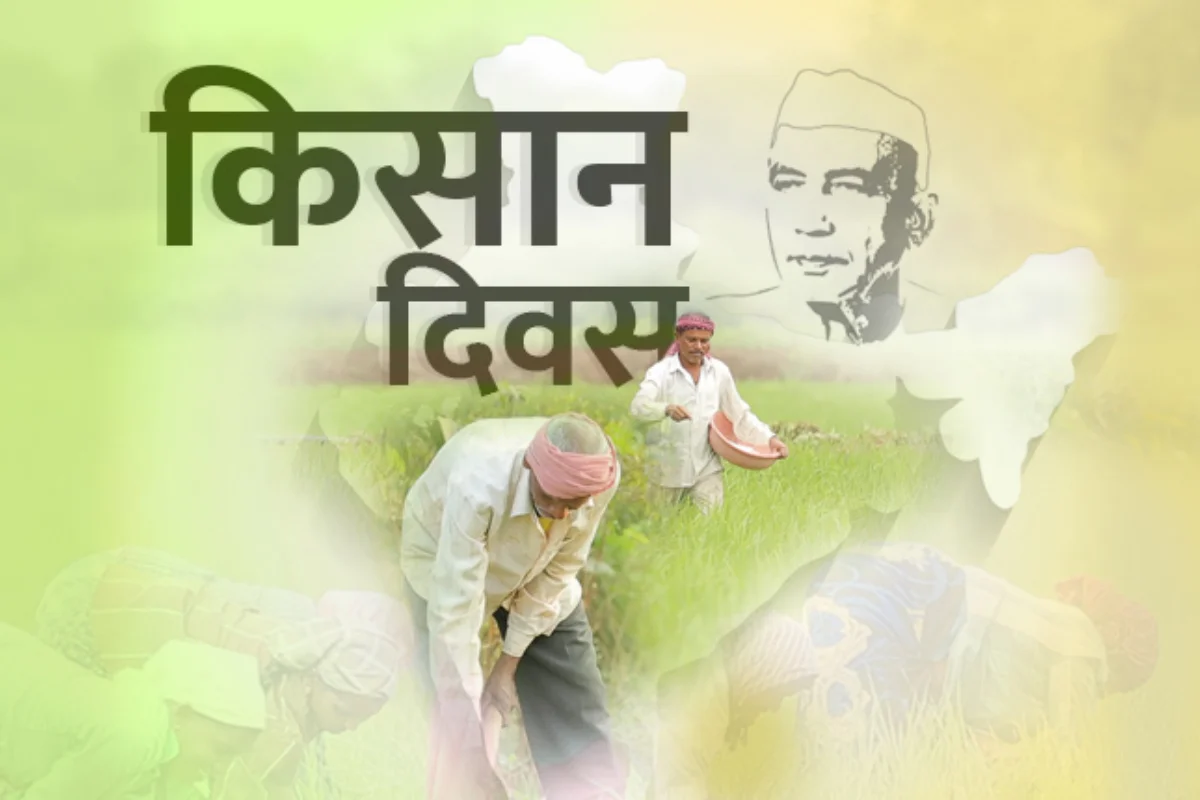
Kisan Diwas 2025: On December 23 every year, India celebrates Kisan Diwas or National Farmers’ Day to commemorate the contributions of the Indian farmers and the birth anniversary of Chaudhary Charan Singh, the fifth Prime Minister of India and a lifelong champion of farmers’ rights and welfare.
National Farmers’ Day 2025: History
Kisan Diwas or National Farmers’ Day was founded in the memory of India’s former Prime Minister and Bharat Ratna recipient Chaudhary Charan Singh (July 28, 1979 – January 14, 1980).
DON'T MISS
Chaudhary Charan Singh put into effect a series of important initiatives to advance agricultural growth while in office.
Known as the “champion of farmers,” Singh initiated several measures to increase agricultural productivity, programs to relieve farmer debt and focused on land reforms.
Significance of Kisan Diwas 2025
December 23 was officially recognized by the Indian government in 2001 as Kisan Diwas 2025 or National Farmers’ Day. This was done to celebrate the legacy of Chaudhary Charan Singh and the significant role the farmers of India play in maintaining the nation’s food systems and economic stability.
About Chaudhary Charan Singh
Chaudhary Charan Singh was born at Noorpur in Meerut in 1902. Singh completed his post-graduation from Agra University in 1925 and later joined the Congress Party.
Chaudhary Charan Singh took over as the Minister for Revenue and Agriculture in the Cabinet of Dr. Sampurnanand, the second Chief Minister of Uttar Pradesh, in 1954. Singh served as Minister for Agriculture and Forests (1962-63) in Smt. Sucheta Kripalani’s Ministry.
Known for his eloquence and courage of conviction, Singh brought the Land Holding Act 1960 in Uttar Pradesh that reduced the land holding ceilings to make it uniform throughout the state.
A dedicated public worker and staunch believer in social justice, Singh was the author of several books and pamphlets, including ‘Abolition of Zamindari’, ‘Co-operative Farming X-rayed’, ‘India’s Poverty and its Solution’, ‘Peasant Proprietorship or Land to the Workers’ and ‘Prevention of Division of Holdings Below a Certain Minimum’.