

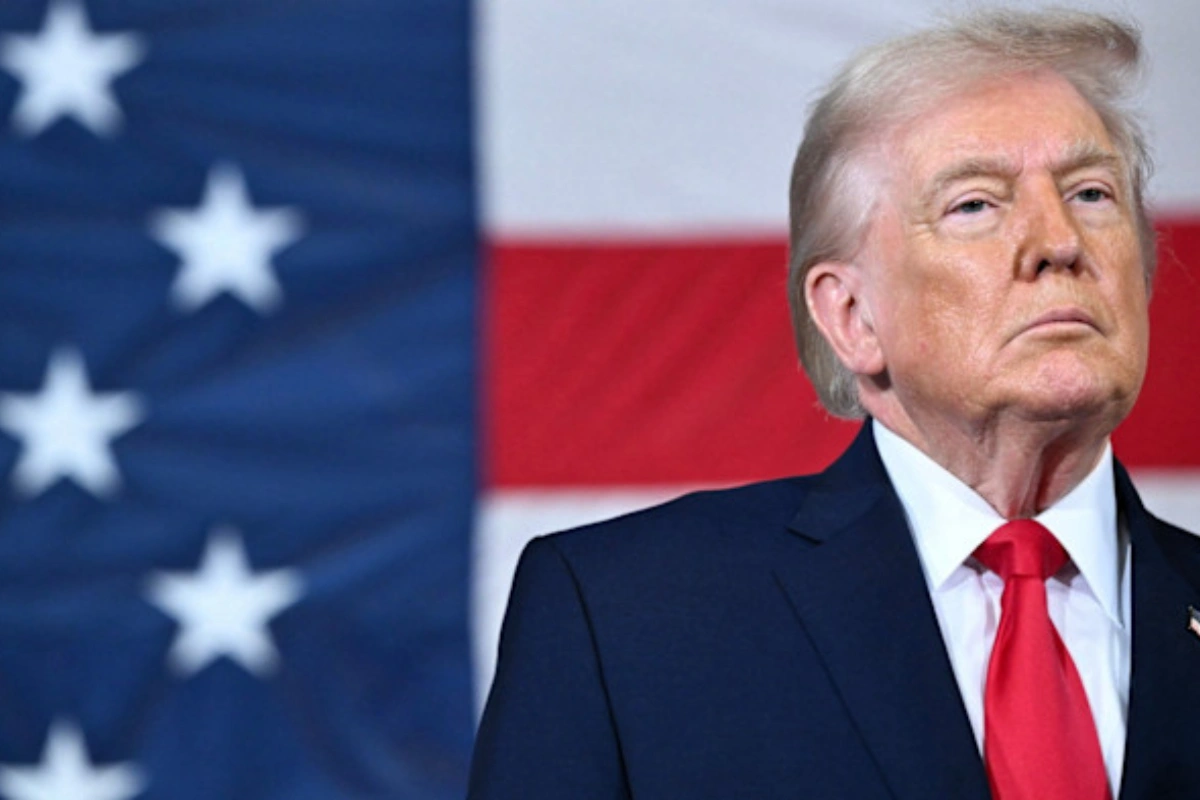
Donald Trump: United States President Donald Trump has again taken a hard public position on Iran, warning that Tehran must not acquire nuclear weapons and signalled that military action against Tehran remains an option. His remarks come at a time when tensions between Washington and Tehran are already high, despite a recent announcement that active hostilities had ended. Global markets end up in panic due to fresh fears on US Iran war expectations.
Reaction Of Global Markets
Financial markets have reacted to the renewed tension with caution. Oil prices remain sensitive to any developments involving Iran, especially given the country’s location near key shipping routes. Even the possibility of disruption in the Persian Gulf can affect global supply expectations.
Equity markets have also shown signs of instability. Investors tend to move away from risk during geopolitical uncertainty, which can lead to short-term declines in stock indices. At the same time, defence-related sectors often see gains as expectations of military spending increase. Gold and other traditional safe-haven assets have seen stronger demand. This reflects a broader pattern that investors look for stability when geopolitical risks increases.
Statements By Donald Trump
In another development, United States President Donald Trump has remarked that USA would withdraw at least 5000 troops from Germany. Trump referred to North Atlantic Treaty Organization (NATO) as a paper tiger and said America spends trillions of dollars on NATO and we got no help.
Trump has also announced a 25 percent tariff on automobiles from the European Union after accusing the EU of not complying with the trade deal. Trump’s scepticism toward NATO is not new. Throughout his political career, he has consistently argued that the alliance disproportionately burdens the United States while allowing European members to underinvest in their own defence. His latest characterization, however, goes further.
DON'T MISS
The hypothetical 25 percent tariff, whether on automobiles, industrial goods, or a broader basket of exports, would not merely be symbolic. It would represent a seismic shift in transatlantic economic relations, effectively weaponizing trade in response to security disagreements. Europe, which is heavily reliant on exports to the American market, may not deliver a calibrated yet firm response.
The Politics Of Pressure
At its core, Trump’s “paper tiger” remark is an exercise in pressure politics. It is designed to provoke, to unsettle, and ultimately to extract concessions. Whether those concessions come in the form of increased defence spending or more favourable trade terms remains to be seen.