


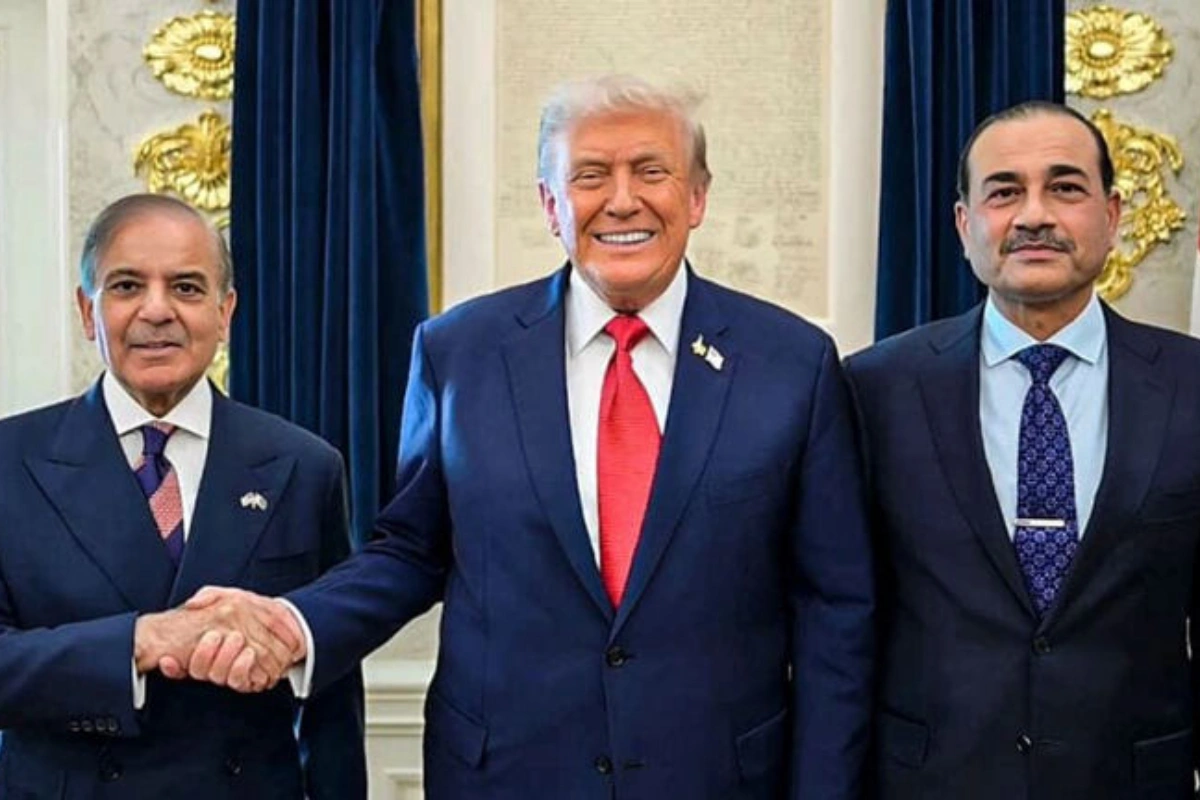
Donald Trump: United States President’s foreign policy recalibration has drawn intense scrutiny as the country grapples with a volatile blend of economic strains, domestic insecurity and deep political polarization.
Among the most controversial elements is the apparent strategic bet of Washington on Asim Munir, the Chief General of Pakistan Army. Many believe that this gamble by Trump reflects the same misjudgements that have repeatedly defined the domestic governance errors of President Trump.
Donald Trump And A Nation On Edge
Trump has been counting on Pakistan to control the Asia-Pacific region. However, the terror state Pakistan has been suffering from a series of issues.
DON'T MISS
Fractured civic trust, Mass shootings, brutal rapes, atrocities against minorities, bomb blasts at religious sites, revolt of the Balochistan Liberation Army, insurgence by Tehrik-e Taliban Pakistan (TTP), social unrest, unprecedented inflation, growing poverty rates and more.
Asim Munir, Shehbaz Sharif And A Nation Built On False Claims
General Asim Munir, Pakistan’s army chief, and Shehbaz Sharif, the Prime Minister of Pakistan, rule a country that has never prospered due to radical Islamists, corruption and diversion of funds meant for development for sponsoring terrorist attacks against India.
Today’s Pakistan is politically polarized, economically fragile and socially restless. Public resentment towards Pakistan’s military interference and Shehbaz Sharif’s economic policies is growing, the civilian institutions of the country are getting weaker and weaker with every passing day and anti-American sentiment simmers beneath the surface.
A Strategy Headed For Collapse
There is no denying the fact that the challenges of Pakistan cannot be ever fixed by military dictatorship just as the problems of America cannot be fully solved ever via polarizing rhetoric and economic brinkmanship.
The bet of Donald Trump on Asim Munir is likely to fail for the exact same reasons the domestic promises of Trump have faltered – faith in strongman solutions and oversimplification of complex problems.