

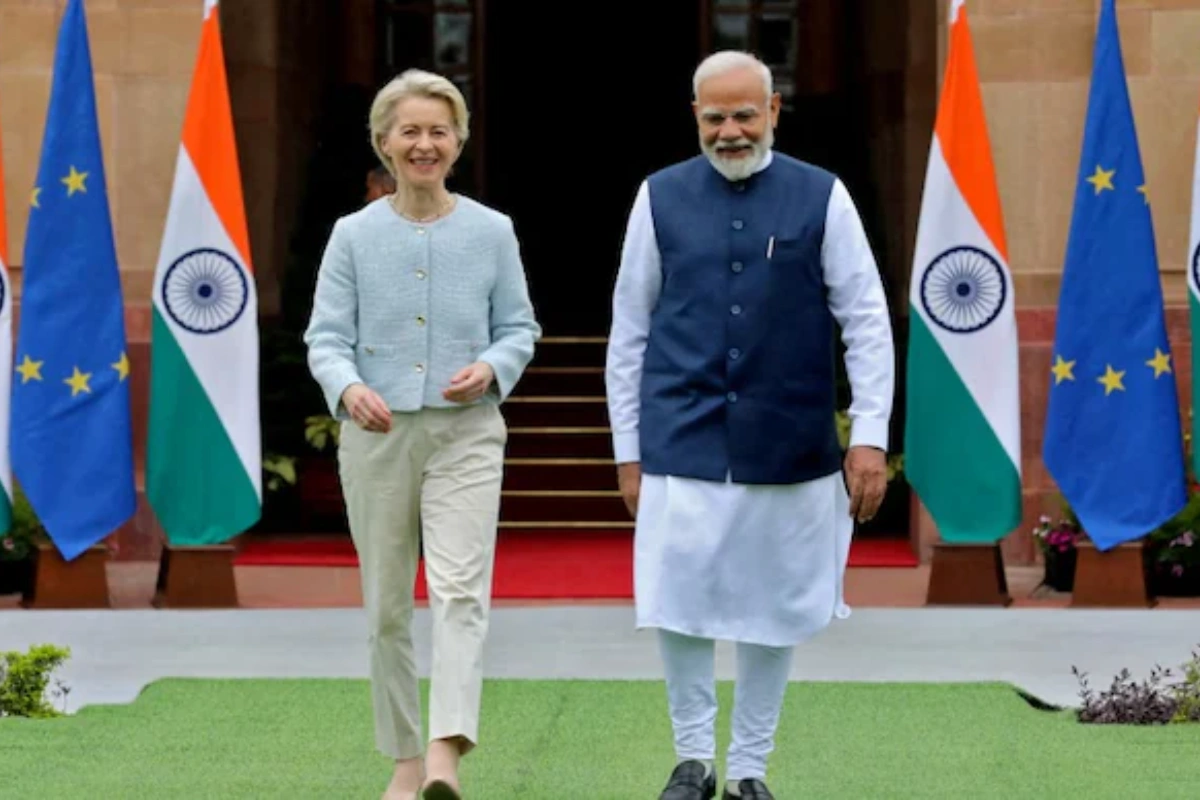
India EU Trade Deal: Ursula von der Leyen, President of the European Union, has remarked that EU and India would sign the “mother of all deals”. Leyen signalled at Davos World Economic Forum that the deal would create a market as big as of 2 billion people, which would account for almost a quarter of the world’s gross domestic product (GDP).
EU India Deal-Benefits For Both
The potential benefits of the potential EU-India deal are countless to say the least. EU has remained a cornerstone of global trade while India is the world’s fastest growing economy. Both EU and India have been threatened by USA in recent times by tariffs.
DON'T MISS
A deal with India would help EU reduce reliance on China by strengthening ties with a country that is globally viewed as strategically aligned. New Delhi would gain deeper and uninterrupted access to the 27-member market of the European Union.
What EU Stands To Gain?
The deal, which is likely to be signed around 27 January 2026 would enable higher EU exports of electrical machinery, chemicals, aircraft parts and services such as IT and business sectors to India. Consumer benefits would include more affordable goods varieties and technological collaborations in the segments of emerging tech and green energy.
It would also be beneficial to diversify supply chains away from dominant suppliers such as China and USA, enhancing economic security via investments and job creation in high-value areas.
What India Stands To Gain?
India gains tariff reductions on labour-intensive exports such as pharmaceuticals, steel, leather, garments, petroleum and electrical machinery to the 27-member market of EU.
Services exports in transport, telecommunications and business would expand significantly, leveraging the incredible talent pool of India. The EU India deal would also support manufacturing growth, integration into global supply chains and job creation.
Viksit Bharat Alignment
FTAs like this could possibly play a key role in India’s goal of becoming a developed nation by 2047, securing market access while protecting sensitive sectors like agriculture and micro, small and medium enterprises (MSMEs).