


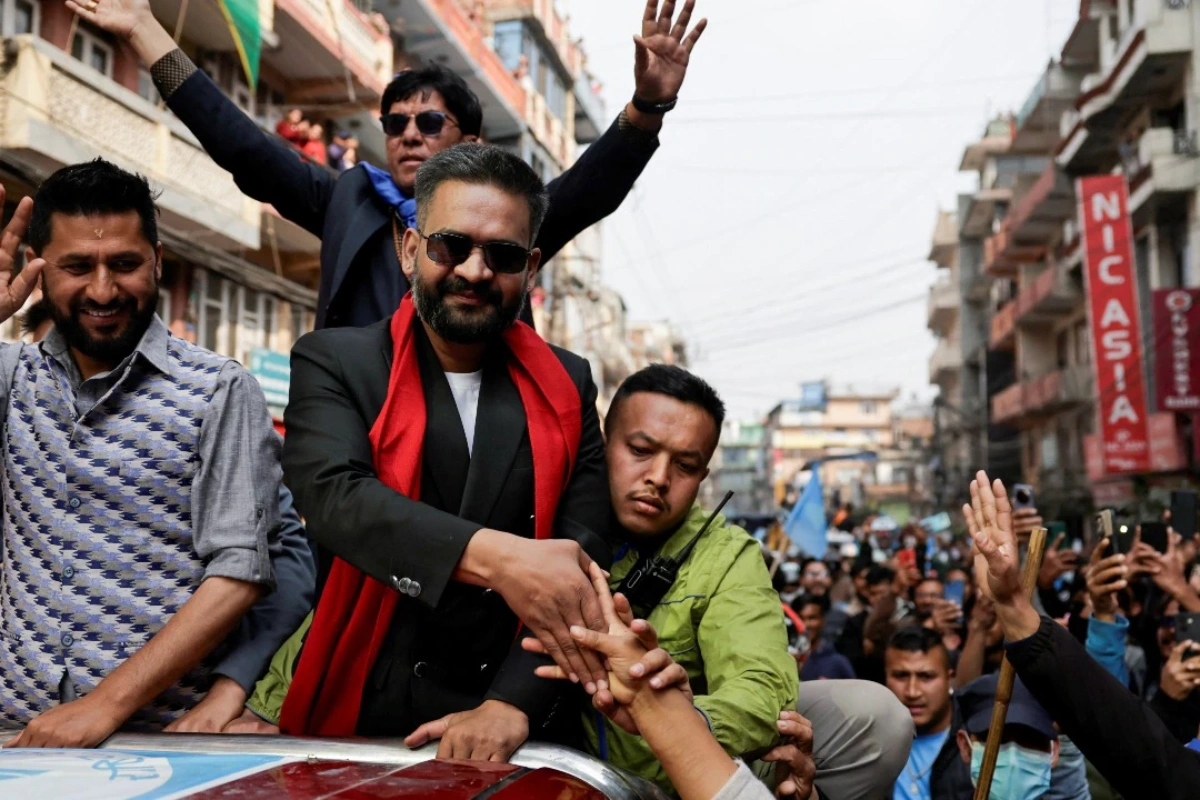
Nepal Election Results 2026: The Nepal general elections are likely to deliver a significant political shift from the traditional politics of leaders such as KP Sharma Oli and Gagan Thapa. The victory baton is all set to get passed to Balendra “Balen” Shah, a former civil engineer and rapper who become the Mayor of Kathmandu.
Balen’s party has long focused on promises of transparency, economic reforms, accountability and bridge-building measures between voters who want change and the traditional political establishment of the Himalayan Republic.
DON'T MISS
Nepal Election Results 2026-Early Voting Trends
According to early voting trends, Gen-Z backed Rastriya Swatantra Party (RSP) of Balendra is all set to win. The Communist Party of Nepal-Unified Marxist Leninist (CPN-UML) and the Nepali Congress are presently lagging behind RSP.
The Nepal Election 2026 is the first nationwide vote ever since Gen Z-led protests rock the Himalayan Republic in September 2025 that forced the resignation of KP Sharma Oli’s government after several weeks of political unrest.
Local media was informed by Acting Chief Election Commissioner Ram Prasad Bhandari that the counting of votes that happened under the country’s proportional representation system may take an additional 2-3 days.
How Would Nepal Election Results Impact India?
For India, the emergence of Balendra as the potential Prime Minister of Nepal represents both a significant strategic uncertainty and a wonderful opportunity for renewed engagement.
For the past several months, tensions have multiplied between the once brothers and allies for life. The Kalapani-Lipulekh border that is a strategically important tri-junction area in proximity to the China-India-Nepal border is claimed by both countries. The primary reason for the dispute is the conflicting interpretations of the Sugauli Treaty of 1816. According to the eastern tributary interpretation, India controls the region while Nepal argues that the western tributary forms the boundary, placing Kalapani within its territory.
Shah’s political ascent has been partly fuelled by his willingness to challenge what he terms India’s “big brother” attitude toward Nepal, a narrative that resonates strongly with younger voters weary of perceived Indian interference.