

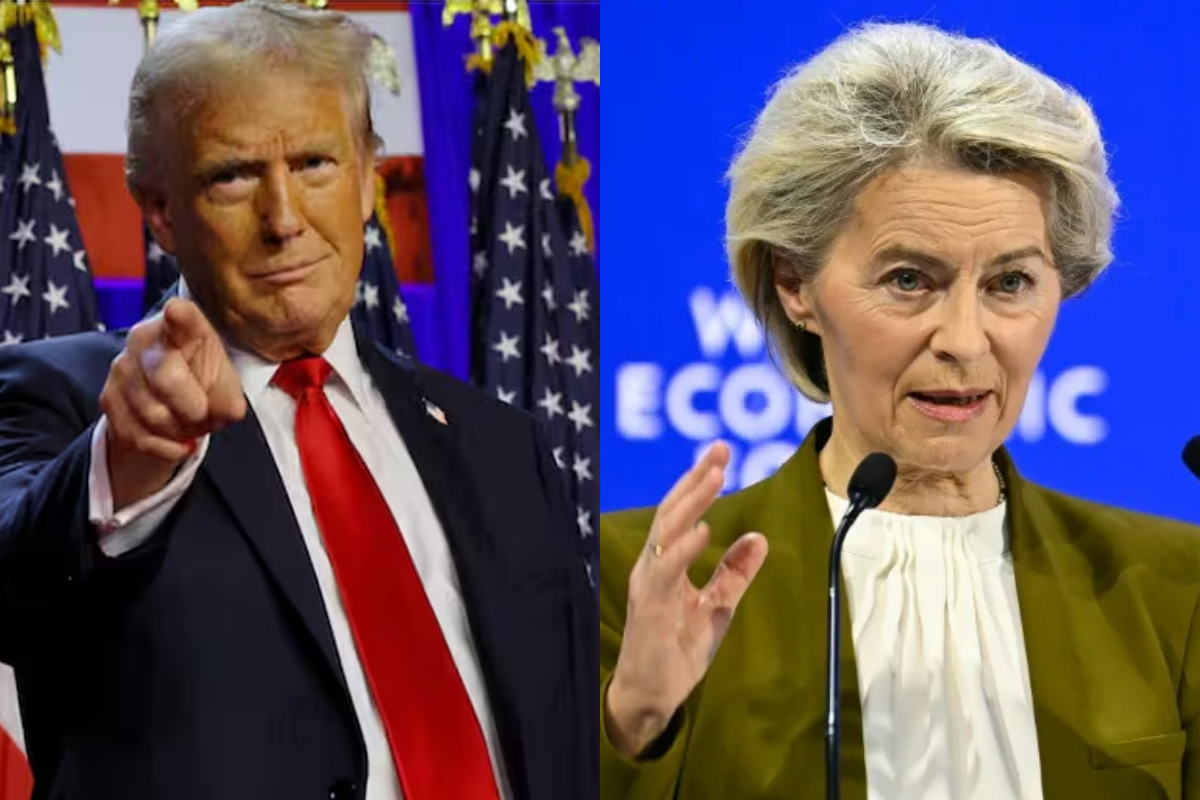
Trump’s Greenland Gambit: Donald Trump intensified global tensions Monday night, insisting the U.S. “has to have” Greenland for national security. His comments come ahead of a high-profile meeting at the World Economic Forum (WEF), where European leaders are planning to push back against the controversial proposal.
DON'T MISS
Greenland at the Centre of a Geopolitical Standoff
Trump’s Greenland Gambit: Greenland, a semi-autonomous territory of Denmark, is part of both the EU and NATO. Trump’s renewed insistence that the U.S. must take control has alarmed European allies, as he hints at punitive tariffs on countries that resist the move. Analysts warn that such actions could destabilise longstanding transatlantic relations.
European Economies Face Potential Fallout
Trump is reportedly pressuring Denmark’s allies within NATO and the EU to abandon Copenhagen’s authority over Greenland. European nations dependent on U.S. trade—like Germany with its automotive sector and Italy’s luxury goods market—could face severe economic consequences if the U.S. imposes punitive taxes. Economists describe the scenario as particularly worrying for European economies already grappling with growth stagnation.
NATO Cohesion at Risk
Experts say Trump’s move could strain NATO unity, as the alliance relies on mutual respect for member sovereignty. Forcing European allies to comply with U.S. territorial ambitions may set a dangerous precedent, challenging decades of transatlantic cooperation and raising questions about the alliance’s future stability.
Why the World Is Watching
The Greenland dispute has become a litmus test for Europe’s strategic independence. The outcome of Trump’s push, combined with Europe’s response at the WEF, could reshape international trade, security policies, and Arctic geopolitics, making this standoff one of the most closely watched diplomatic tensions of the year.