

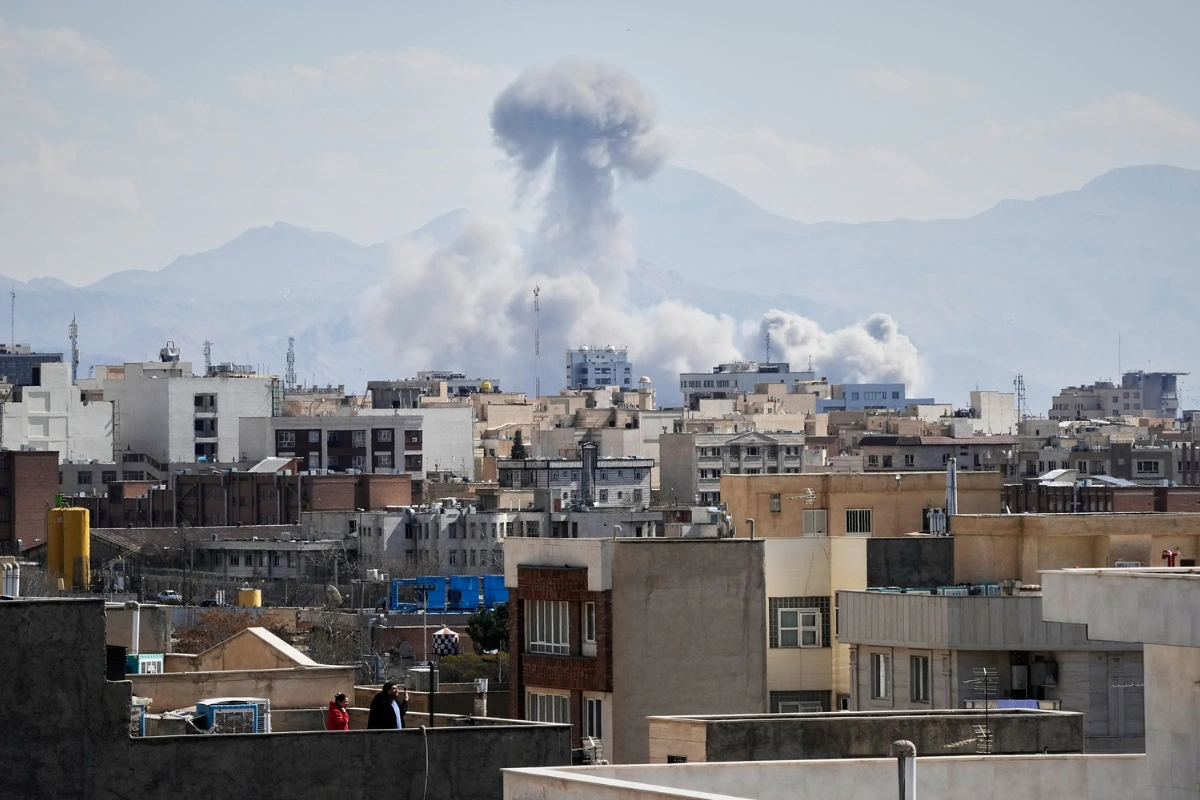
US-Israel Iran War: In a dramatic escalation of Middle East tensions, the United States and Israel launched a major coordinated military offensive against Iran on 28 February 2026, codenamed Operation Epic Fury, marking a decisive and unprecedented phase in the long-running animosity between Tehran and the West.
While the immediate focus has been military, the broader implications touch on Iranian leadership, regional stability, and the very survival of the Islamic Republic’s ruling establishment.
US-Israel Iran War: What Is Operation Epic Fury?
Operation Epic Fury represents a large-scale air and sea bombardment led by the United States with substantial support from Israel, targeting Iranian military, missile, and nuclear capabilities, including key leadership locations in Tehran.
DON'T MISS
The offensive’s official justification, according to U.S. and Israeli statements, was to neutralize what they characterize as imminent threats, particularly Tehran’s missile programs and nuclear infrastructure, and to defend regional allies.
Decapitation And Leadership Vacuum
One of the most profound immediate implications of Operation Epic Fury has been the reported death of Iran’s long-time Supreme Leader, Ayatollah Ali Khamenei , a central unifying figure in Iran’s political and clerical hierarchy, in the initial wave of strikes. Multiple sources, including Iranian state confirmation, indicate that Khamenei was killed during the operation, setting off a constitutional and political earthquake in Tehran.
Under Iran’s constitution, the Assembly of Experts is responsible for appointing a new Supreme Leader in such circumstances. In the immediate aftermath, Ayatollah Alireza Arafi was named interim Supreme Leader, tasked with guiding Iran through the transition. Arafi is a respected cleric within Iran’s religious establishment, but his authority and legitimacy, especially during a time of war, are inherently more fragile than that of a full-appointed Supreme Leader.
This leadership change could mark a fundamental turning point for the Islamic Republic. Khamenei, who had held power since 1989, was a symbol of continuity and ideological unity. Arafi’s elevation comes amid war, economic strain, and rising popular dissatisfaction, a confluence that undermines Tehran’s internal cohesion and raises questions about the future direction of the regime.


