


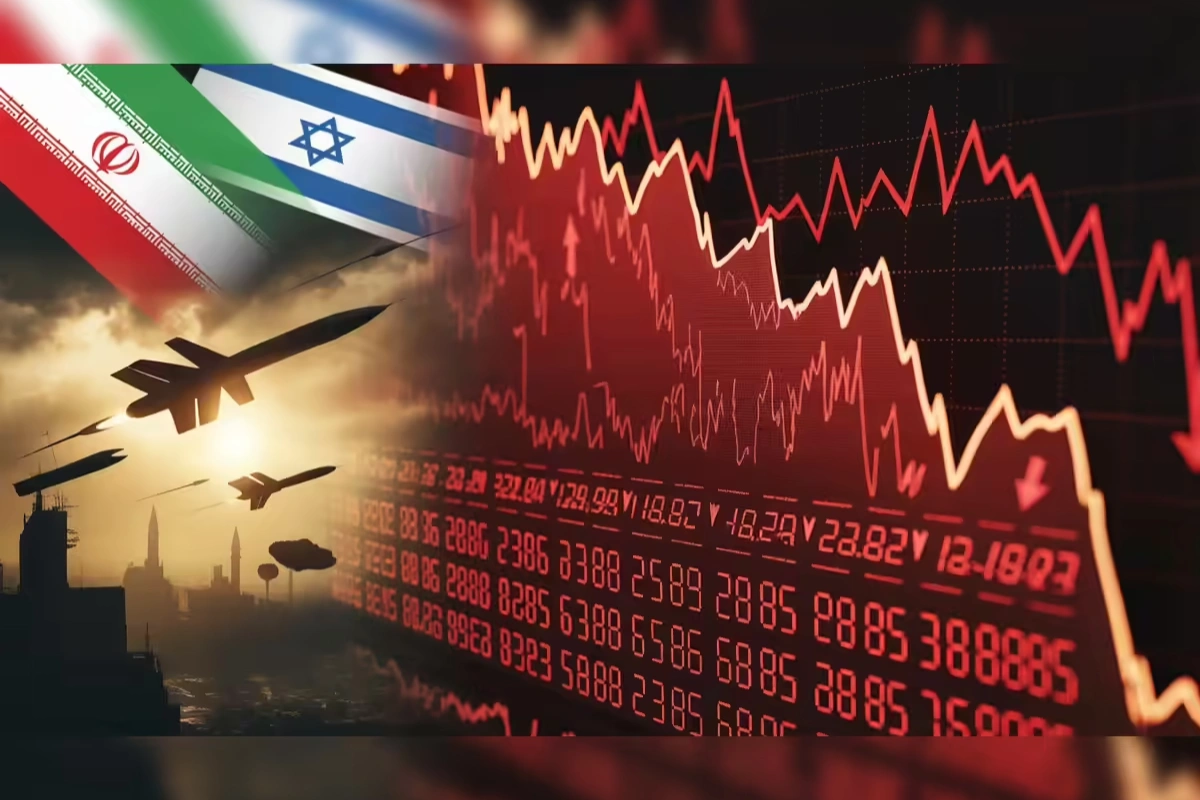
US Israel Iran War: A significant decline in Dalal Street’s prices has resulted from growing conflicts between the U.S., Israel, and Iran. Investors chose to move to safer investments as benchmark indices dropped dramatically and blue-chip stocks such as Reliance Industries Ltd fell. There was also a massive decline in the Indian rupee, which indicates increased worldwide uncertainty.
DON'T MISS
Market pressure continues to build globally
The recent share decline has quickly wiped out several lakh crore in market value within only a few days across both the BSE Sensex and Nifty 50 indices (with many stocks falling sharply) as some major companies, such as Reliance, major banks, and general infrastructure stocks all fall together, which in turn increased the pressure placed upon the indices by their combined declines.
As uncertainty about a possible larger global conflict increases, investors globally have moved their capital into commodities or safe-haven assets such as gold or US dollars. The appetite for risk has dropped significantly overall within emerging markets, including India, reflecting this broader concern regarding an expanded conflict.
As a result of increasing crude oil prices and the recent capital outflows occurring from India, the rupee relative to the USD has now fallen to nearly all-time lows; compared to other emerging-market currencies, the rupee has exhibited greater levels of vulnerability to this trend because the USD remains strong, and uncertainties exist regarding geopolitical developments globally.
In recent sessions, foreign portfolio investors (FPIs) have taken out a lot of money from Indian stocks. Domestic institutional investors have tried to soften the blow, but overseas funds are still putting a lot of pressure on the market.
What the Future Holds for Markets
US Israel Iran War: A lot now depends on how things change in the world. If tensions stay low, the markets might settle down after the initial shock. But any escalation, especially one that raises oil prices a lot, could lead to bigger corrections.
On the other hand, a de-escalation could make investors feel better and cause a relief rally, especially in large-cap stocks. For now, volatility is likely to stay high, and investors are keeping a close eye on what happens around the world and how governments respond.