

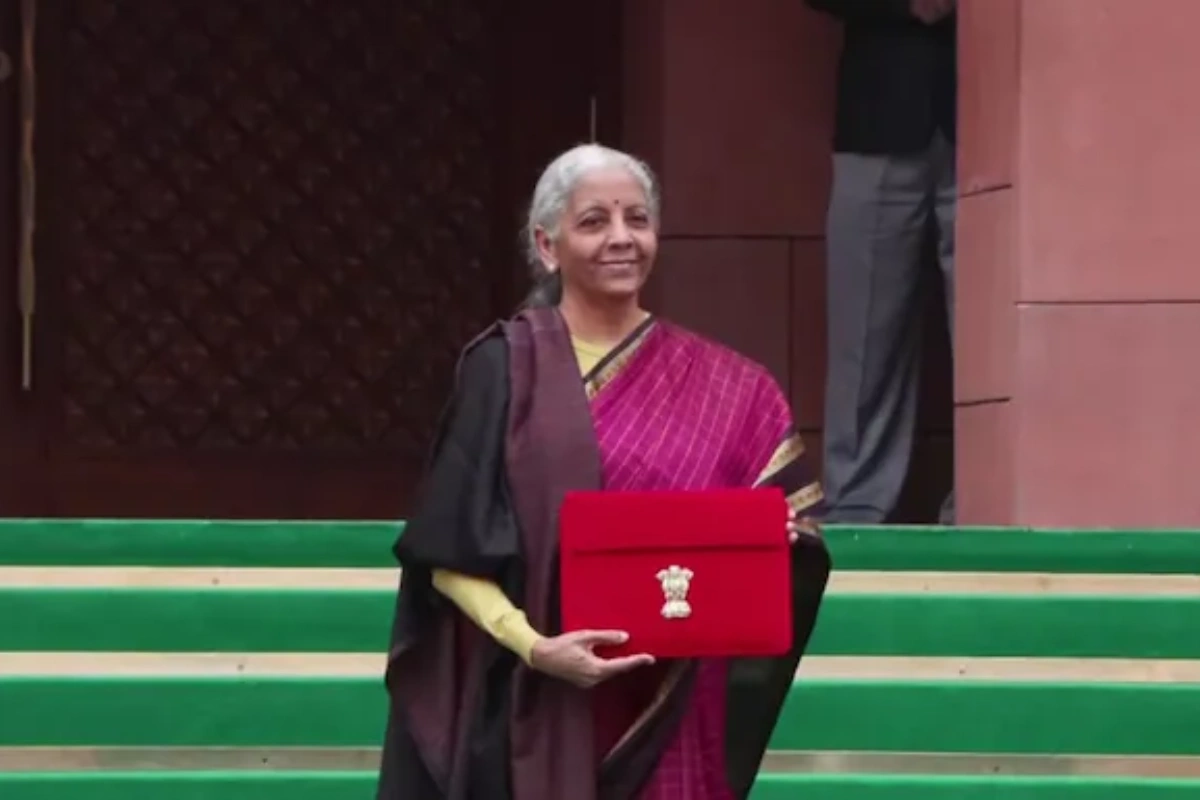
Budget 2026: Union Finance Minister Nirmala Sitharaman visited the Indian President Droupadi Murmu wearing a purple handwoven Kancheevaram silk saree, paying rich tributes to rich textile traditions of Tamil Nadu.
Symbolically, the colour purple carries layered symbolism. It evokes wisdom, power, dignity and calm authority that make it an excellent visual metaphor for control and continuity over the country’s finances on her ninth consecutive Union Budget. Sitharaman’s saree features the colour purple as the base, a coffee-brown border with intricate thread work and light gold-brown checks (also known as “kattam”).
DON'T MISS
In many ways, the purple saree of Nirmala Sitharaman connects the fiscal policy moment with the story of local weavers of the country, the glorious textile heritage of the country and the broder “vocal for local” message of the Narendra Modi government.
Budget 2026-What Does The Purple Kattam Kancheevaram Signify?
Tamil Nadu’s Kancheevaram or Kanjivaram sarees are traditionally associated with new beginnings and prosperity. The checked “kattam” pattern signifies order, balance and symmetry, echoing the idea of structural balances and nationwide stability that the 2026 budget aims to project.
The Cultural And Political Subtext Behind The Purple Saree
The purple colour of Nirmala Sitharaman’s saree can be read as a deliberate attempt to position the Budget 2026 of India as inclusive and measured amid global challenges, high tariffs and economic uncertainty.
About Nirmala Sitharaman
Nirmala Sitharaman is one of the country’s most influential political leaders who is renowned for her calm demeanour and data-driven approach to governance. Born on 18 August 1959, Sitharaman studied economics before she moved into public life. She first became the spokesperson of the Bhartiya Janata Party before emerging as a key voice on economic issues.
In 2019, Sitharaman was appointed by Narendra Modi as the country’s Finance Minister and Minister of Corporate Affairs, taking charge of the economy during challenging periods including the pandemic and subsequent recovery.