

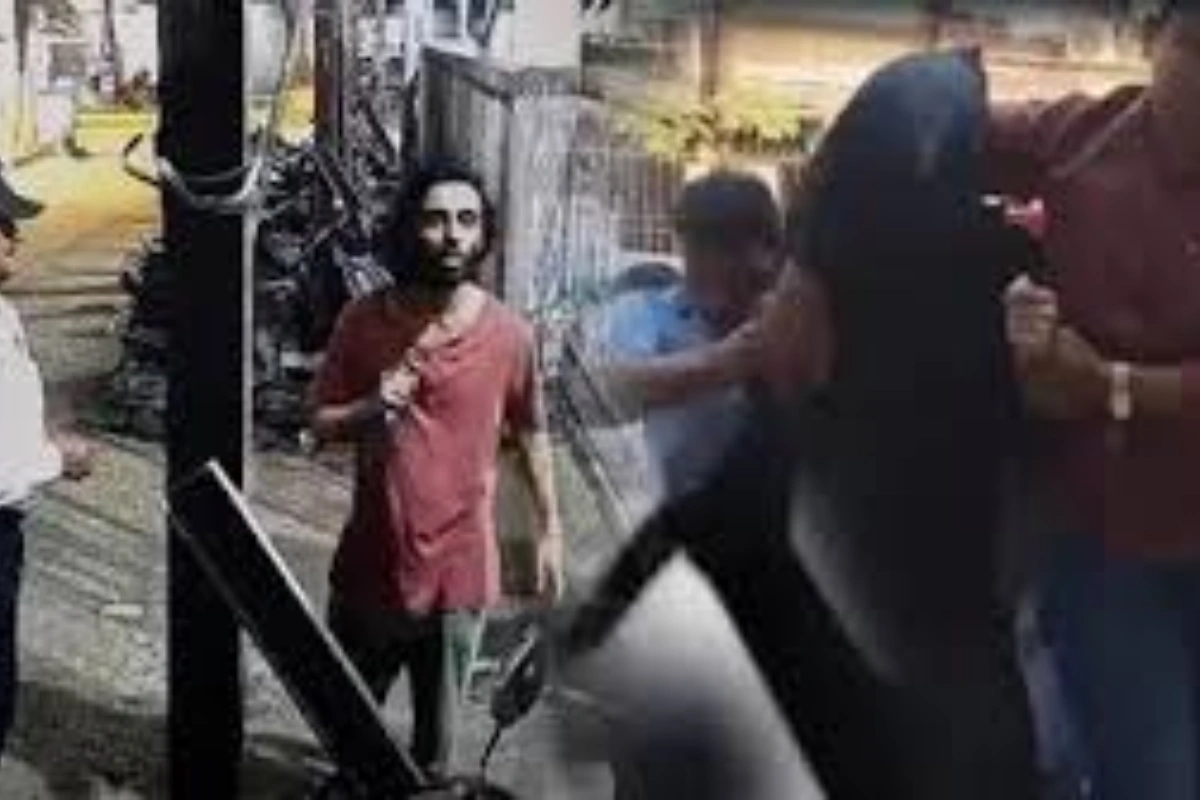
Jaib Zubair Ansari (31) went up to security guards Rajkumar Mishra and Subroto Sen at an under-construction site in Mira Road East near Wockhardt Hospital around 4 AM on April 27, 2026. He wanted to know what religion they were and if they could recite the Kalma. When they couldn’t, he allegedly pulled out a knife and stabbed them badly, with one person being critically hurt.
DON'T MISS
Local Mira-Bhayander police caught him on CCTV within 90 minutes, but the case screamed terror links.
ATS Takes Over: Shocking Discoveries
On Monday, the Maharashtra ATS took over the investigation and held Ansari—who has a degree in science, used to live in the US, and is an online chemistry tutor—until May 4. Raids in Mira Road, Thane, and Kurla found handwritten notes that were angry about “ISIS,” “real jihad,” and “Gaza.” He said that the attack was his “first step” to join the group.
His phone and laptop? Full of extremist videos, propaganda, and failed attempts to contact ISIS handlers on the dark web. Ansari was alone and jobless after being fired from his job in Abu Dhabi, and he was ready for online poison.
The Threat of Online Influence Is Growing
CM Devendra Fadnavis called it “self-radicalisation” because jihad calls on the internet to target people of other faiths. NIA worked with ATS to look for bigger networks, but it’s a classic lone wolf: personal problems, encrypted apps, and ISIS videos lead to deadly action.
This is a pattern: well-educated city dwellers turn to digital extremism when they lose their jobs or break up. Security is better in Mira-Bhayander; people are being told not to believe rumours.
What’s the next step in the investigation?
ATS forensic devices for handlers; victims heal slowly. If lone-wolf holds, it shows how quietly online radicalisation is growing. Stay tuned; a full update is on the way.