

In one of the most far-reaching agricultural reforms undertaken in Punjab in recent decades, Chief Minister Bhagwant Singh Mann on Tuesday unveiled a sweeping overhaul of the Kisan Credit Card (KCC) system, transforming a 26-year-old framework that had long left farmers dependent on inadequate institutional credit and vulnerable to private moneylenders. The revamped policy significantly raises crop-wise credit limits in line with actual cultivation costs, lowers interest burdens, expands loan eligibility to high-value crops and allied sectors, introduces dedicated financial support for stubble management, and enables farmers to access funds through modern digital platforms such as ATMs and UPI.
Positioning the reforms as a major step towards making farming more profitable and sustainable, CM Bhagwant Singh Mann said the new KCC framework would put more money directly into farmers’ hands, accelerate crop diversification beyond the wheat-paddy cycle, strengthen cooperative credit institutions, and help free cultivators from debt traps. The reforms are expected to benefit over 13 lakh farmers across Punjab, with credit support for several crops rising sharply, including horticulture crops where loans can now go up to ₹1.57 lakh per acre compared to the earlier uniform limit of ₹32,000 per acre.
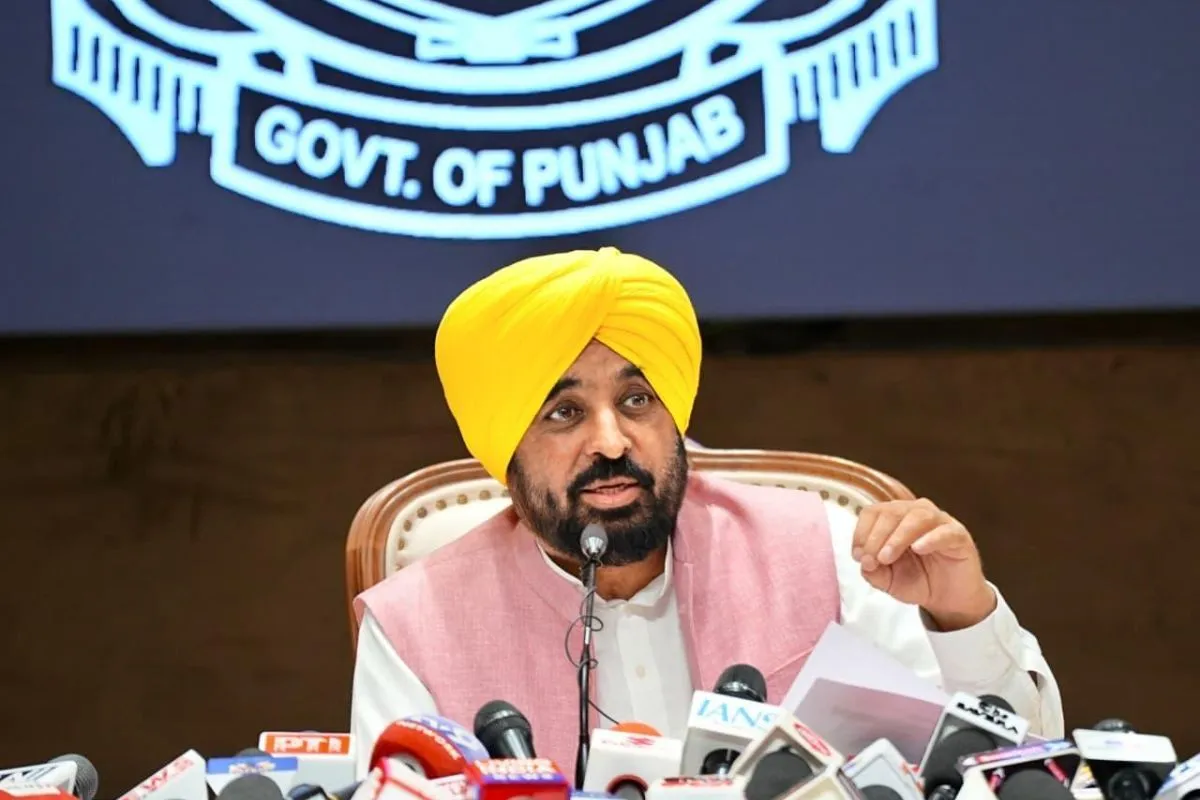
Addressing a press conference, CM Bhagwant Singh Mann said, “This is not merely a policy change but a historic initiative aimed at the economic liberation of Punjab’s farmers. We have removed red tape, ensured that more money reaches farmers directly in their bank accounts, and made it easier for Primary Agriculture Cooperative Societies and District Central Cooperative Banks to serve them efficiently. We have equipped our farmers with the digital tools of the 21st century, and they will now write a new growth story for Punjab.”
Highlighting the significance of the reform, the Chief Minister said the state government had broken 26 years of stagnation by replacing an outdated KCC system that had remained largely unchanged since 2000. “For more than two decades, Punjab’s farmers were forced to depend on an outdated and cumbersome KCC framework built around manual paperwork, cheques and passbooks. Previous governments allowed this situation to continue. Our government has replaced that 26-year-old system with a transparent, digital and significantly upgraded credit structure designed around the needs of modern agriculture,” he said.
CM Bhagwant Singh Mann said the revised policy would substantially increase the scale of finance available to farmers and ensure that institutional credit better reflects actual cultivation costs. “We have raised the Scale of Finance for wheat from ₹24,380 per acre to ₹30,000 per acre. Similarly, the scale of finance for paddy has been increased from ₹25,440 per acre to ₹39,000 per acre. This will provide farmers with the real financial support they deserve,” he said.
The Chief Minister said Punjab had once again emerged as a national leader by becoming the first state in the country to explicitly include Crop Residue Management under the KCC framework. “Out of the revised ₹39,000 per acre paddy limit, ₹2,000 per acre has been earmarked specifically for crop residue management. For the first time in the country, farmers are being financially empowered to contribute to environmental protection through dedicated support for stubble management,” he said.
CM Bhagwant Singh Mann said the government had also taken unprecedented steps to support sugarcane growers. “The scale of finance for planted sugarcane crops has been increased from ₹44,000 per acre to ₹1 lakh per acre. For ratoon crops, a credit provision of ₹65,000 per acre has been introduced for the first time. Earlier, farmers often had to depend on informal lenders and NBFCs charging exorbitant interest rates because institutional credit did not meet their actual needs. Our objective is to bring farmers fully into the cooperative credit network through affordable financing,” he said.
The Chief Minister said the revised KCC framework would also accelerate crop diversification and strengthen allied sectors. “We are actively encouraging farmers to shift towards high-value crops. For the first time, agro-forestry crops such as Poplar and Bamboo, along with agro-horticulture crops like Jamun, have been brought under the credit framework. We have also introduced a Scale of Finance for Lemongrass, which will benefit farmers in the Shivalik foothills,” he said.
CM Bhagwant Singh Mann said the government had significantly expanded support for horticulture and vegetable cultivation. “Earlier, all fruits and vegetables were covered under a uniform scale of finance. Now, crop-wise credit support has been introduced, with limits going up to ₹1.57 lakh per acre. Garlic growers can now avail credit of ₹1,57,372 per acre, Rabi onion growers ₹92,686 per acre and hybrid tomato growers ₹80,981 per acre,” he said.
The Chief Minister further said that support had been extended to several emerging and progressive farming sectors. “For the first time, crops such as dragon fruit and chia seeds/quinoa have been brought under the credit framework. To strengthen the Blue Revolution, the scale of finance for fisheries has been increased from ₹2.5 lakh per hectare to ₹3 lakh per hectare. White shrimp farming will now receive support of ₹5.5 lakh per hectare, up from ₹4.5 lakh per hectare earlier,” he said.
Listing the direct benefits available under the new KCC policy, CM Bhagwant Singh Mann said farmers would now receive six-year KCC sanctions along with annual reviews by the State Level Technical Committee. “We have removed old restrictions. The B-component can now be enhanced from 40 per cent up to 100 per cent, enabling farmers to secure credit for seeds, fertilisers, cattle feed, custom hiring, stubble management, land levelling and even drone hiring. To ensure complete transparency and eliminate middlemen, the A-component will now be deposited directly into farmers’ savings accounts,” he said.
DON'T MISS
The Chief Minister said the policy would also reduce the interest burden on farmers and streamline the delivery of interest subvention benefits. “Interest rates applicable to farmers will be lower and all benefits will be transferred through a streamlined KCC account linked to the KRP portal. By aligning credit limits with actual cultivation costs, we are freeing farmers from the debt traps of informal moneylenders,” he said.
CM Bhagwant Singh Mann said the new framework would usher in a new era of digital convenience for farmers. “We are moving away from slow manual cheque-based processes. Farmers will now be able to withdraw and manage funds through ATMs, UPI and CBS-based digital systems. Those who choose online and digital modes for loan repayment will receive special incentives from banks because our government believes in rewarding progress,” he said.
Describing the initiative as a long-standing demand of the farming community, the Chief Minister said the state government’s pro-farmer policies had helped improve the overall condition of farmers and would further strengthen the agricultural economy. “These reforms will benefit more than 13 lakh farmers across Punjab and help move agriculture beyond the traditional wheat-paddy cycle by encouraging diversification and innovation,” he said.
CM Bhagwant Singh Mann reiterated the state government’s commitment to strengthening the cooperative banking sector and safeguarding farmers’ interests. “No bank, whether public or private, will be allowed to confiscate farmers’ land. Our government is making every possible effort to ensure that farmers derive maximum benefit from these reforms,” he said.
The Chief Minister also criticised the BJP-led Union Government’s policies towards agriculture. “For the last twelve years, the Modi Government has consistently worked against the interests of farmers. Seven hundred and fifty farmers from Punjab laid down their lives during the movement against the farm laws. Today, corporate interests continue to threaten the rights of farmers, and every effort is being made to weaken the agricultural sector,” he said.
AAP Govt delivers biggest KCC reform in 26 years
In a major pro-farmer reform, the Bhagwant Mann Government has transformed Punjab’s outdated 26-year-old Kisan Credit Card framework into a modern, digital and farmer-centric credit system. By significantly increasing crop-wise credit limits, linking loans more closely to actual cultivation costs, and ensuring direct transfers into farmers’ bank accounts, the Punjab Government aims to reduce farmers’ dependence on private moneylenders and provide affordable institutional credit. The reforms also introduce digital banking facilities such as ATM and UPI access, lower interest burdens and a six-year KCC sanction period, making credit more accessible and convenient for farmers.
The revamped policy also reflects the AAP Government’s focus on diversification and sustainable agriculture. For the first time, dedicated financial support has been extended to crop residue management, agro-forestry, horticulture, fisheries and several high-value crops, including dragon fruit, lemongrass and bamboo. By expanding the credit net beyond the traditional wheat-paddy cycle and bringing more sectors under institutional finance, the Bhagwant Mann Government is creating new income opportunities for farmers while strengthening Punjab’s agricultural economy for the future.