


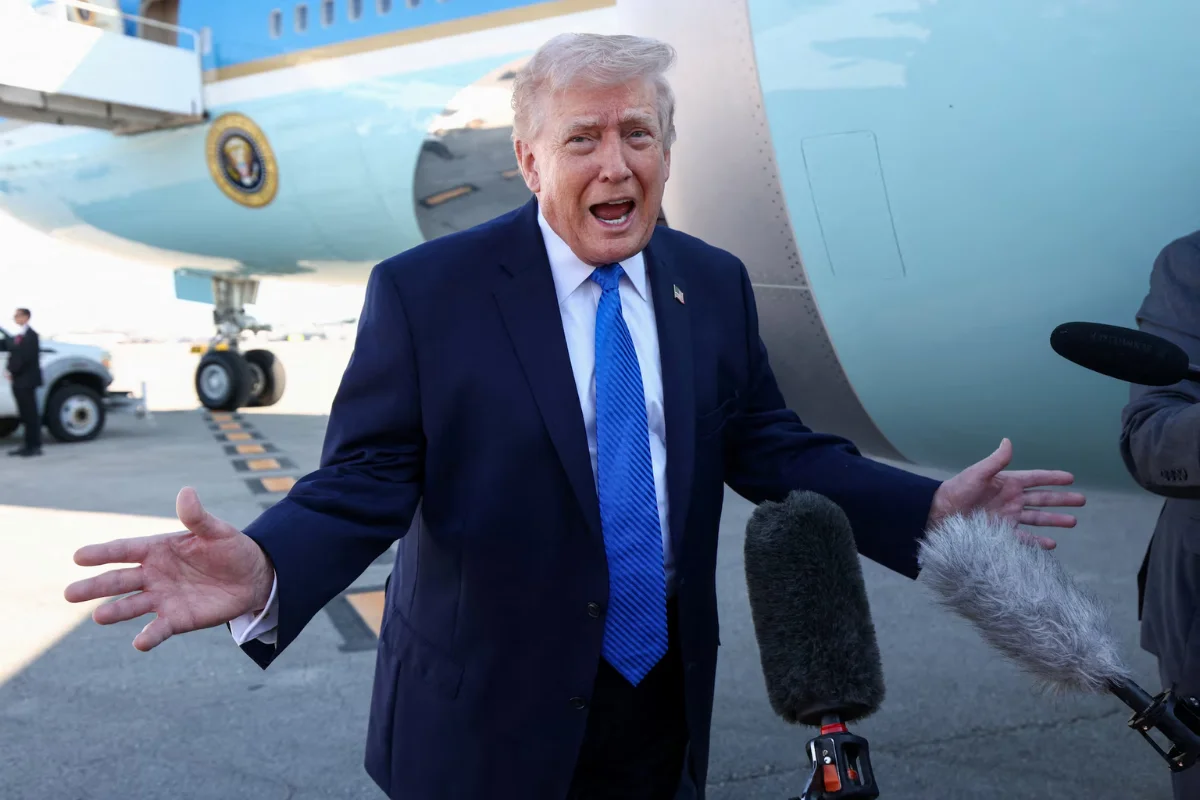
US president Donald Trump has signalled fresh military action against Iran, amid rising tensions in the region, where the strategic Strait of Hormuz is currently witnessing heightened activity. Addressing reporters in Florida on Saturday, October 24, the US president warned of action by his country as early as Sunday, October 25, while also admitting the US was working towards avoiding conflict altogether. The secretary of state previously warned of ‘unrelenting force’ if Iran continued to threaten US interests.
Trump Hints at Possible Fresh Strikes on Iran
Asked if he felt the US could strike Iran again, Mr. Trump said: “We could,” adding he believed diplomacy “can work too”. However, he also said he felt a deal could be reached, but asked: “Does Iran want to make a deal?”The comments highlight Washington’s ongoing escalation of the standoff with Iran as the two countries stand at loggerheads over the Strait of Hormuz and the US naval blockade. While Trump has not rule out negotiations, the leader’s remarks have raised questions about the potential for the standoff to spiral higher.
Why the Strait of Hormuz Is at the Heart of the Crisis?
The strait of Hormuz lies between the Gulf of Oman and the Persian Gulf. It connects the Persian Gulf to the Gulf of Oman. It is an important route for international oil shipments; therefore, any disruptions to trade in this region can have impacts on energy markets and other economies. The conflict relates to access to the waterway and Washington’s blockade of Iranian ports. There have been reports that re-opening the strait could be part of any agreement, but Iran has denied it made the latest reported offer to reopen access in return for the end of the US blockade.
DON'T MISS
Iran Rejects New Hormuz Offer
Iran dismisses claims of offer to reopen Hormuz Strait reports that Iran offered to reopen the Strait of Hormuz in exchange for the lifting of the U.S. navy blockade have been dismissed by Iranian officials. The reports were fabricated by unnamed sources, Iranian media quoted sources as saying. No fresh initiative has been offered, the report said through Pakistani mediation. These discrepancies underscore the diplomatic ambiguity that surrounds the crisis. Despite Trump saying he’s open to a deal, the public stance of Washington and Tehran appears to be that the disagreements aren’t yet bridged.
What Could the Escalation Mean for Gulf Security?
The risk of new US military strike on Iran may fuel regional instability, particularly for Gulf countries, who may have security concerns over maritime security, critical energy infrastructure, and confrontation. Shipping firms and energy traders are also keeping an eye on the Hormuz situation, as a prolonged disruption could impact the shipment of oil and drive global energy prices higher and more volatile. But the economic impact would depend on the length and degree of such disruptions.
Can Diplomacy Prevent Another Round of Fighting?
Even amidst the military threats, a diplomatic solution could be reached. The US president has publicly appeared to leave open the possibility of a deal, but the questions surrounding the naval blockade the Strait of Hormuz and whether any commitments can be trusted are the main sticking points. But what the future holds is anybody’s guess. Trump’s allegation has reopened the possibility of fresh strikes, and Iran’s rejection of the alleged Hormuz plan on the part of Trump highlights the disconnect in each side’s narrative of the talks. The coming period will be pivotal in shaping the future course of events, potentially bringing an end to the time of strategic patience or ushering in a new chapter of military hostilities.