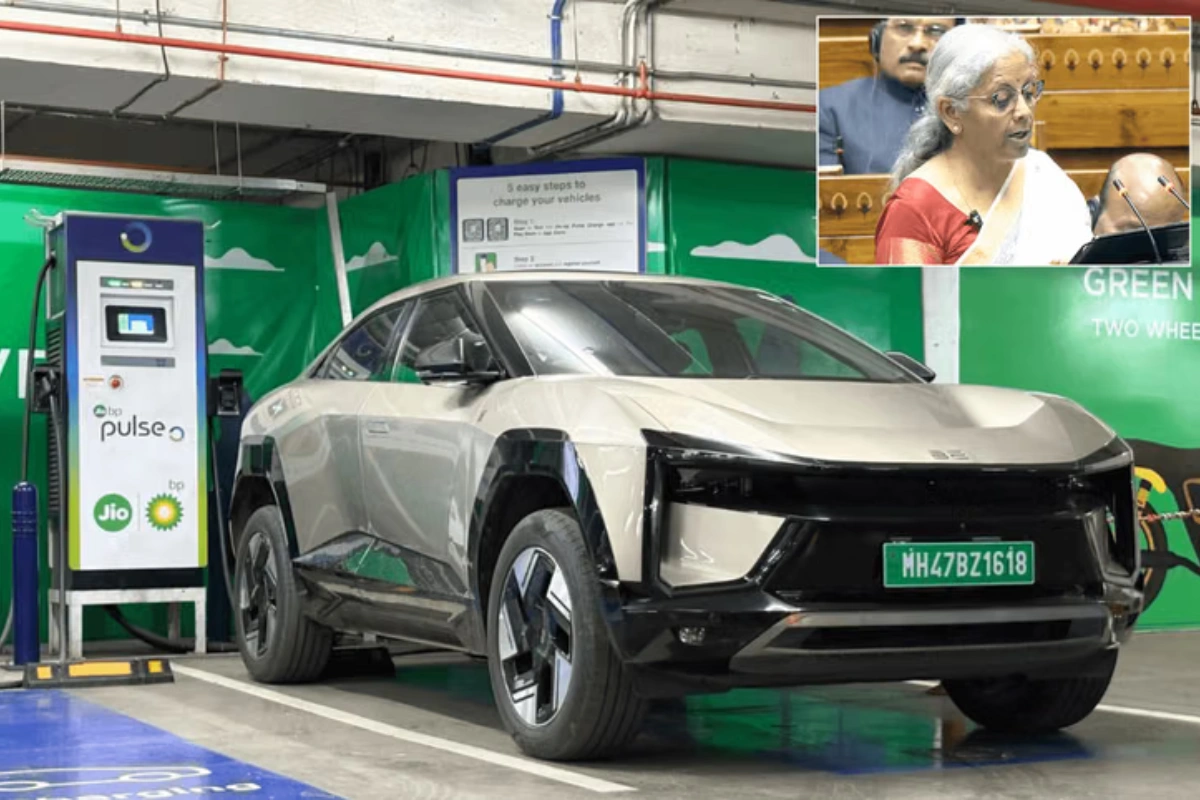
Budget 2026: As the Union Budget 2026 approaches today, the automobile sector of the country is hoping that the Finance Minister Nirmala Sitharaman would introduce a series of measures to stimulate demand, bring on FAME-III for electric vehicles (EVs), providing subsidies primarily for e-2 wheelers, e-3 wheelers, e-buses, and related infrastructure.
The automobile sector is also hopeful that Sitharaman would bring on budgetary measures that would help the country accelerate its transition to green energy and electric mobility with a long-term approach.
DON'T MISS
Budget 2026: Context Set By Past Budgets
Over the years, the ruling NDA government had emphasized on the significance of electric vehicles (EVs) and green energy. In 2019, the Faster Adoption and Manufacturing of Electric Vehicles (FAME) scheme was launched.
Industry experts believe that Budget 2026 would bring on the FAME-III. It is also expected that the union government would introduce countless Production Linked Incentive (PLI) schemes to scale domestic automotive, attract significant private investment and scale cell & battery manufacturing in the country.
Demand Stimulation Remains Critical, Would It Be Fulfilled?
For years, the demand for commercial vehicles and two-wheelers in terms of EVs has been uneven despite resilient sales in sport utility vehicles (SUVs) and premium passenger vehicles (PVs). Would Nirmala Sitharaman bring on a series of budgetary measures to stimulate massive demand?
The automobile sector wants Budget 2026 to focus on GST rationalization, launch of interest subvention schemes and reduction of inverted duty structures to support financing for rural markets and first-time buyers. It is also believed that this year’s budget would focus on enhancing the availability of credit in tier-II and tier-3 towns as well as semi-urban and rural areas of the country to stabilize consumption.
Overall, Budget 2026 could be a complete game-changer for the electric vehicle sector. A series of measures to bolster the manufacturing, sale, consumption and demand of electric vehicles along with a focus on local manufacturing, charging stations, subsidies and GST relief can make EVs more reliable, economical and affordable options for the general public.