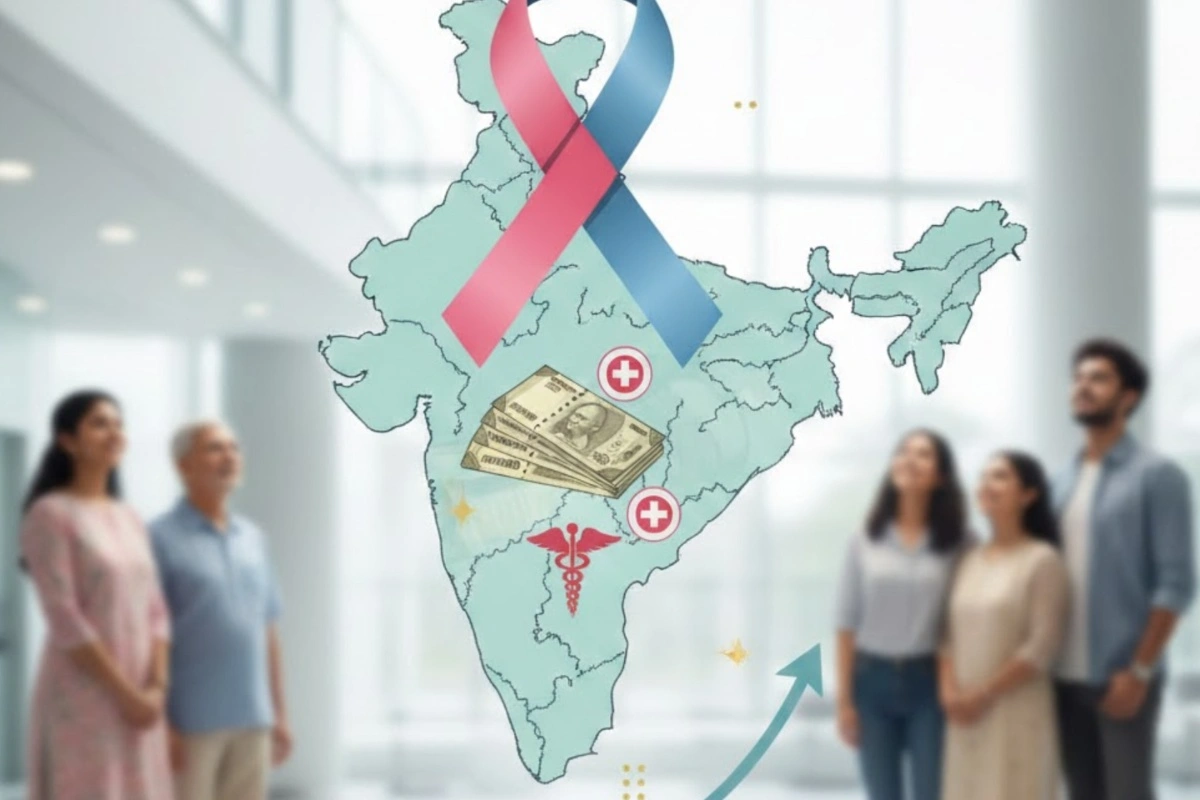
On World Cancer Day 2026 (Feb 4, 2026), a recent announcement in India’s Union Budget has put the spotlight on cancer care. The government has proposed a major policy change that could affect how much patients pay for life-saving treatment.
Finance Minister Nirmala Sitharaman announced a cut in taxes on several costly cancer medicines. The decision has raised hopes among patients and health experts alike. However, it has also sparked debate on whether the move will truly make treatment affordable for everyone.
During her Budget speech on February 1, the finance minister said the government would remove basic customs duty on 17 critical cancer drugs. These are medicines that are mostly imported and often come with high taxes, making them expensive for patients.
The exemption covers drugs used in breast cancer, blood cancers, immunotherapy, targeted therapy and other advanced treatments. Along with this, the Budget also waives import duty on medicines for seven rare diseases, as well as specialised medical foods and therapies.
DON'T MISS
World Cancer Day 2026: Why Cutting Customs Duty On Cancer Drugs Matters
Imported cancer drugs are among the most expensive parts of cancer treatment in India. Customs duty adds to their final price, increasing the burden on patients and families.
By removing this tax, the government aims to lower costs at the entry level. Experts say that even a small cut in duty can reduce the overall landed cost of high-end oncology medicines.
Finance Minister Sitharaman explained the intent clearly during her speech. She said, “To provide relief to patients, particularly those suffering from cancer, I propose to exempt basic customs duty on 17 drugs or medicines.”
Healthcare analysts believe this step could reduce out-of-pocket expenses, especially for patients who rely on imported drugs. With limited insurance coverage, many families still pay for treatment directly, often draining savings or taking loans.
Will This Budget Move Make Cancer Treatment Affordable?
While the duty exemption sends a strong policy signal, experts caution that it may not be enough on its own. Many of the drugs on the list remain expensive due to patents, high research costs and limited competition.
If manufacturers do not pass on the benefit, the final price may not fall significantly. This is why healthcare advocates stress the need for broader reforms.
They point to stronger domestic drug production, better insurance coverage, price negotiations and patient support programmes as key steps. Without these, the relief for patients could remain limited.
That said, the decision is still seen as a positive move. For advanced treatments that were once out of reach, even a modest reduction can make a difference.
As India marks World Cancer Day 2026, the Budget’s cancer drug relief highlights an ongoing challenge. Making treatment accessible and affordable will need sustained efforts (far beyond a single tax cut).