


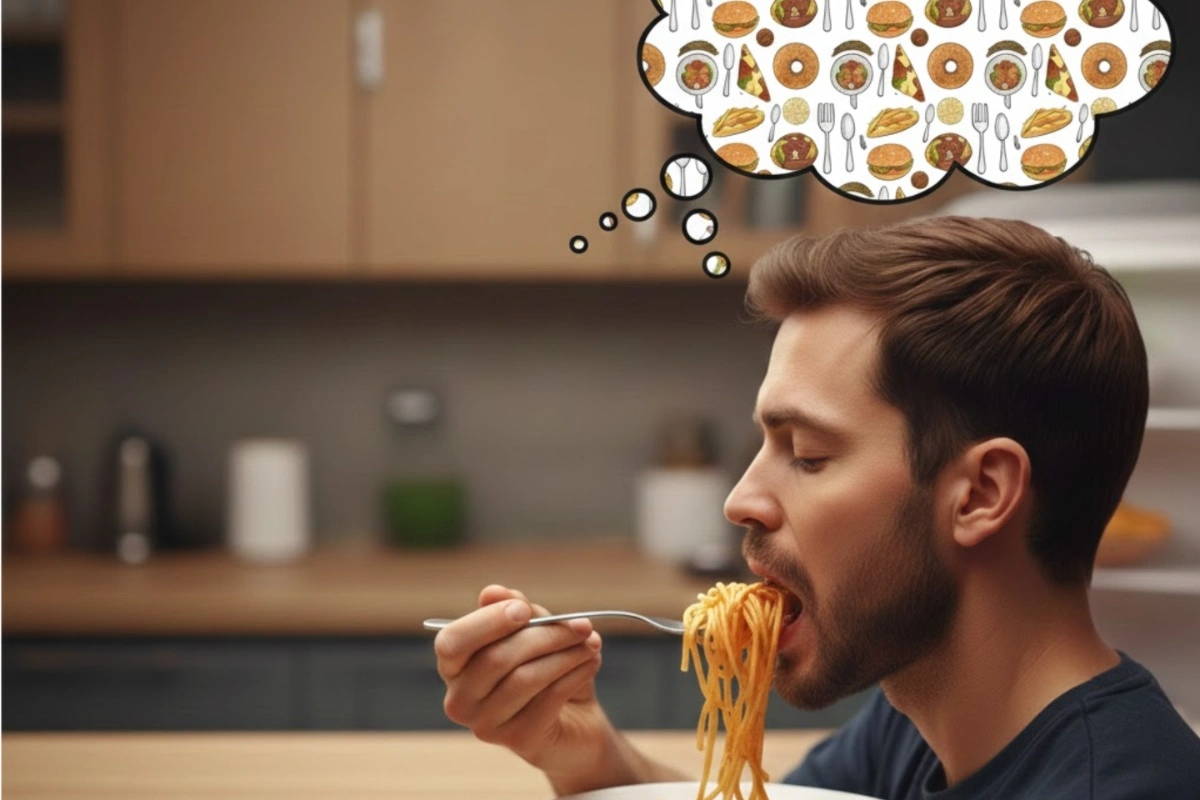
If you are always thinking about food, even after eating well, you are not alone. Many people blame themselves for weak willpower. Some think they lack discipline. But a hidden problem may be running the show. Sleep deprivation could be the real reason behind your constant cravings. And the truth might surprise you.
You may eat a proper meal and still think about snacks an hour later. You may feel hungry late at night for no clear reason. This does not always mean your body needs food. According to experts, it often means your body needs rest. When sleep suffers, your brain and hormones fall out of sync. That is where the trouble begins.
Doctor Explains Why Your Brain Keeps Asking For Food
Harvard-trained doctor Saurabh Sethi says constantly thinking about food is not always about hunger. It is also not about poor willpower. He explains that this endless mental chatter has a name. It is called food noise. This happens when your brain keeps asking for food even when your body does not need energy.
Doctor Sethi says poor sleep is one of the biggest triggers. Sleeping late or getting too little sleep throws hunger hormones off balance. One hormone called ghrelin increases. This hormone makes you feel hungry. When ghrelin rises, your brain starts asking for food at random times.
Research backs this up. Studies show that people who sleep for less than six hours can feel up to 30 percent hungrier the next day. This hunger is not a real fuel need. It is a biological response. Doctor Sethi is clear on this point. This is not about mindset. It is biology.
A tired brain also makes things worse. When you are sleep-deprived, your brain reacts more strongly to high-calorie foods. The brain’s natural brakes become weak. Cravings grow louder. That is why lack of sleep often leads to cravings for sugar, salt and crunchy foods. These foods give quick comfort and fast energy when your brain feels exhausted.
How Sleep Deprivation Fuels Cravings And What You Can Do
Instead of fighting cravings harder, Doctor Sethi suggests fixing sleep first. This is often the missing piece. Better sleep can calm the food noise naturally.
He recommends keeping a consistent sleep schedule. Go to bed and wake up at the same time each day. Get morning sunlight to reset your body clock. Reduce screen time at night, especially before bed. Sleep in a cool and dark room to support deeper rest.
Doctor Sethi says you do not always need more willpower. Sometimes, better sleep is enough to quiet the noise. When your brain is well-rested, cravings lose their power. And food finally stops controlling your thoughts.