

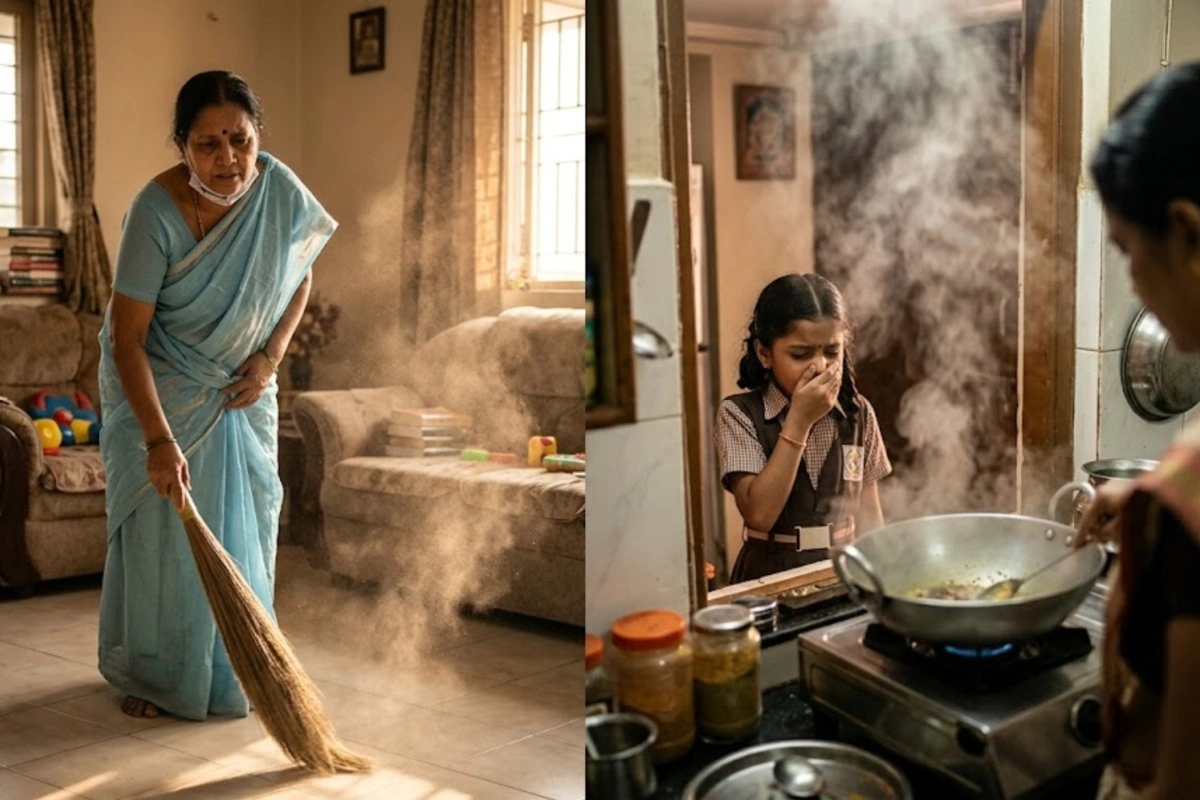
Asthma is often seen as a condition triggered outdoors, but experts warn that danger may actually be hiding inside our homes. In a video on Instagram, former AIIMS Director Randeep Guleria explained how common household habits and invisible irritants can quietly trigger severe health risks, especially for children and women. These everyday triggers are often ignored, but they can worsen breathing problems and even lead to serious asthma attacks.
He explained that many asthma triggers are present in routine home activities like cleaning, cooking and using fragrances. Dust, smoke and chemical fumes are among the most common causes. If not managed properly, these can directly impact people suffering from asthma and make symptoms worse without warning. This makes awareness about asthma more important than ever for families living in urban homes.
Hidden Home Triggers Behind Asthma
According to him, one of the biggest triggers inside homes is dust. Activities like sweeping can release dust into the air, which should be avoided by people with breathing issues. Similarly, kitchen fumes, especially during cooking or tempering spices, can also trigger breathing discomfort. In such situations, it is safer to stay away from the kitchen area until the air clears.
Maintaining a clean sleeping environment is equally important in managing asthma. Bedrooms should be kept dust-free and regular cleaning under the bed is necessary. Carpets should be avoided in bedrooms as they easily trap dust and allergens, increasing the risk of asthma flare-ups.
What Experts Recommend
Managing asthma at home requires simple but consistent precautions. Wearing a mask during cleaning or exposure to dust can help reduce irritation. Pet owners should ensure that animals are kept clean, and their fur or hair is regularly managed to prevent allergens from spreading indoors.
Strong smells such as perfumes, paint fumes and other chemical odours should be avoided as they can act as strong irritants for asthma patients. Even burning incense sticks (agarbatti) inside the house can worsen breathing problems and should be limited if they trigger discomfort.
Dr Randeep Guleria strongly emphasises that controlling starts at home. By reducing exposure to common triggers, families can significantly improve indoor air quality and reduce the risk of sudden attacks.


