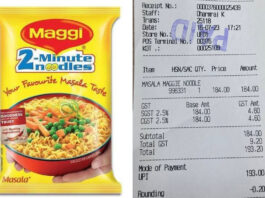
Maggi Masala Test: Consumers today are more curious than ever about what goes into their food. Responding to this growing demand, Trustified has expanded its investigations into the spices category. The first product under the scanner is Nestlé’s popular Maggi Masala.
In the latest video, viewers can now see results from both the earlier lab report and the most recent batch examination. Before diving into the numbers, Trustified highlights a key point. For the first time, its spices reports compare pesticide limits based on both FSSAI and European Union (EU) safety standards. This move aims to provide better context and transparency for consumers.
Why does this comparison matter? In 2024, independent testing in Singapore and Hong Kong detected potentially carcinogenic compounds linked to pesticides and chemicals in some Everest and MDH spice products. This led to temporary sales suspensions and batch recalls. Following the controversy, FSSAI revised certain pesticide safety limits for spices.
Earlier, the maximum residue limit (MRL) for some pesticides was set at 0.01 mg per kg. After revision, it increased to 0.1 mg per kg. Meanwhile, EU regulations still follow the stricter 0.01 mg per kg benchmark. Trustified says showing both standards helps consumers understand how results may vary across regulatory frameworks.
Understanding The First Maggi Masala Test Report
The initial lab report was completed before the teaser release. Here’s how the evaluation was structured:
- Sachet weight: 6 grams
- Serving size defined by company: 2 grams
- Total servings per sachet: 3
All results were calculated on a 2-gram serving basis. On screen, viewers can compare:
- The company’s per-serving claims
- The actual values detected in lab testing
Key observations from Report One:
- MSG (Monosodium Glutamate):
The company claims no added MSG. The lab detected 0.03% MSG.
However, experts note this does not automatically prove MSG was added. Some ingredients naturally contain glutamates, and labs cannot easily distinguish the source. - Heavy Metals:
Arsenic, cadmium, and mercury were below the limit of quantification (LOQ).
Lead was detected, but within safety limits. - Aflatoxins: Below LOQ
- Synthetic Dyes: Not detected
- Microbiological Parameters:
Mostly below LOQ. TPC (Total Plate Count) detected but within safe range. - Pesticides:
Multiple pesticides were tested. Any detections were displayed in the video.
Despite passing under revised FSSAI limits, the number of pesticide detections surprised the team. This prompted a fresh batch test.
DON'T MISS
What The Latest Batch Revealed
Due to financial constraints, not every test was repeated. Still, major safety checks were conducted.
Findings from the latest batch:
- Heavy Metals:
Mercury below LOQ. Lead, arsenic, and cadmium were detected but within safety limits. - Aflatoxins: Below LOQ
- Microbiological Tests:
Within safe limits. TPC detected but acceptable. - Pesticides:
Even more detections compared to the earlier batch.

According to the report conclusion:
- The sample complies with FSSAI guidelines
- The same sample does not clear EU pesticide limits
This means:
- Under Indian regulations, the product is considered “Pass”
- Under EU standards, the batch could face rejection
- Disclaimer: This content is for general information only and not a substitute for professional medical advice. DNP India neither confirms nor denies the claims. Always consult a professional before following any suggestions.