


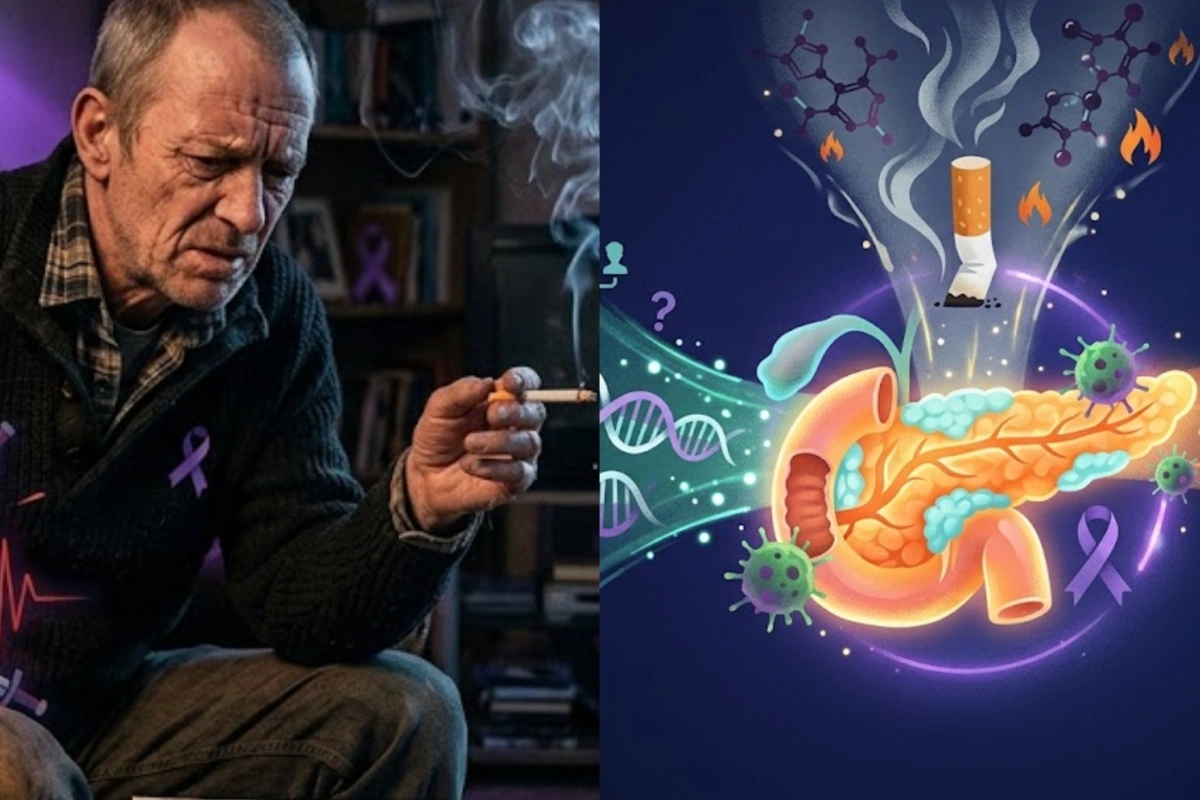
Pancreatic cancer is often called one of the most silent and dangerous diseases because it grows quietly inside the body. Many people do not notice anything wrong until the condition has already progressed to an advanced stage. A recent post by Harvard-trained gastroenterologist Dr Saurabh Sethi has brought attention to how easily early signs of pancreatic cancer are missed or ignored.
According to the doctor, one of the most alarming facts about pancreatic cancer is that it rarely causes pain in the early stages. By the time discomfort appears, the disease may have already been developing for years. He also explains that early symptoms are often very mild and commonly dismissed as minor health issues. These can include back pain, unexplained weight loss or even new-onset diabetes.
Pancreatic Cancer And Silent Early Signs
Dr Sethi highlights that pancreatic cancer often sends subtle signals that are easy to overlook. New diabetes after the age of 50 can sometimes be an early warning sign because the pancreas plays a key role in insulin production. Another visible but late symptom is painless jaundice, where the skin and eyes turn yellow due to bile duct blockage.
Unexplained weight loss is another major red flag. The body may begin to lose weight due to poor appetite, poor digestion, and internal inflammation. Changes in stool, such as oily or floating stools, can also appear when the pancreas is not producing enough digestive enzymes. However, these signs are often ignored for months.
Risk Factors You Should Not Ignore
When it comes to pancreatic cancer, certain risk factors significantly increase the chances of developing the disease. Family history plays a major role. Having one close relative with pancreatic cancer can raise the risk two to five times, while multiple affected relatives increase it further.
Chronic pancreatitis, a long-term inflammation of the pancreas, is another serious risk factor. Over time, this condition can lead to cancerous changes in the organ. Smoking also has a strong link. Studies show that smokers are two to three times more likely to develop pancreatic cancer due to harmful chemicals entering the bloodstream.
Dr Sethi emphasises that early detection is the only factor that can improve survival rates. Unfortunately, most cases are diagnosed late because symptoms remain hidden for too long. He warns that pancreatic cancer is one of the most serious cancers gastroenterologists deal with, yet it is often not taken seriously until it is too late.
Raising awareness is crucial because recognising early warning signs and understanding risk factors can make a real difference in outcomes.